Jeolla is the part of Korea people go to for the food. Inside Korea that’s common knowledge. In English there is almost nothing written about it.
Seoul is covered. Jeju is covered. Damyang? You’d struggle to find a page that tells you why anyone makes the trip.
So here it is. Three days, two cities, everything we ate.
At a glance
- 🍜 Food: ⭐⭐⭐⭐⭐
- 🎋 What there is to see: ⭐⭐⭐⭐⭐
- 🛏️ Where to sleep: ⭐⭐⭐☆☆
- 🌡️ Going in July: ⭐⭐☆☆☆
- In one line: Go for the food. Just don’t go in July.
Damyang, and what it is
About thirty minutes from Gwangju by car. A small town, and what it’s famous for is bamboo.
There are no hotels. That’s the first thing to know. We stayed at SongSong Hostel, braced for the worst, and were surprised — bigger and cleaner than expected. The bathroom was the weak point, and I’ll say so. But Juknokwon is right there, close enough that you walk out the door in the morning and you’re at the bamboo forest. That made up for everything.
First night — tteokgalbi, and rice cooked in bamboo
Tteokgalbi is the Damyang dish. Short rib, minced and seasoned and grilled, and if you order the set it arrives with a whole table of small plates around it.
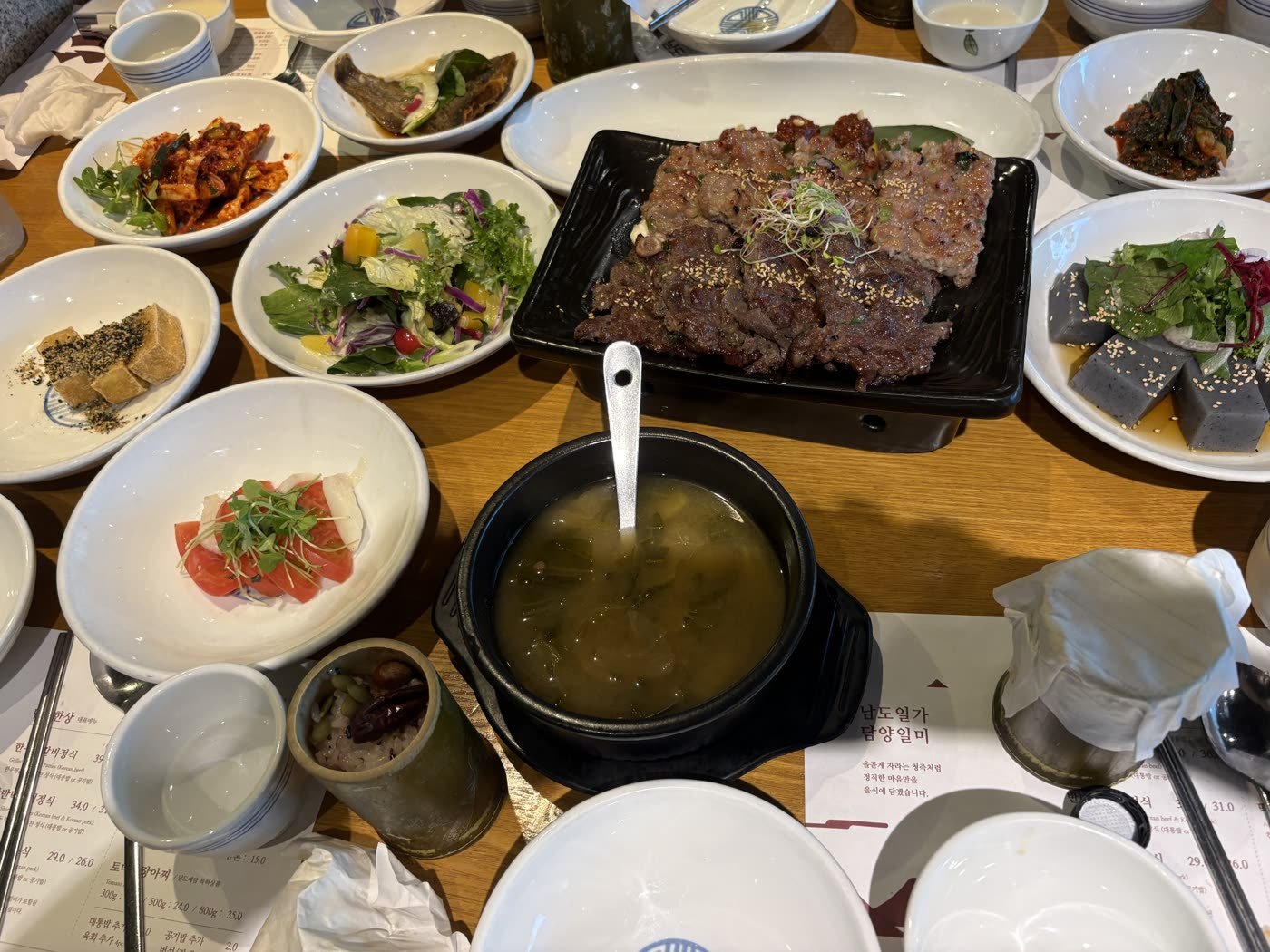
But the thing I remember wasn’t the tteokgalbi. It was the daetongbap.
Rice is packed into a length of bamboo and steamed in it. The tube comes to the table whole, and when you open it the rice has taken the smell of the bamboo. Jujube and beans are pressed into the top.
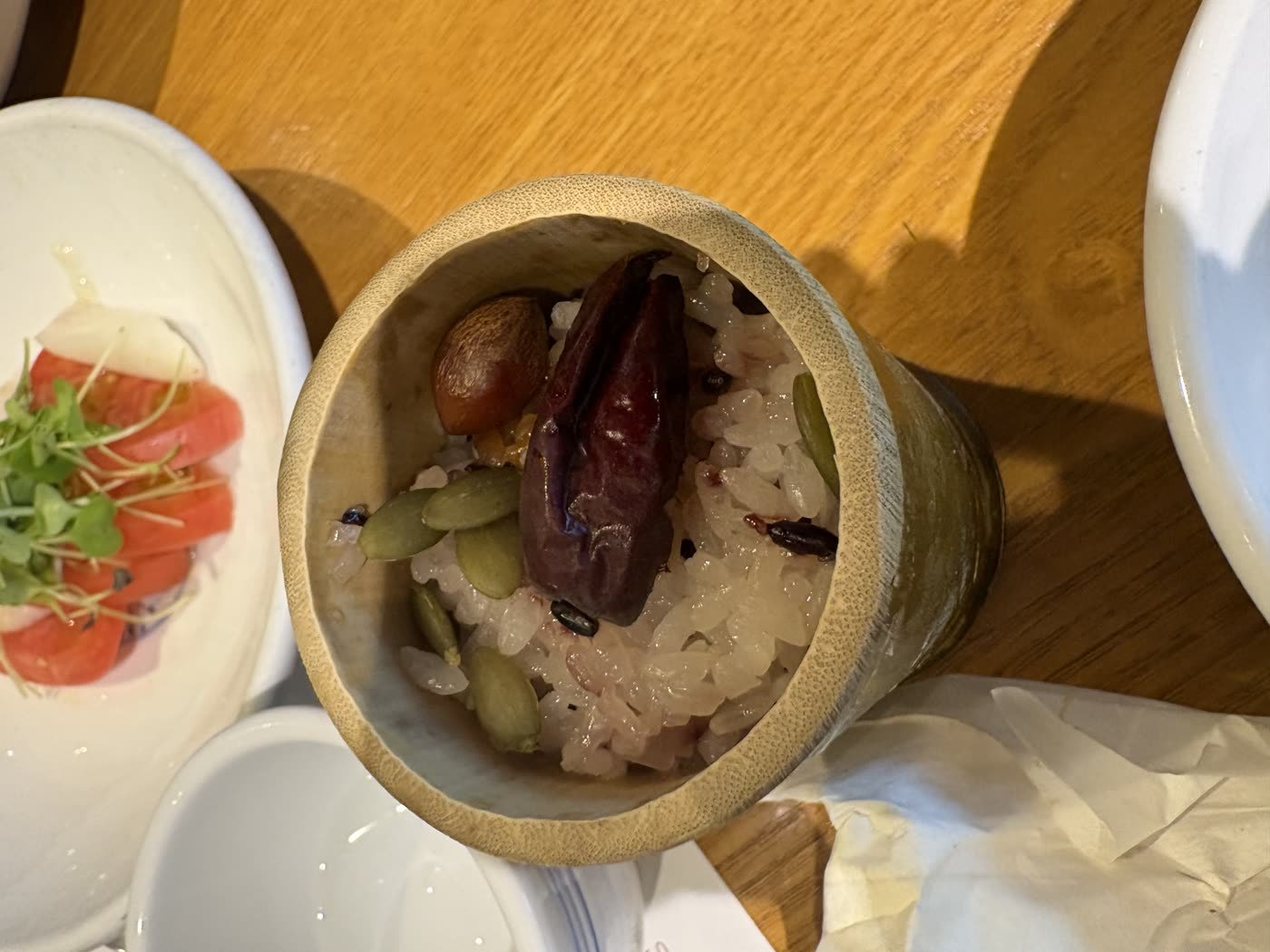
I wouldn’t have known to order it.
Gwanbangjerim — where to walk in the evening
After dinner we walked Gwanbangjerim, a levee along the stream planted with very old trees. Some of them are said to be over three hundred years old.
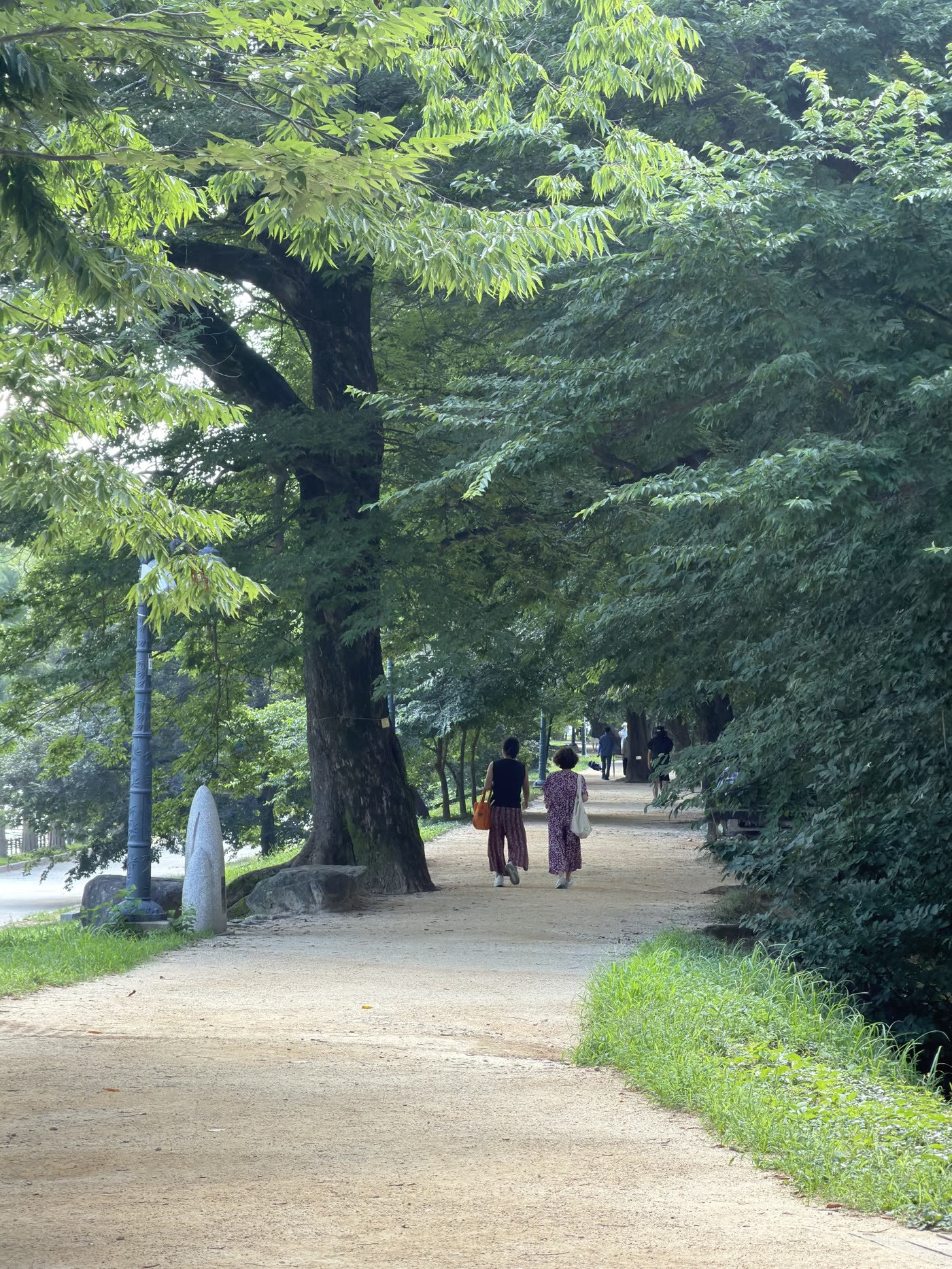
It was dusk, and it was the best twenty minutes of the day. It felt less like a sight and more like the path the town walks after dinner.
Second morning — Juknokwon
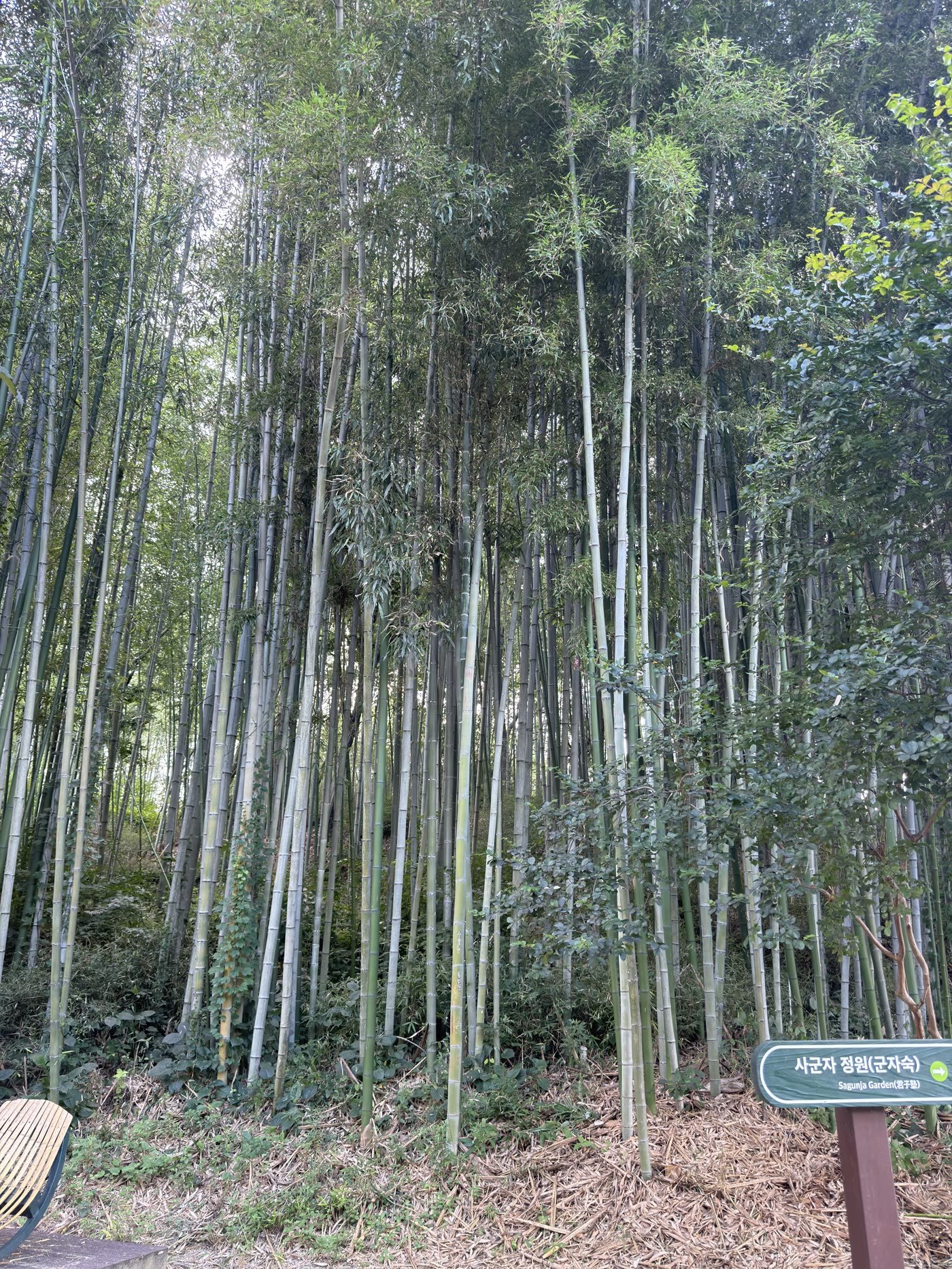
This is what you come to Damyang for.
A hillside packed solid with bamboo. Paths run up through it, and you spend the whole walk looking up, because the bamboo is so tall the sky only comes through in pieces.
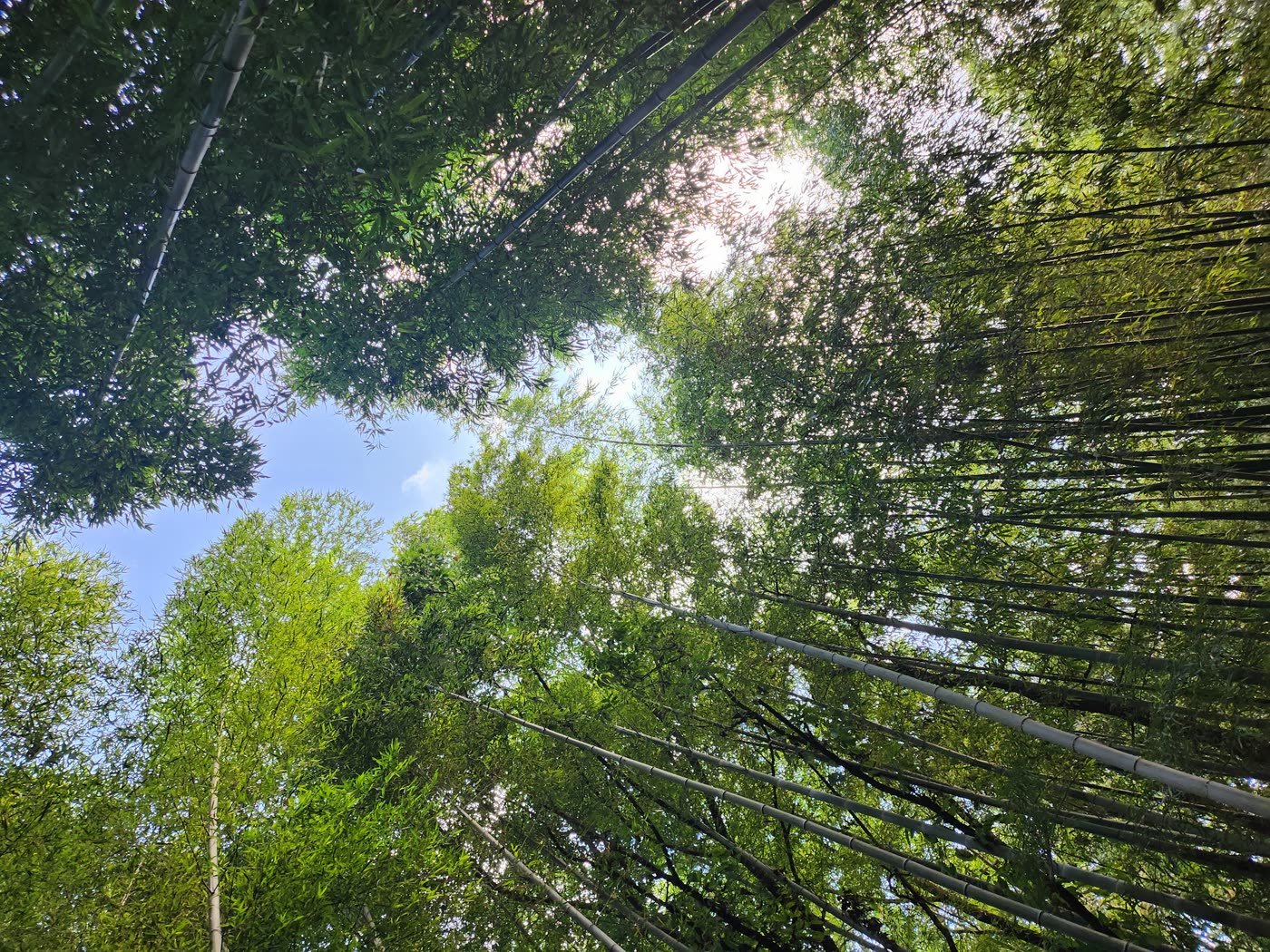
Go when it opens. We were there at nine, and it was the only cool hour we had in three days. Late morning is a different place.
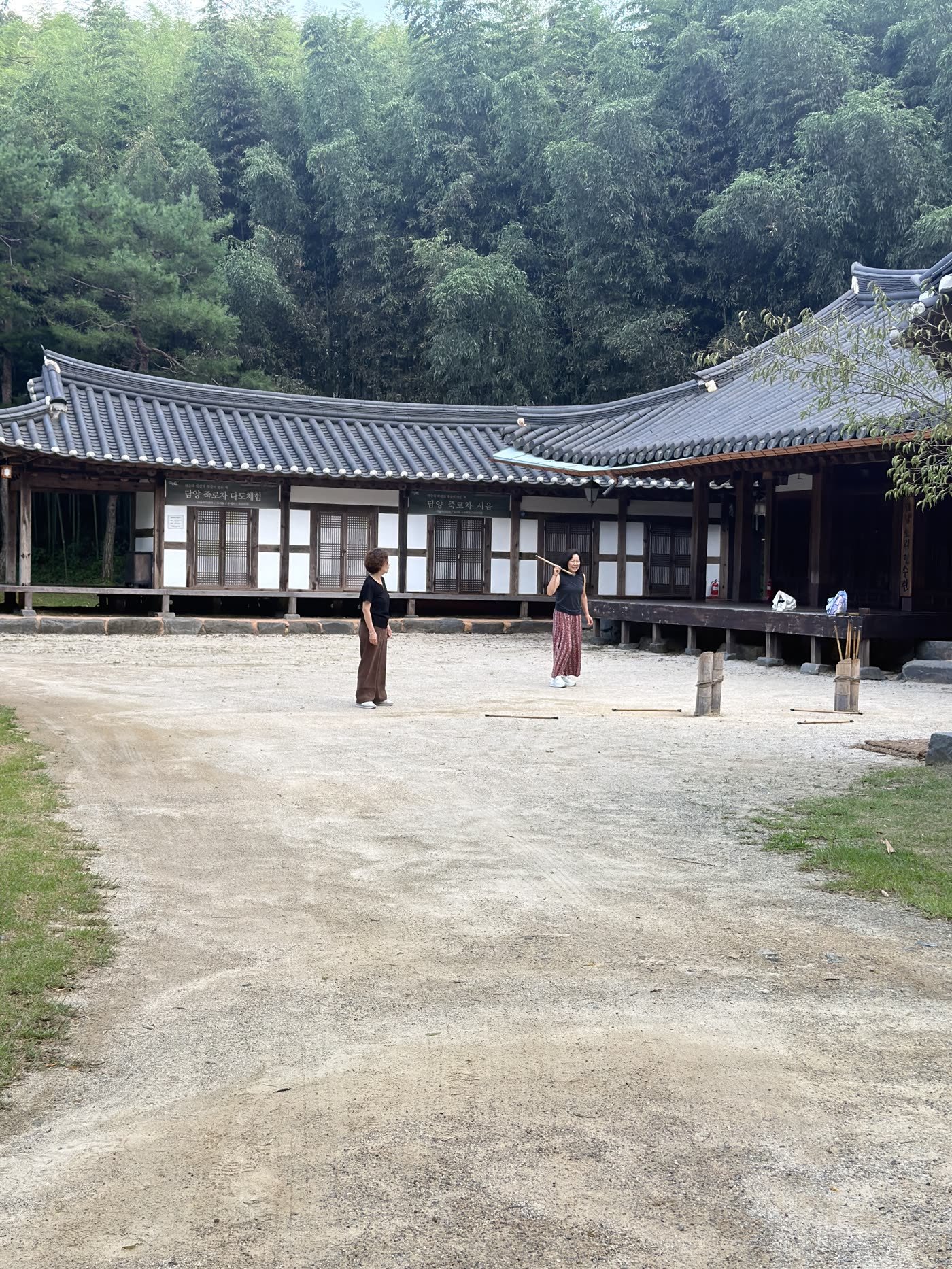
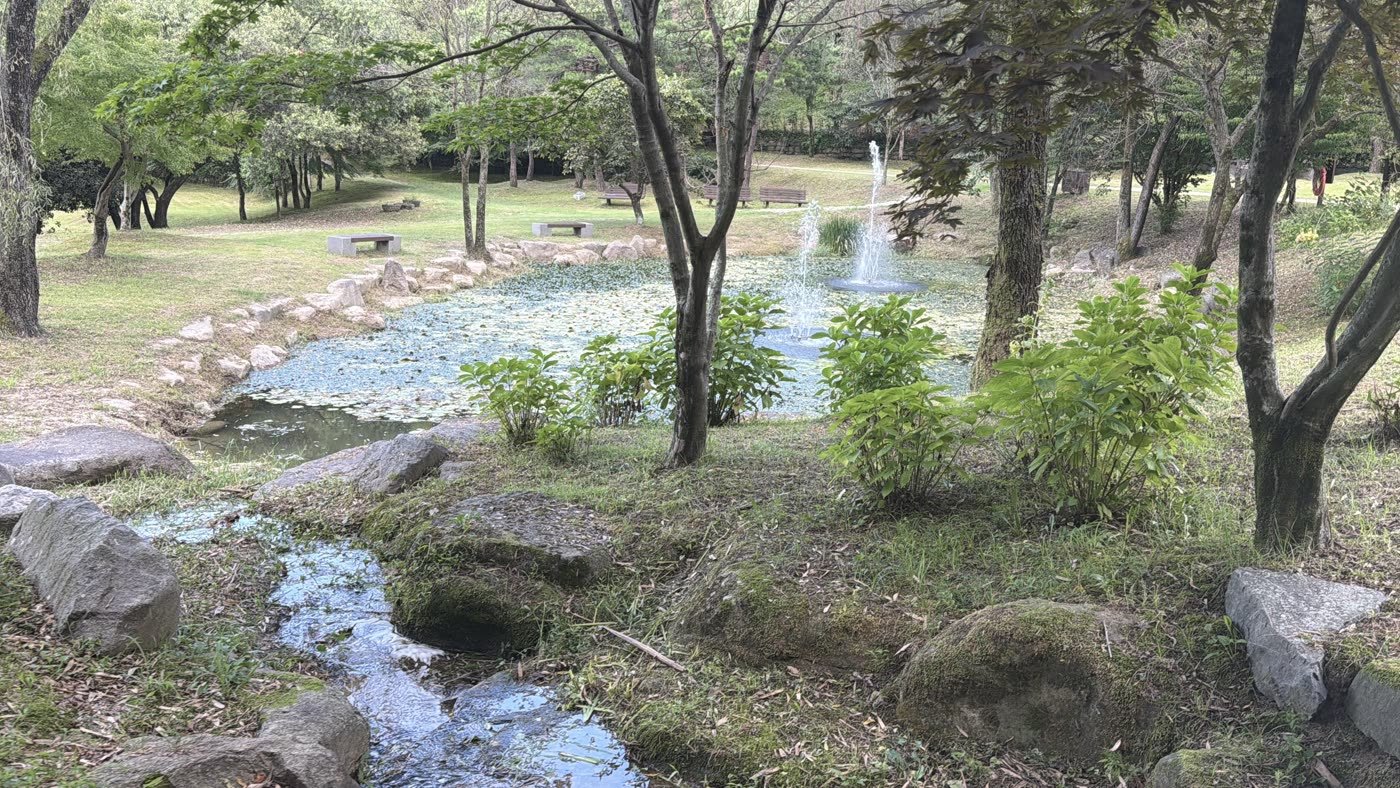
If the weather had been kinder I’d have gone back twice more.
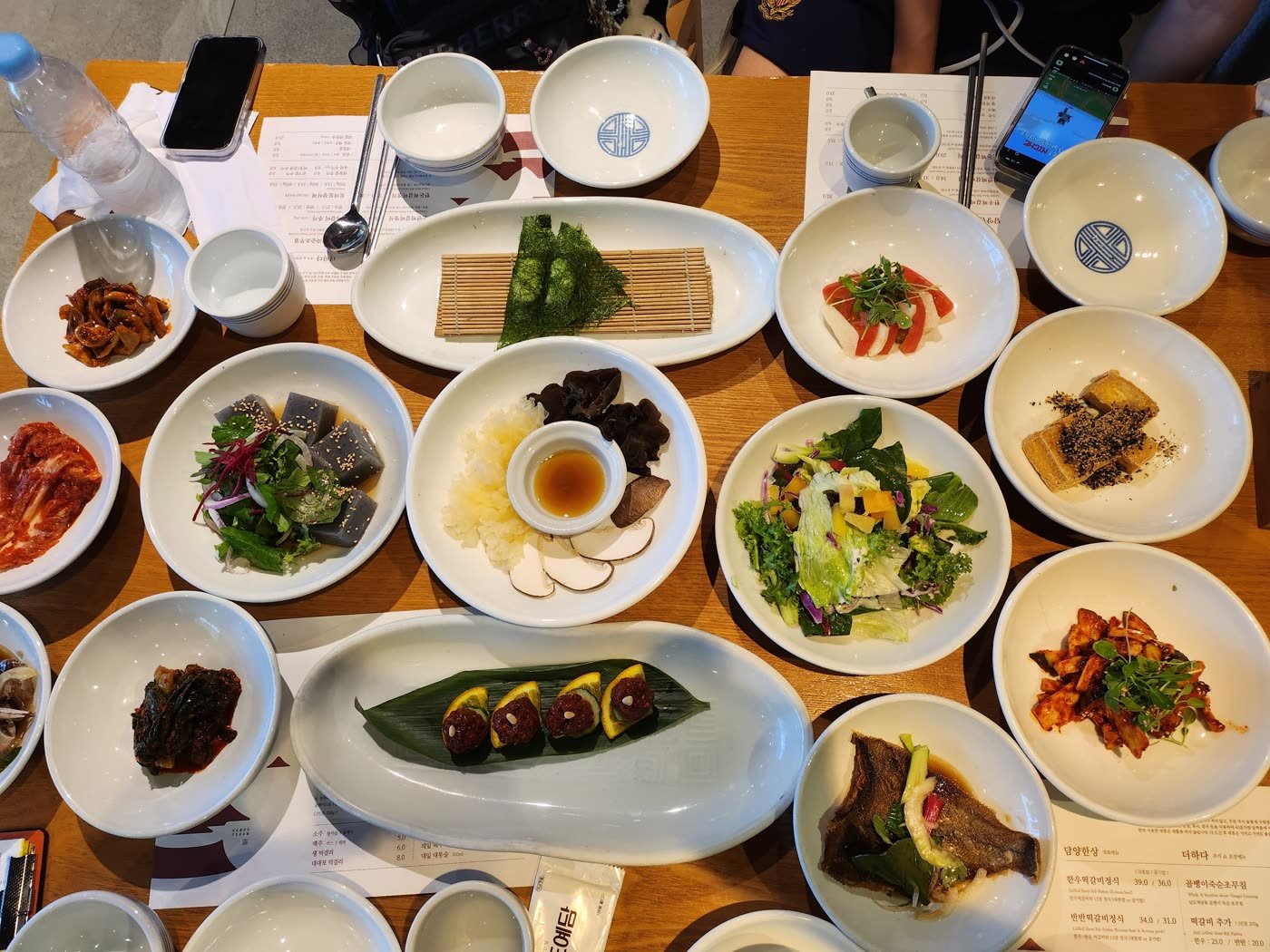
Lunch afterwards was a proper hansang — the whole-table-of-small-dishes meal that Jeolla is actually famous for.
Guksu Street — go, but go for the look of it
Damyang’s most famous eating street. Parasols along the water, noodle shops side by side, and a big panda sculpture at the entrance holding a pair of chopsticks.
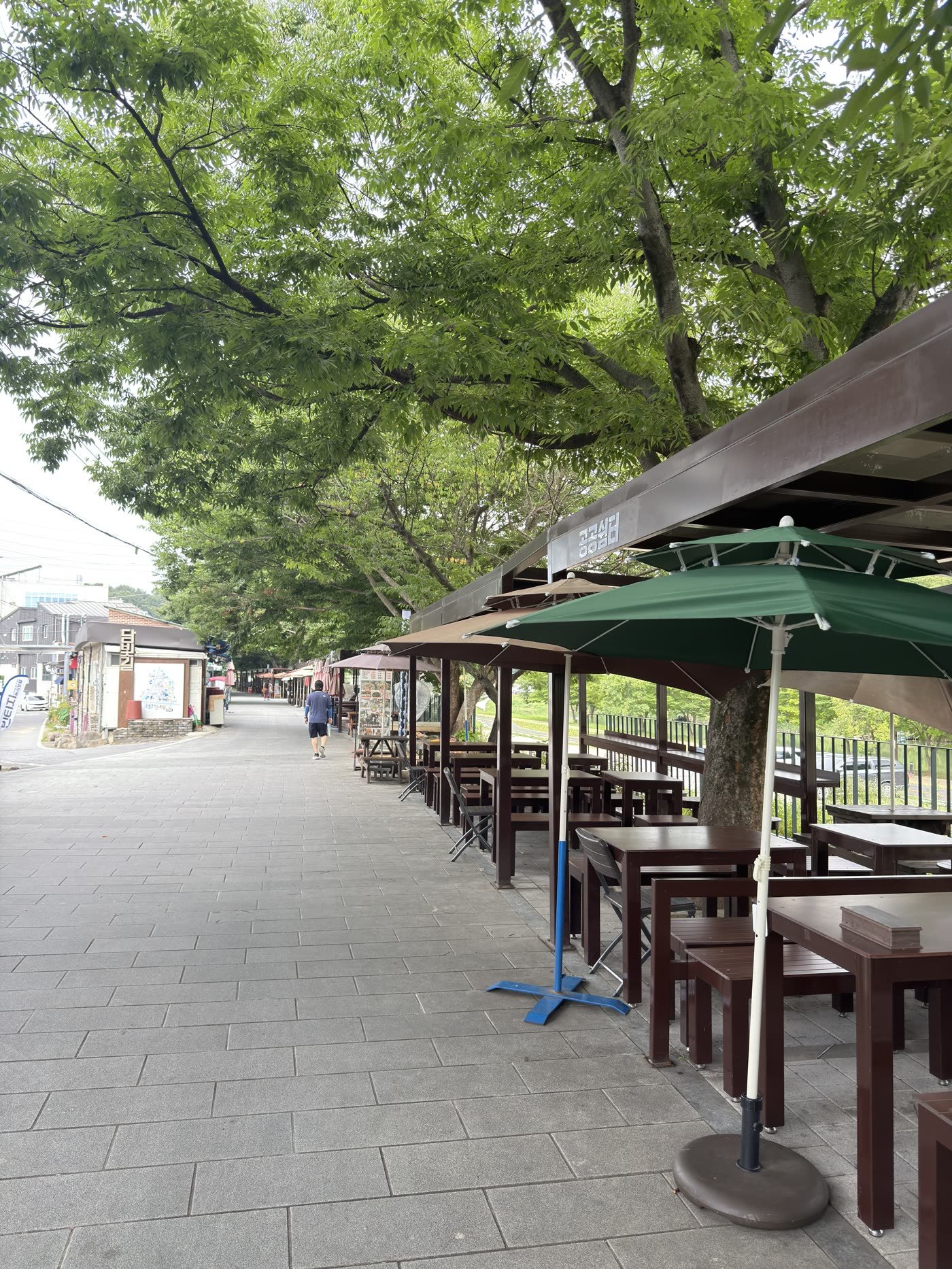
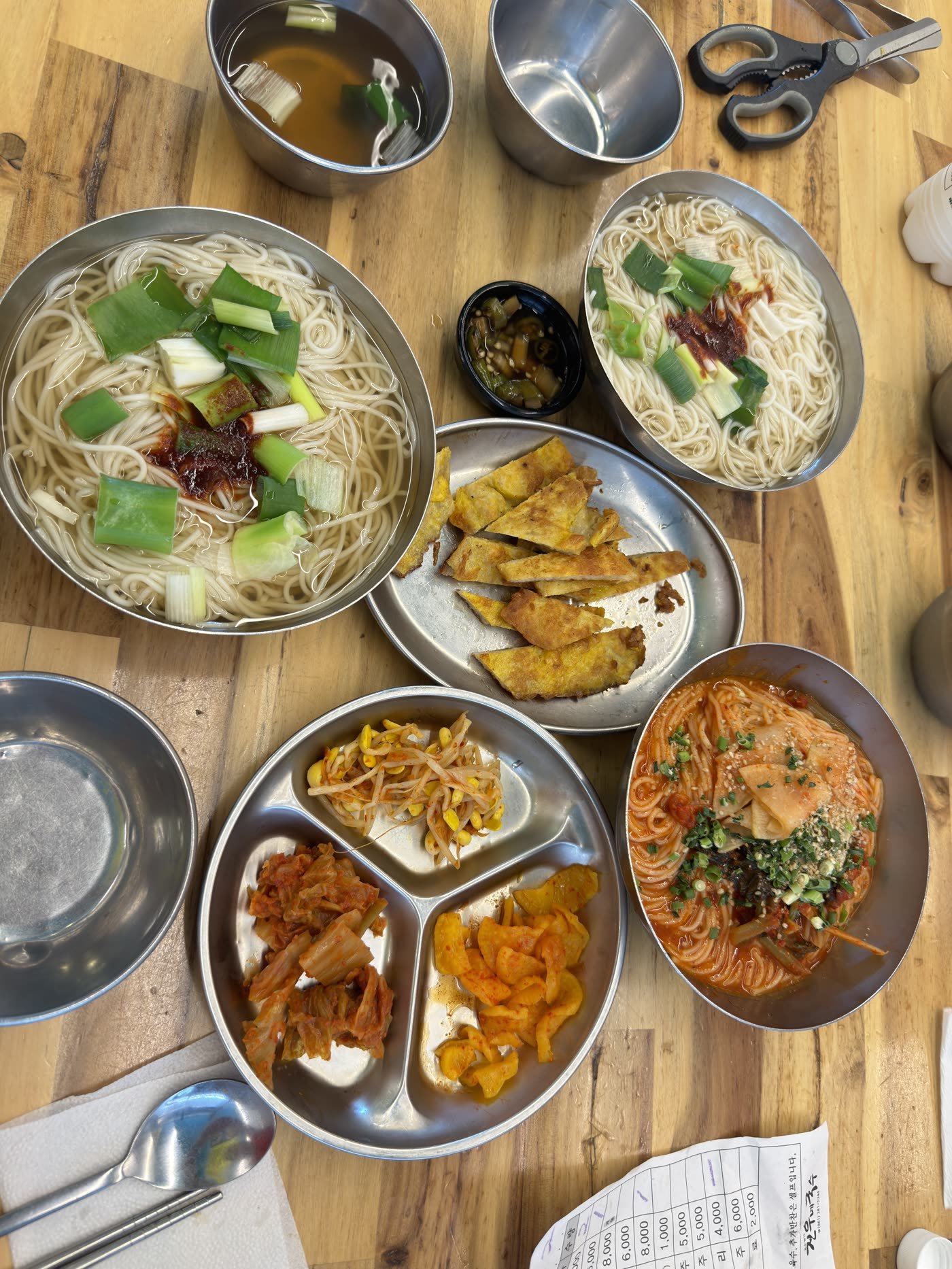
It is very cheap. Noodles, spicy noodles, pancakes, side dishes and makgeolli for four people comes to almost nothing.
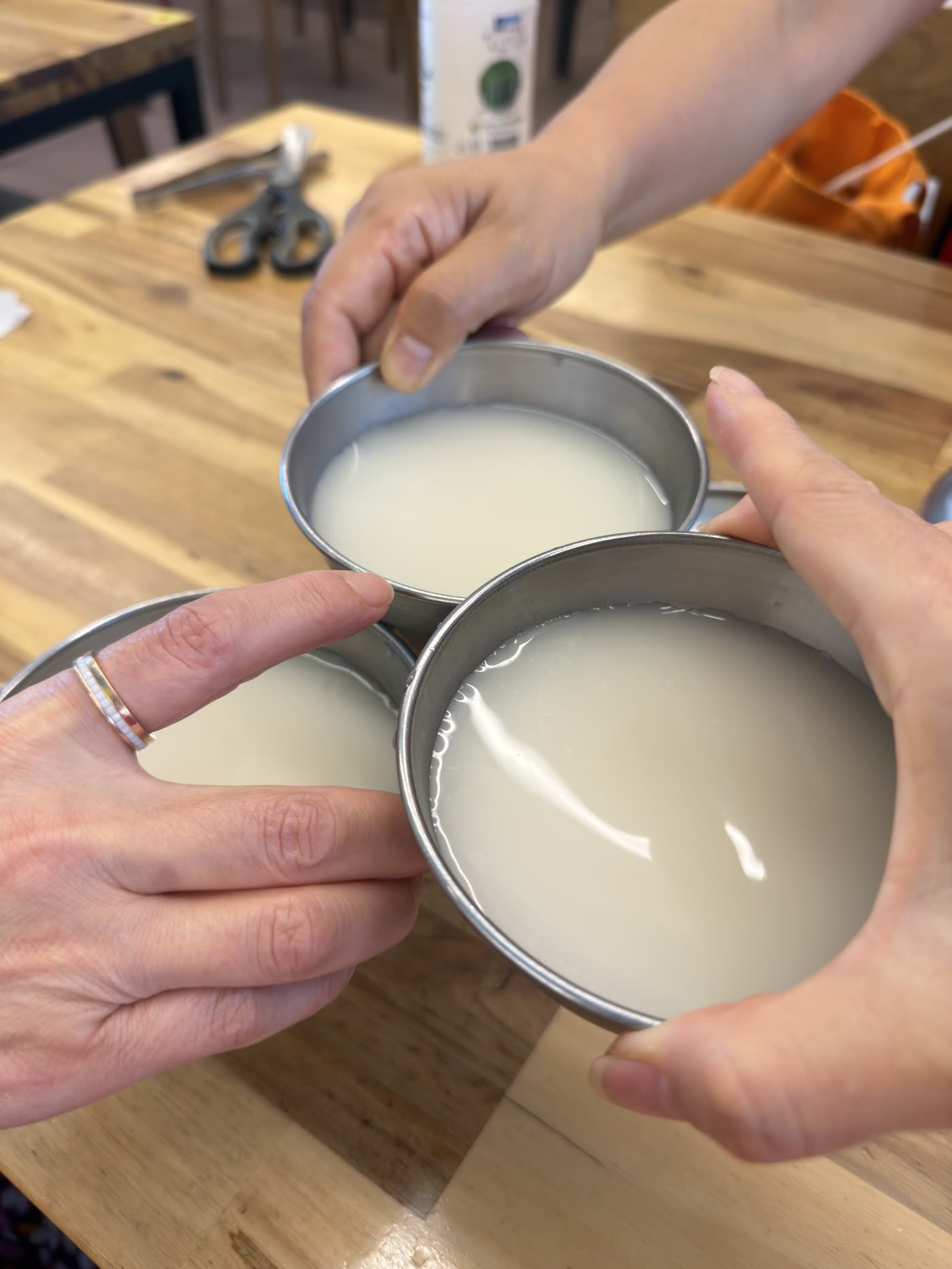
The makgeolli here gets poured into metal bowls, which is worth doing once on its own. This is bamboo country, so some shops pour a bamboo-leaf version.
Plainly, though — the noodles were ordinary. What we’d eaten the night before was much better. Go for the water and the parasols and the metal bowls and the price. Just don’t save one of your meals for it.
Getting to Jeonju
The usual way is a bus from Damyang to Gwangju U-Square and a transfer on to Jeonju. We ended up in a taxi that took us door to door for ₩100,000, which split four ways was ₩25,000 each — no transfer, no waiting, and much faster. If there are three or four of you, do that sum before you head for the terminal.
In Jeonju we stayed at Shilla Stay Jeonju Hanok Village. Clean, easy, well placed.
The meal we found by giving up
We were supposed to have a makgeolli spread that night.
We didn’t. It was too hot. We got back to the hotel and nobody could face walking another block.
So we went into Kkotsalhui, directly across the street.
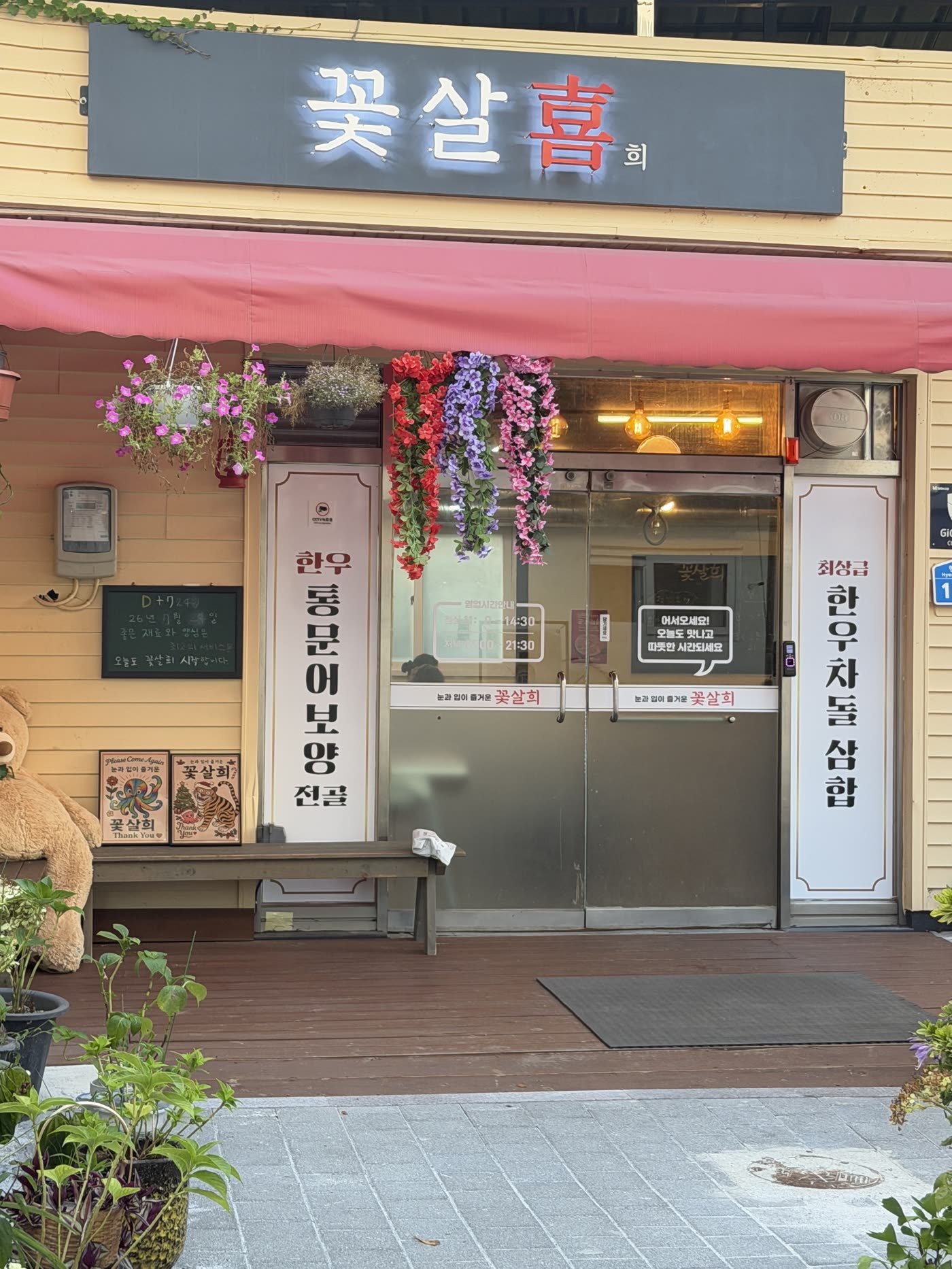
The signs outside said hanwoo with whole octopus, and hanwoo brisket three ways. We went in to find out what that meant.
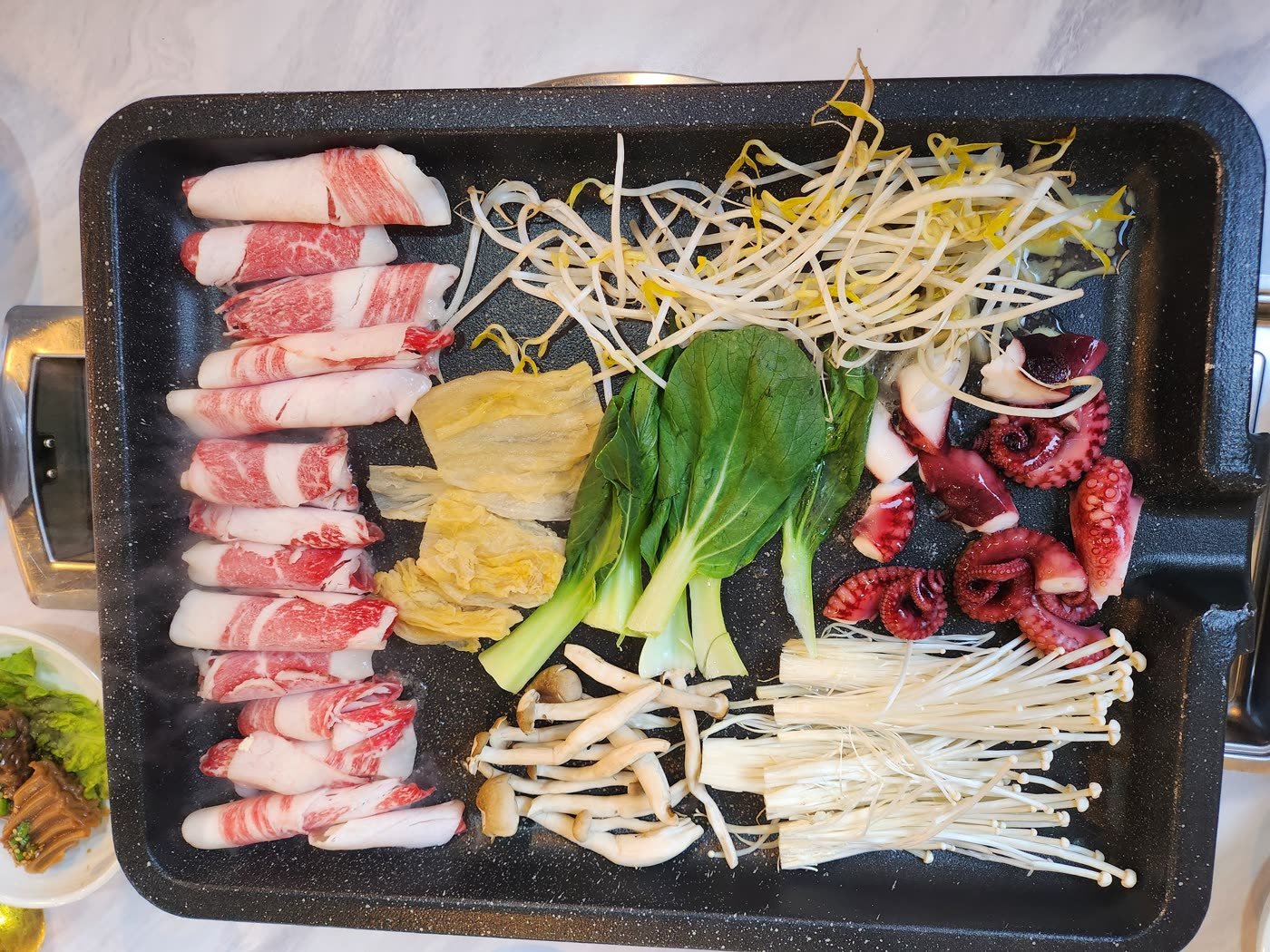
And then, once the grilling was done, a seafood hot pot arrived on top of it.
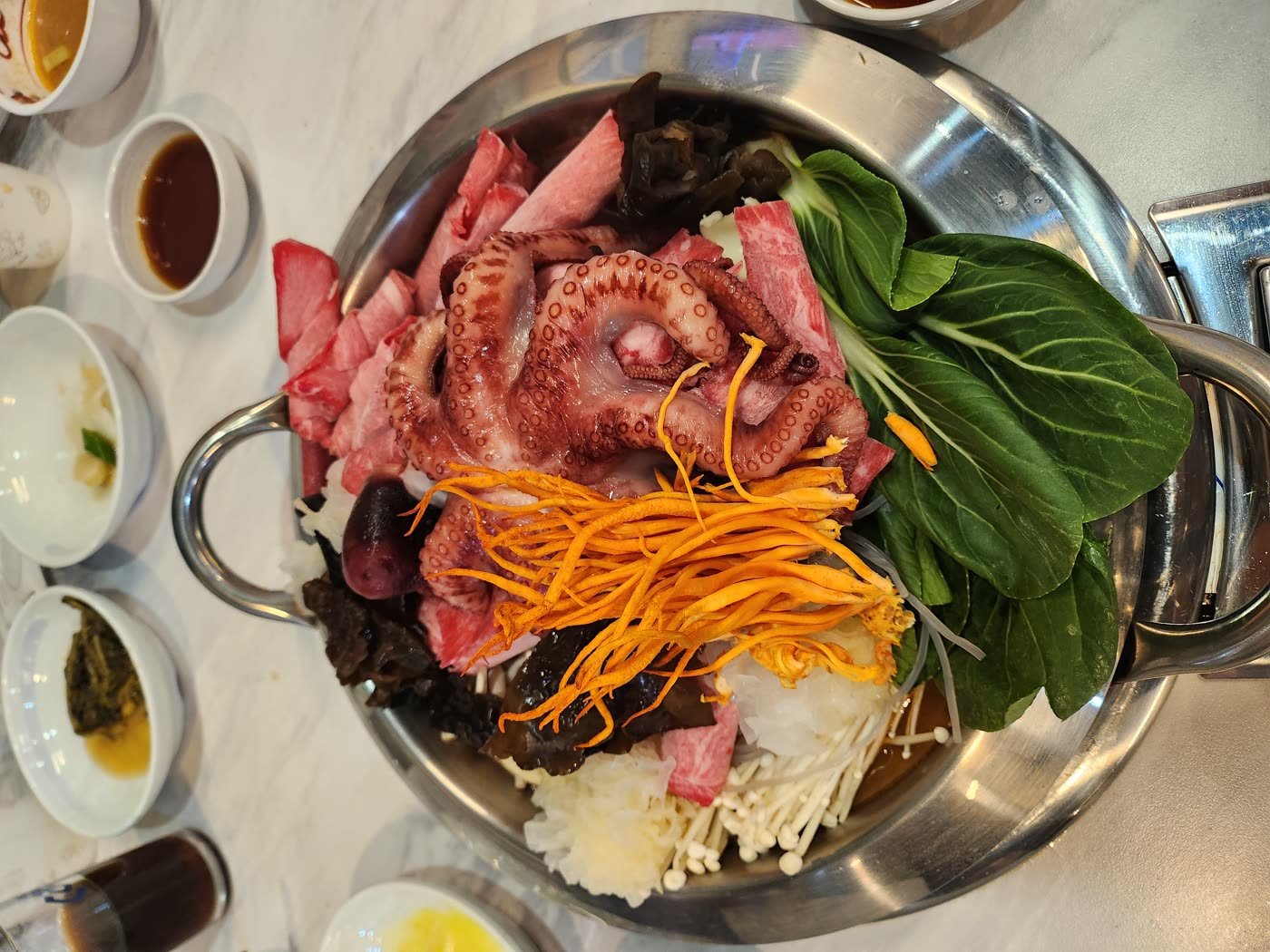
One of the best meals of the trip, at the restaurant we chose because it was nearest.
Last day — Jeonju Hanok Village
We walked the Hanok Village in the morning: street after street of tiled roofs, craft shops and souvenir stalls. Early is better — fewer people, less heat.
Lunch was Jeonju bibimbap at Hanguk-jip. It’s the dish the city is known for and it was the right thing to eat.
But there’s a second one, and I’d argue for it just as hard: kongnamul gukbap, bean sprout soup. We had it separately, near the hotel. Clear, hot, a little spicy, and the better of the two first thing in the morning.
Then Jeonju Station, and ninety minutes on the KTX into Seoul.
Watch it in 48 seconds
No narration. Everything above, in order.
Worth knowing before you go
- Don’t go in July. This is the big one. The heat and the humidity cut what you can do in a day roughly in half. Spring or autumn and this is a different trip.
- Juknokwon at opening time. Nine o’clock and eleven o’clock are not the same place.
- Damyang has no hotels. Guesthouses and hostels. Know that going in and you won’t be disappointed.
- Order the daetongbap. It often comes with the tteokgalbi set; if it doesn’t, order it separately. You can’t get it at home.
- Guksu Street is for looking at. Cheap and atmospheric. Not where you spend one of your meals.
- Four people? Price the taxi. On the Damyang–Jeonju leg it beat the bus for us on time, comfort and very nearly on money.
- In Jeonju, eat both. Bibimbap and bean sprout soup. Don’t leave with only one.
📍 Getting there and around
- Damyang — Jeollanam-do. About 4 hours by express bus from Seoul, 30 minutes from Gwangju
- Jeonju — Jeollabuk-do. About 1 hour 30 minutes to Seoul by KTX
- Damyang → Jeonju — bus via Gwangju U-Square, or a taxi if there are several of you
- Stays — SongSong Hostel, Damyang · Shilla Stay Jeonju Hanok Village
- Juknokwon — central Damyang; go first thing
- Gwanbangjerim — between Juknokwon and Guksu Street, walkable
I didn’t plan this trip. I asked AI to, and then followed it. What it got right and where it fell down is written up separately — the original itinerary is in that post if you want to copy it.
Jeolla is where Koreans go to eat, and nobody writes about it in English. If you can spare a few days away from Seoul, this is where I’d spend them.
If you’ve been to Damyang or Jeonju, tell me what I missed in the comments. I’m going back in spring.