Damyang has a street famous for noodles. Everyone who writes about the town mentions it.
The AI left it out of my itinerary completely.
I went anyway, because how do you go to Damyang and skip the noodle street. It was cheap. It was also not very good.
I have thought about that a lot since. Most articles about AI trip planning are written by people who never got on the bus. Mine is the opposite: I took the plan, I flew to Korea, I rode a bus down to the countryside in late July, and I followed it for three days with two friends and a teenager.
Here is the honest scorecard.
At a glance
- 🗺️ The plan itself: ⭐⭐⭐⭐⭐
- 🍜 Restaurant picks: ⭐⭐⭐⭐☆
- ⏱️ Timing and pacing: ⭐⭐⭐☆☆
- 🚌 Getting between places: ⭐⭐⭐☆☆
- 🌡️ Reading the conditions: ⭐⭐☆☆☆
- In one line: The plan was better than I expected and worse at exactly the thing you’d expect — it cannot feel the weather, and it doesn’t know there are four of us.
What it actually handed me
This is the part that surprised me before the trip even started.
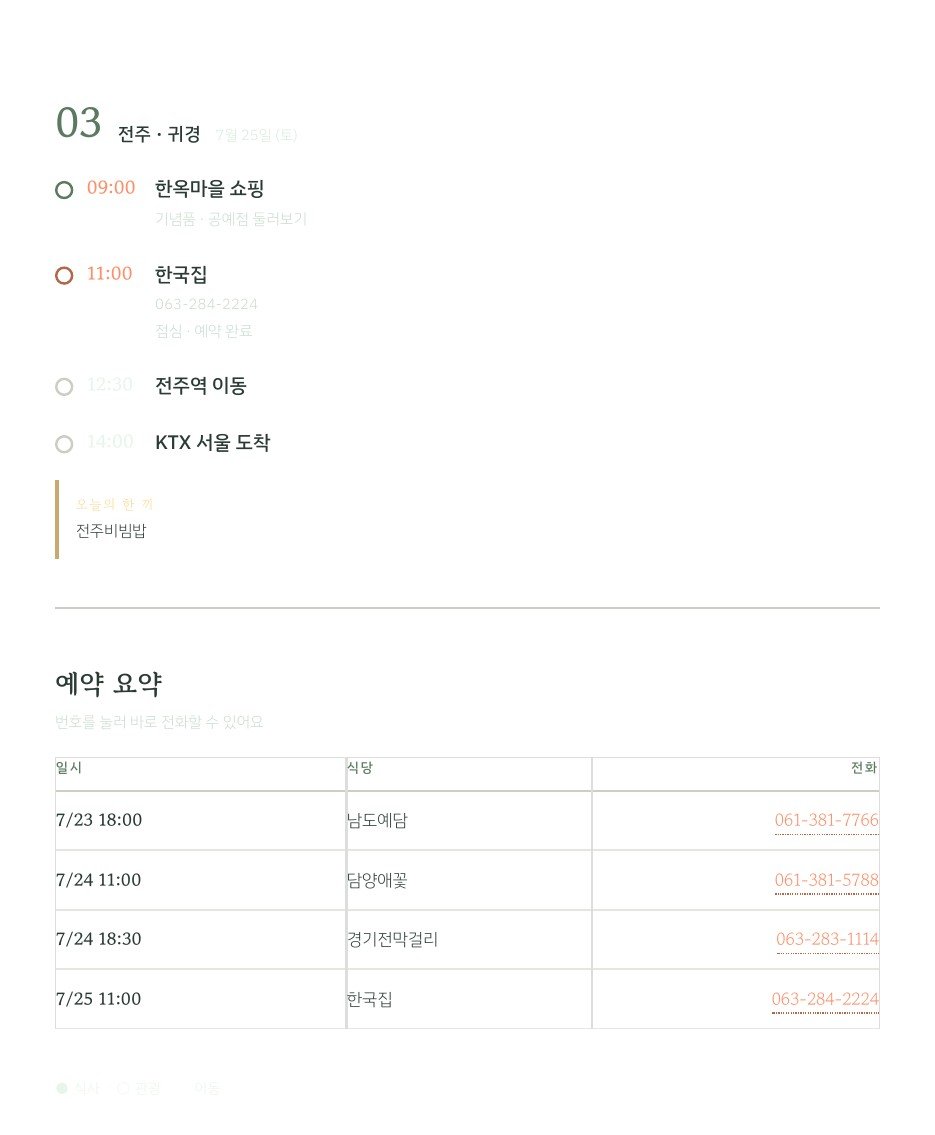
I did not get a wall of text. I got a laid-out itinerary: three days, each stop with a time, the lodging for each night, a dish of the day for each day — and a reservations summary at the back with the phone number for every restaurant, so you could tap to call.
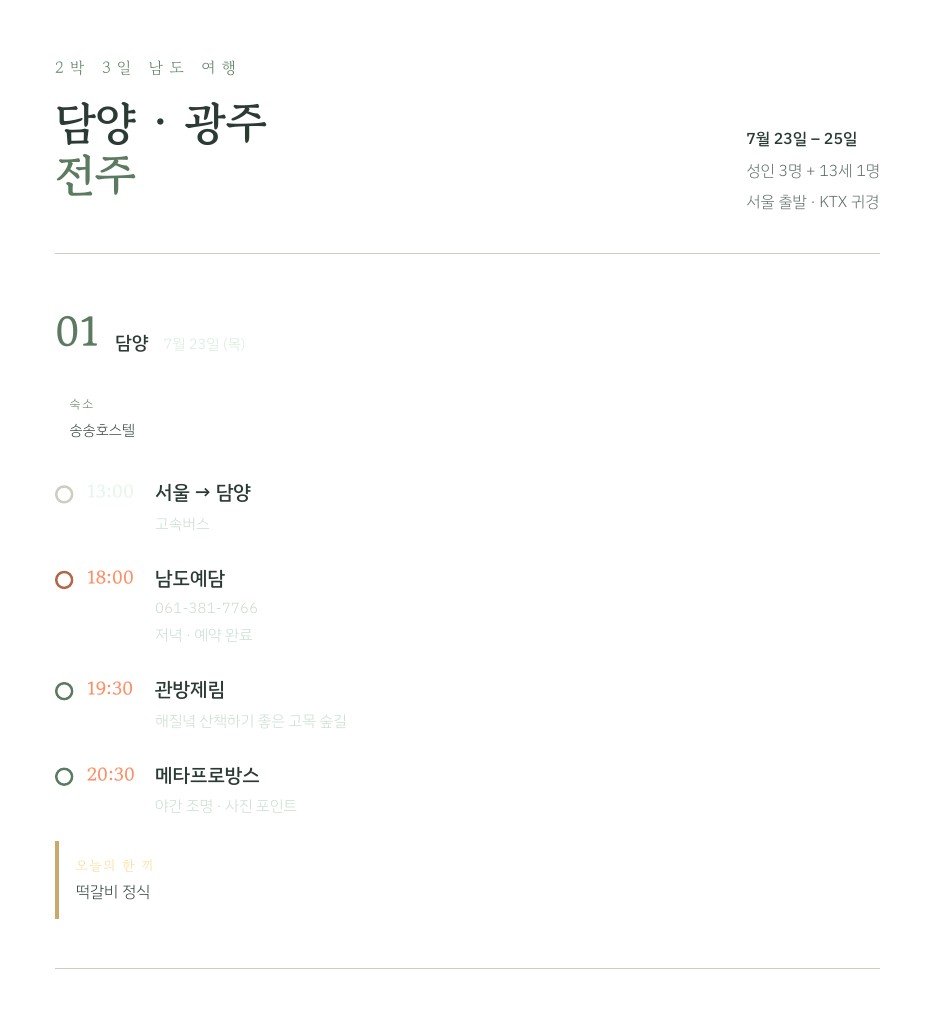
Translated, the three days looked like this:
Day 1 — Damyang (Thu) · Stay: SongSong Hostel
13:00 express bus, Seoul → Damyang · 18:00 dinner at Namdo Yedam (grilled tteokgalbi set) · 19:30 Gwanbangjerim, an old tree-lined levee, good for a walk at sunset · 20:30 Meta Provence, lit up at night, photo spot
Dish of the day: tteokgalbi jeongsik
Day 2 — Damyang → Jeonju (Fri) · Stay: Shilla Stay Jeonju
09:00 Juknokwon bamboo forest — coolest in the morning · 11:00 lunch at Damyang Aekkot · 13:30 Gwangju U-Square → Jeonju · 18:30 dinner, makgeolli spread
Dish of the day: makgeolli hansang
Day 3 — Jeonju, and home (Sat) · 09:00 Hanok Village, crafts and souvenirs · 11:00 lunch at Hanguk-jip · 12:30 to Jeonju Station · 14:00 KTX into Seoul
Dish of the day: Jeonju bibimbap
Three adults and a teenager. Bus down, train back. It even chose that split correctly — the bus goes where the train doesn’t, and the train gets you home faster when you’re tired.
Day 1 — ✅ ✅ ✅ ❌
Damyang has no hotels. It’s a small town. The AI put us in SongSong Hostel and I was braced for the worst.
It was bigger and cleaner than I expected. The bathroom was the weak point — I’ll be honest about that — but the rooms were fine and the location turned out to be the real win, which I’ll get to.
Dinner was right. Tteokgalbi is what Damyang is known for, and the set came with daetongbap, rice steamed inside a length of bamboo. That is a local dish an outsider wouldn’t think to ask for.
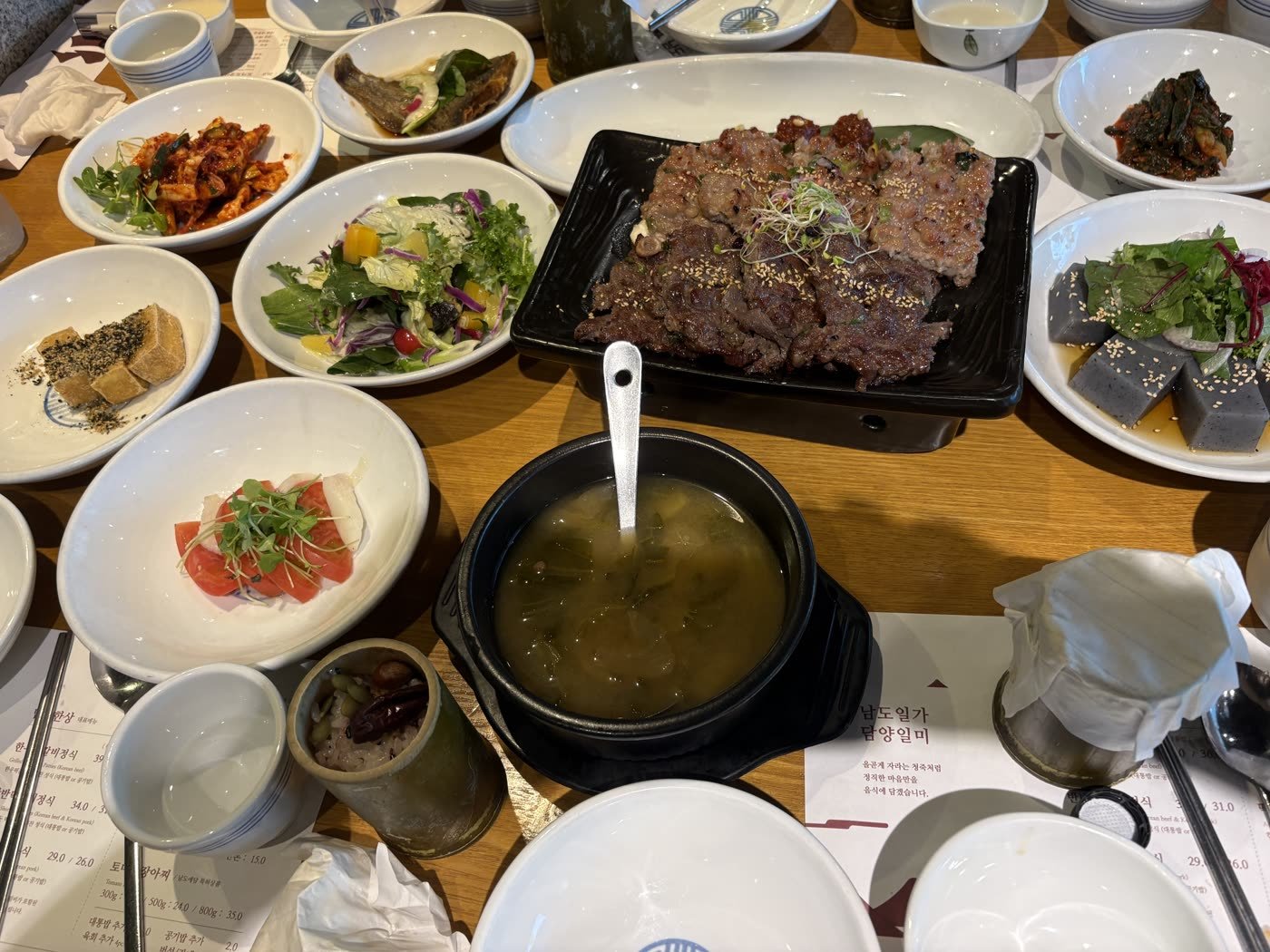
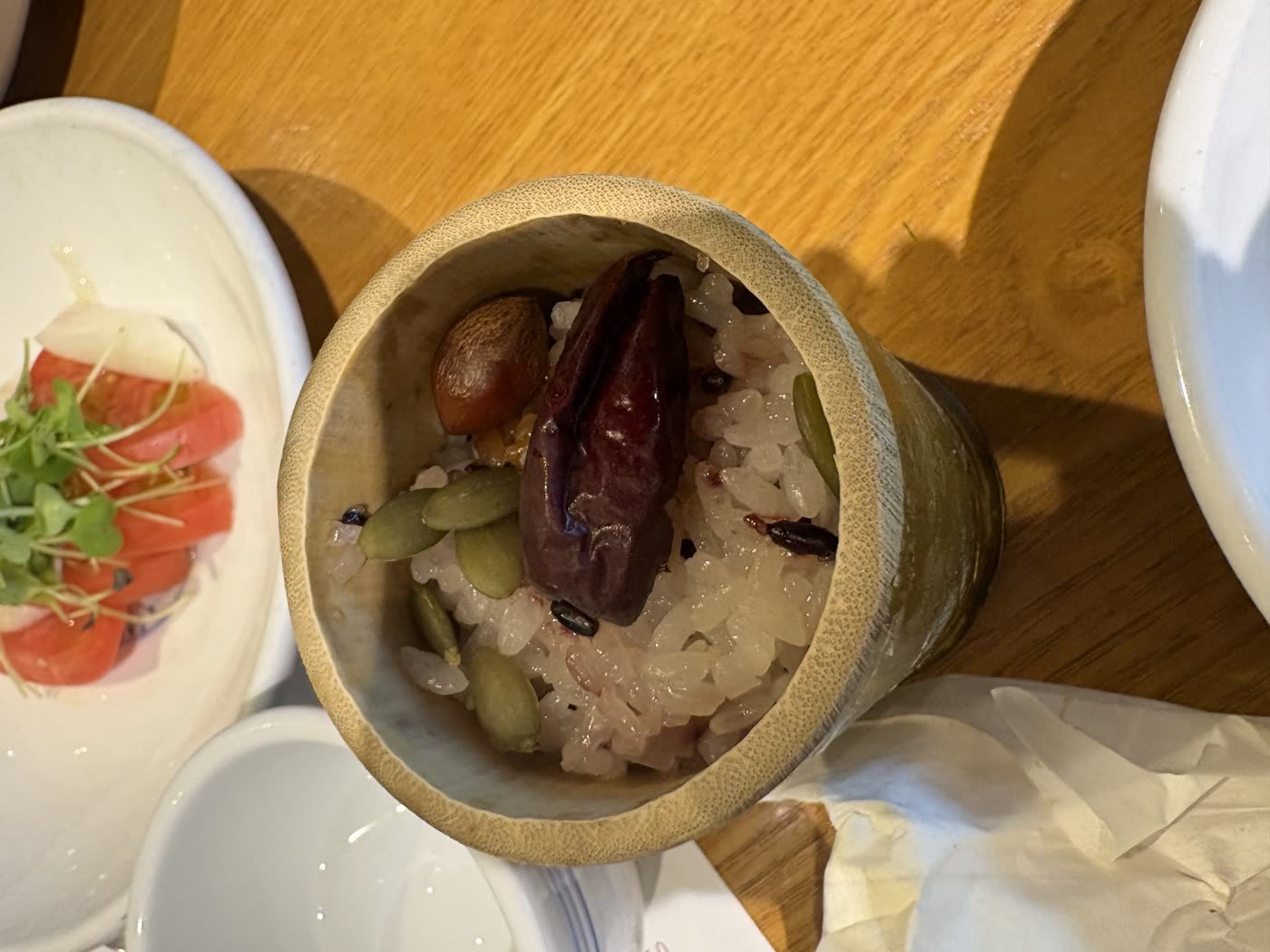
The evening walk was right too. Gwanbangjerim is a levee lined with very old trees, and at dusk it was the best twenty minutes of the day.
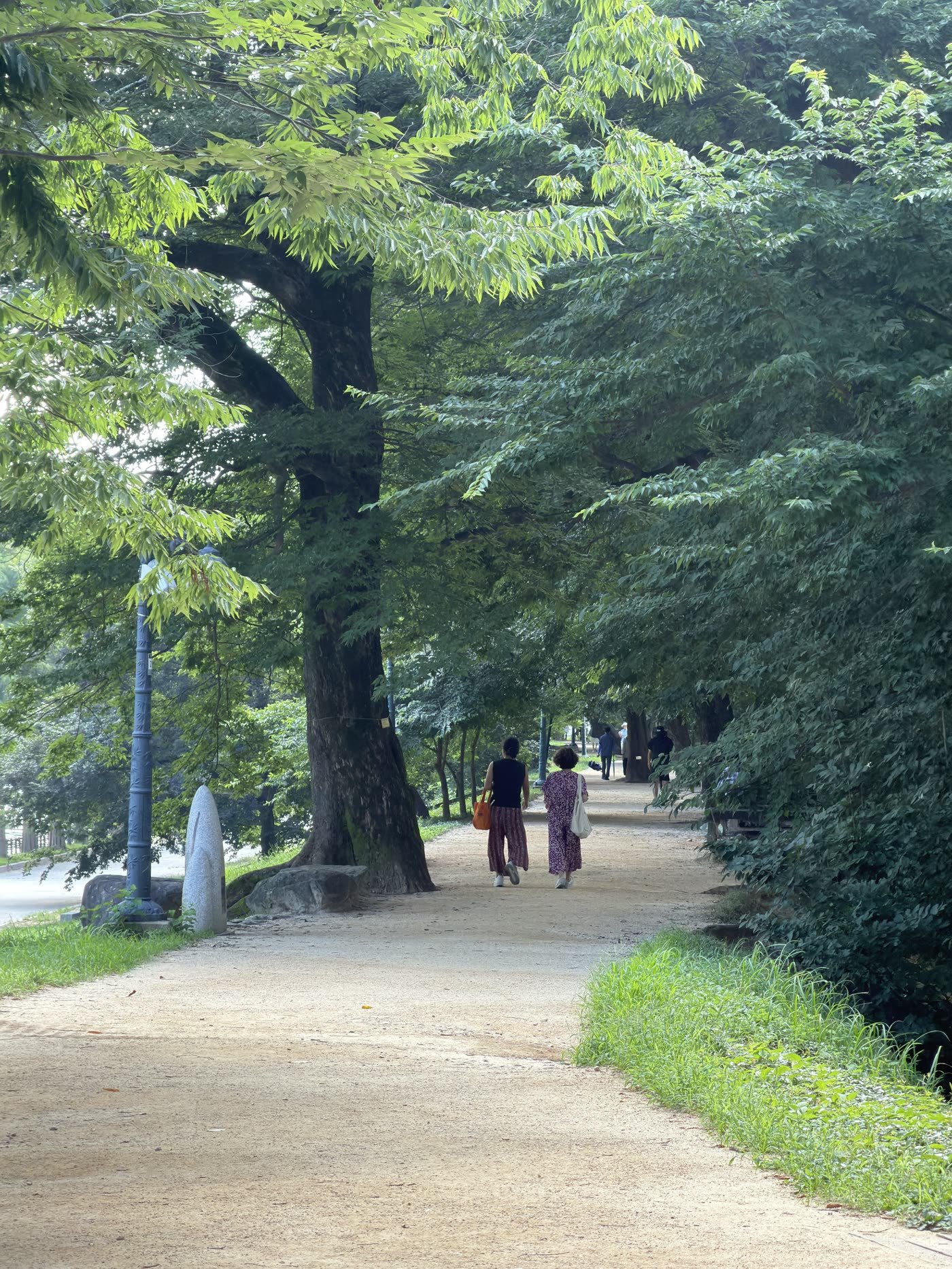
And then we didn’t go to Meta Provence.
Not because it’s bad. Because it was the end of July in southern Korea and by 20:30 we were finished. Four stops in one evening after a bus ride reads fine on paper. In that heat it isn’t.
That’s the first real gap: the plan was built as though the weather didn’t exist.
Day 2 — ✅ ✅ ⚠️ ❌
Here is where it earned the stars back, and then lost some again.
Juknokwon at 9am was the single best call in the whole itinerary. The bamboo forest was a few minutes from the hostel — so the lodging choice paid off — and the plan had a small note next to it: mornings are coolest.
It was right. By late morning we would not have enjoyed it. At nine it was green and quiet and cool in a way nothing else was for three days.
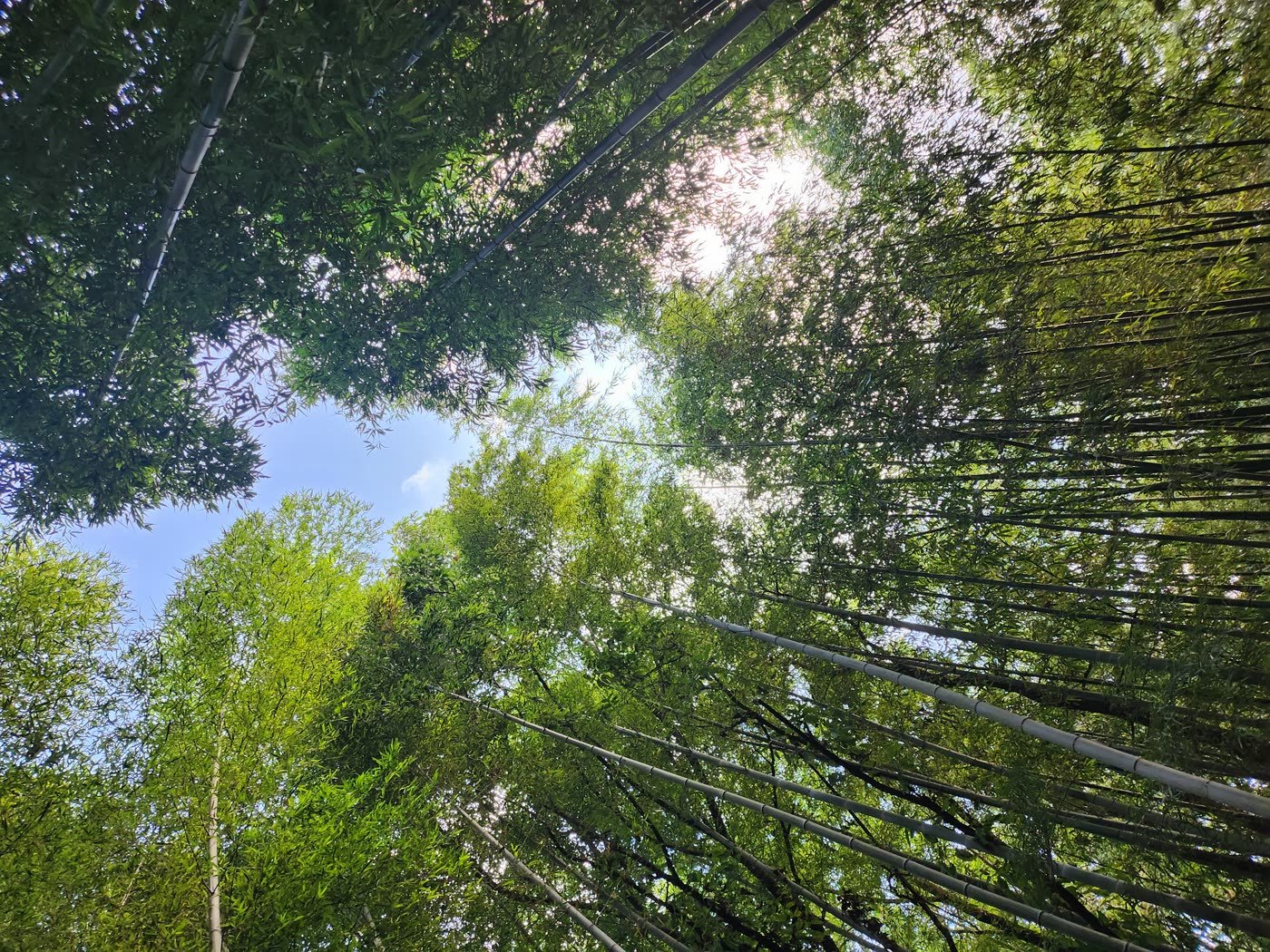
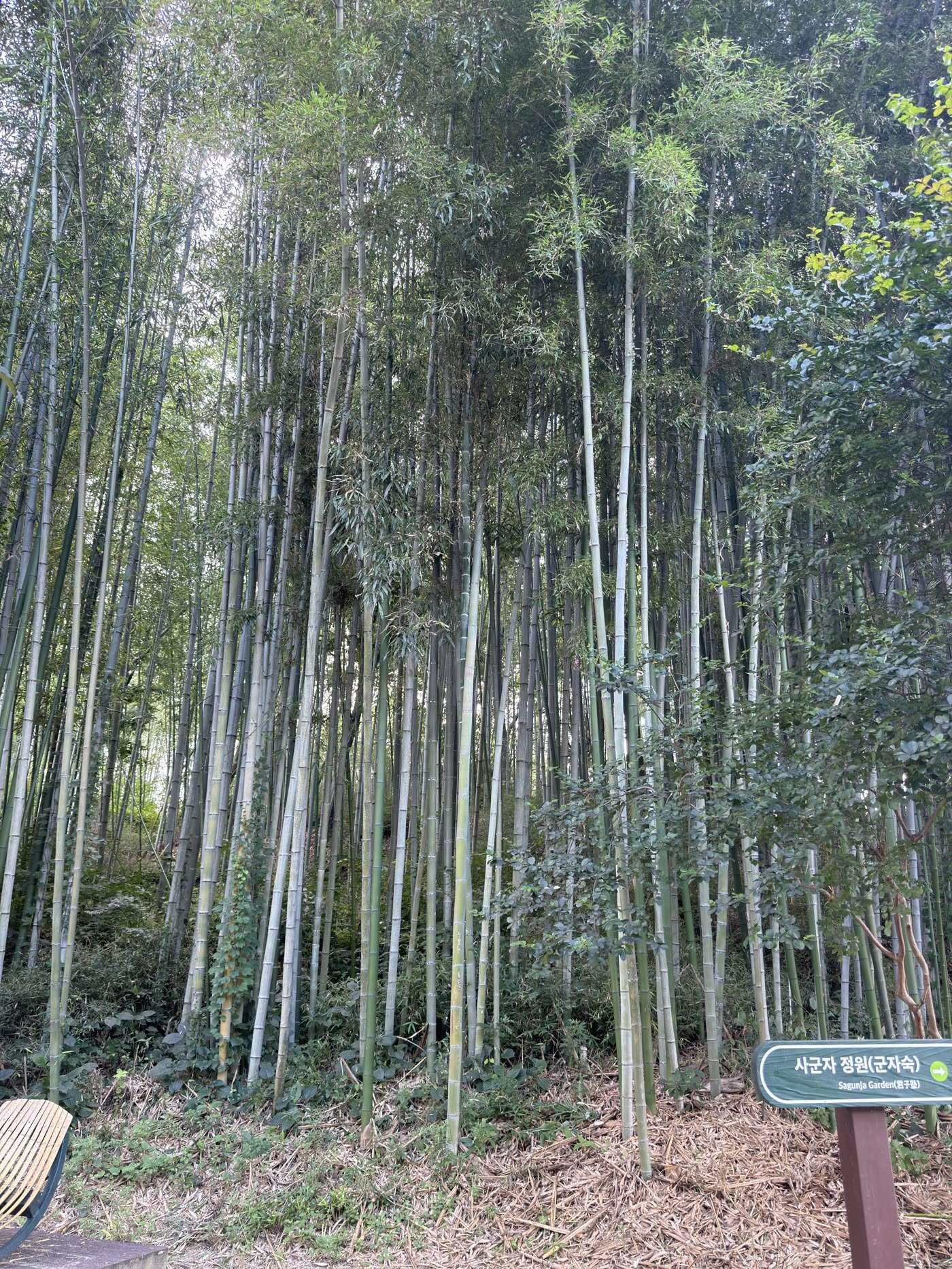
If the weather had been kinder I would have gone back twice more.
Lunch was a proper hansang — a whole table of small dishes, the kind of meal Jeolla province is actually famous for.
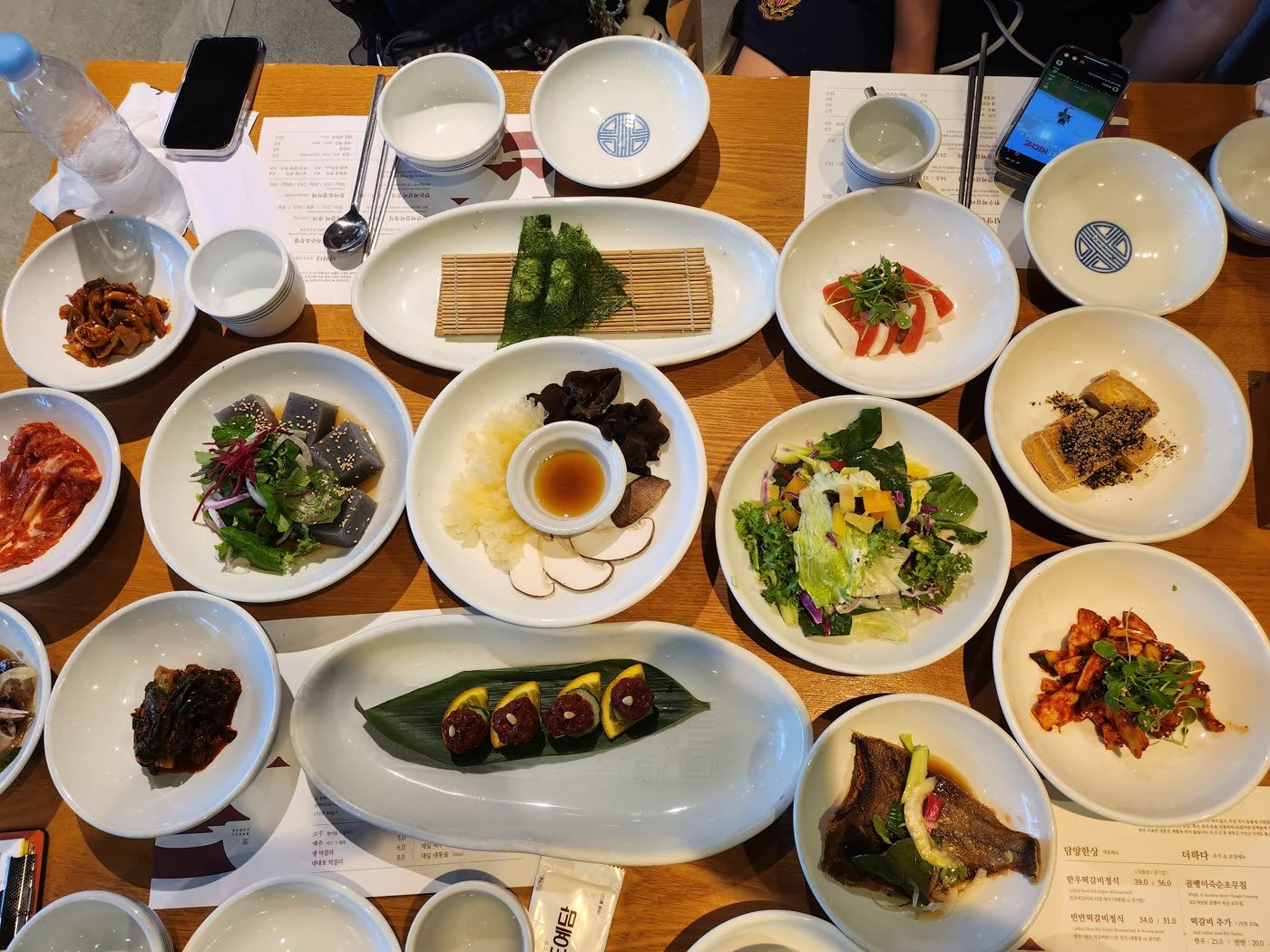
Then came the part where we ignored it, and were right to.
The taxi, and the arithmetic AI doesn’t do
The plan moved us Damyang → Gwangju U-Square → Jeonju by express bus. That is the correct answer. It’s the route, it’s cheap, it’s what any guide would tell you.
We were in a taxi on the way to the bus terminal when the driver said he’d take us all the way to Jeonju for ₩100,000.
There were four of us. Split four ways that’s ₩25,000 each — which is not far off what four bus tickets cost once you’ve paid for the leg to Gwangju and the leg out of it. No transfer, no waiting on a platform at the hottest part of the afternoon, and door to door in a fraction of the time.
We took it. We were in Jeonju before we’d have finished the first bus.
I don’t think the AI was wrong. I think it solved the wrong problem. It optimised the route the way a route is normally optimised — for one person, on a schedule, paying per seat. It never ran the arithmetic that actually applied to us: four people, splitting one fare, in July.
That’s worth knowing before you go, because it’s a rule and not a fluke: the moment your group hits three or four people, every “take the bus” instruction is worth recalculating. AI will almost never do that for you unless you make it.
And then the heat took the evening
The plan for that night was a makgeolli spread in Jeonju — the day’s headline dish, booked, with a phone number next to it.
We didn’t go.
It was too hot to go anywhere. Not “we’d rather not” hot — we are not walking further than we have to hot. So we ate at the place directly across from the hotel, Kkotsalhui, which no plan had ever mentioned.
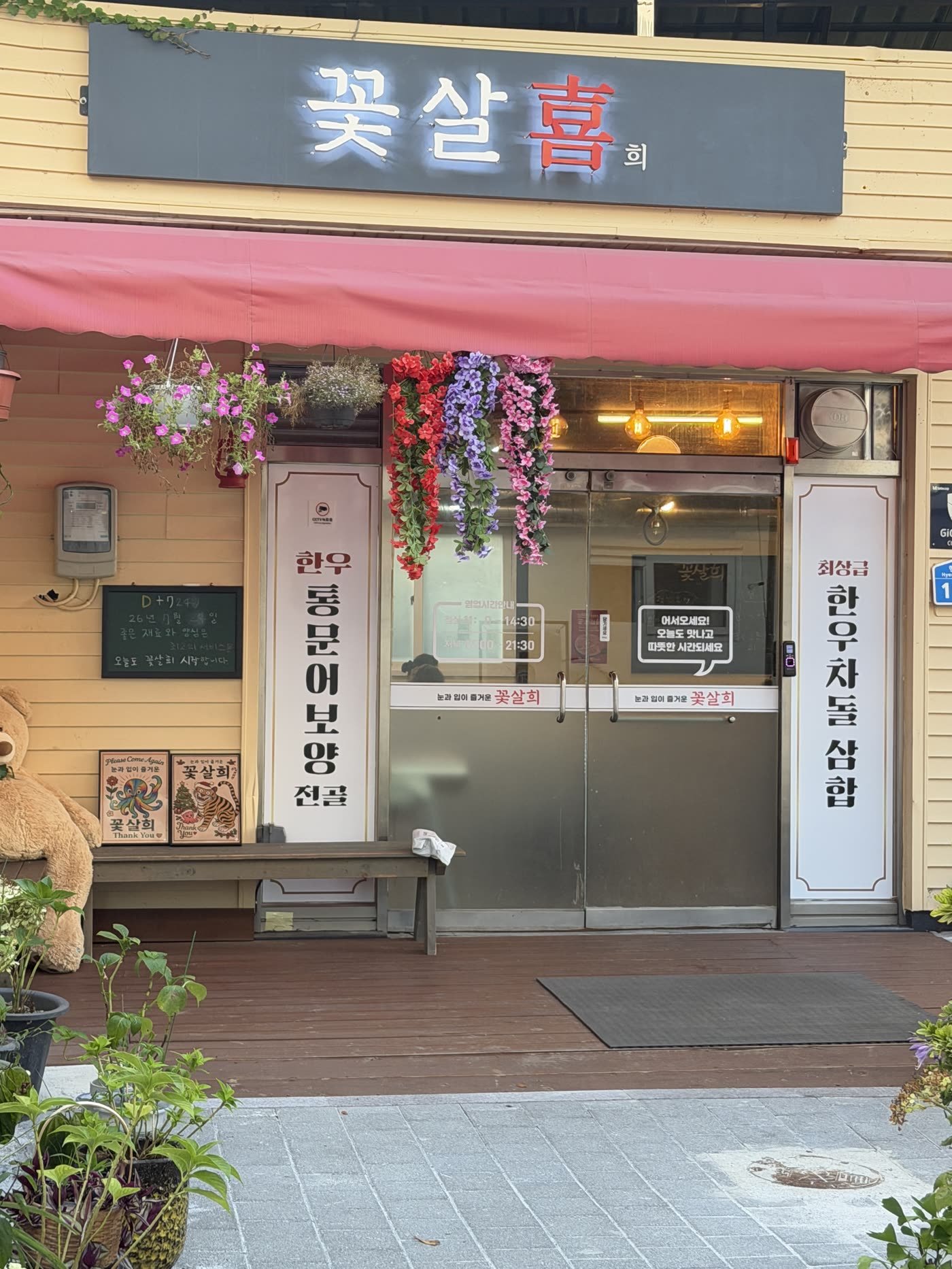
Beef and octopus, grilled at the table and wrapped in lettuce, and then a seafood hot pot after that.
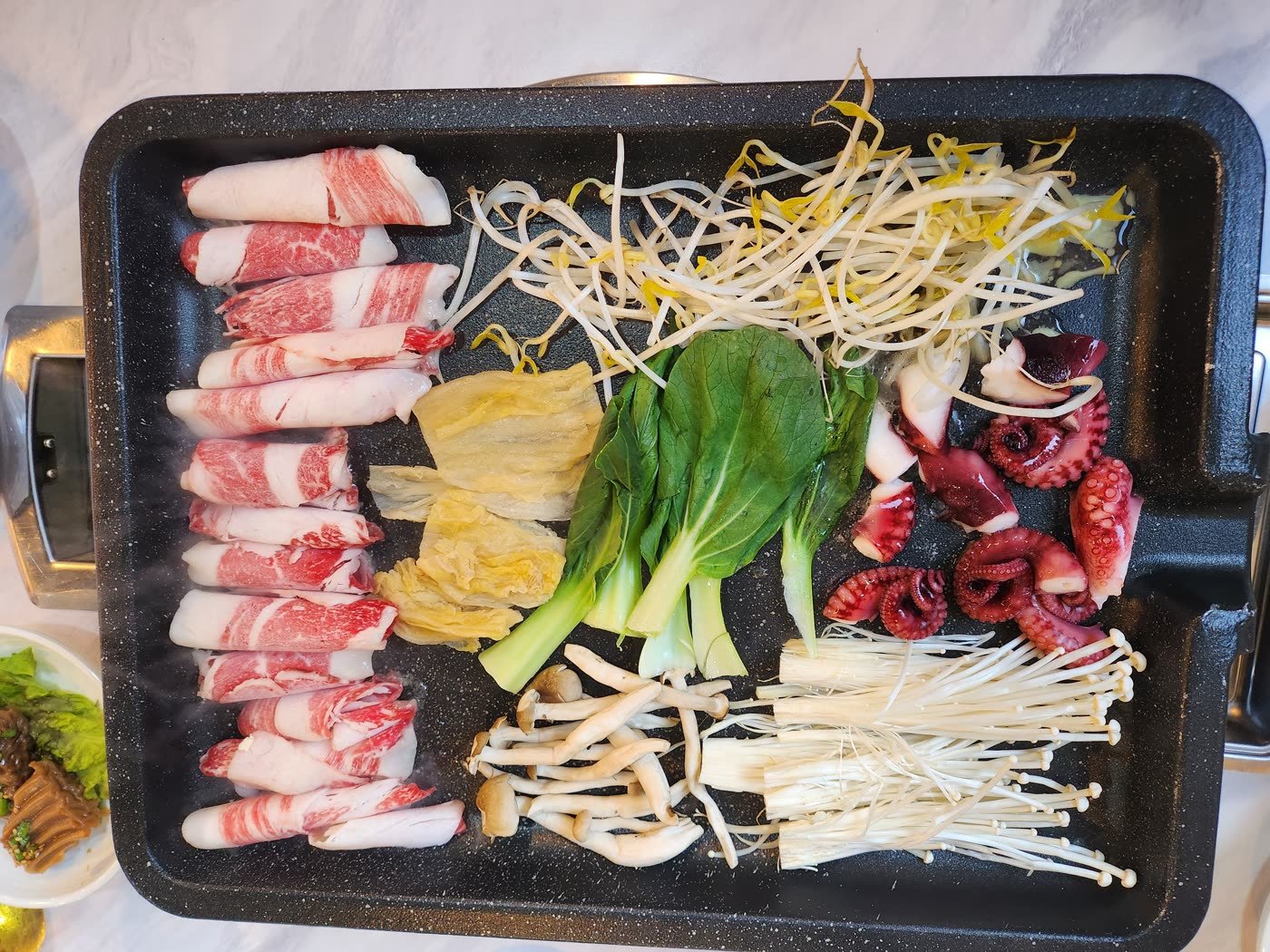
It was one of the best meals of the trip. We found it by giving up.
So the day’s verdict is split: the AI got the morning exactly right and lost the evening — not to a bad recommendation, but to weather it had no way to feel.
The noodle street — the test I set it
Damyang’s Guksu Street is in every guide to the town. Rows of parasols along the water, bowls of janchi guksu for a few thousand won each, a big panda sculpture at the entrance holding chopsticks.
The AI didn’t put it in.
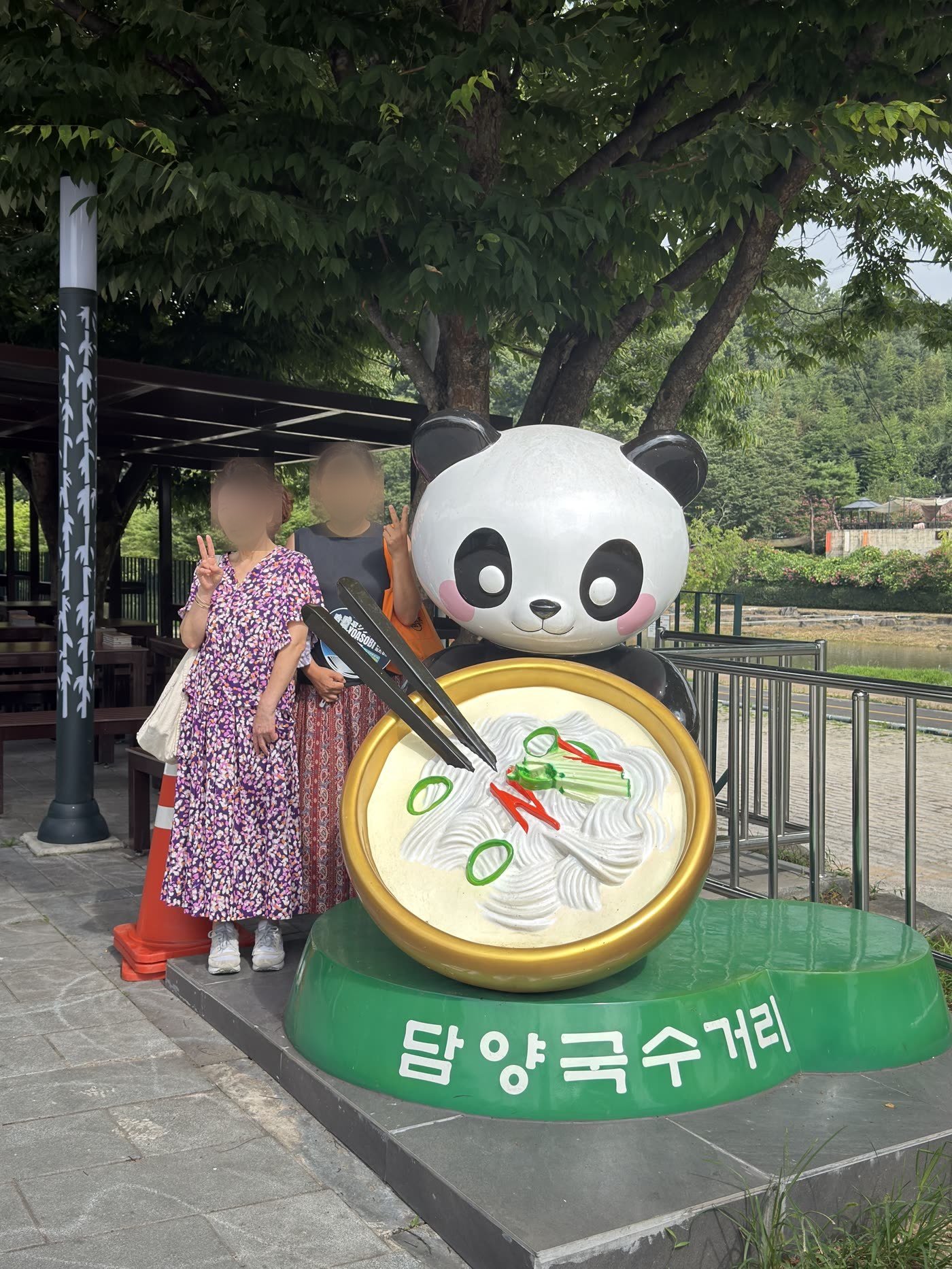
So I went, half to see it and half to catch the AI out.
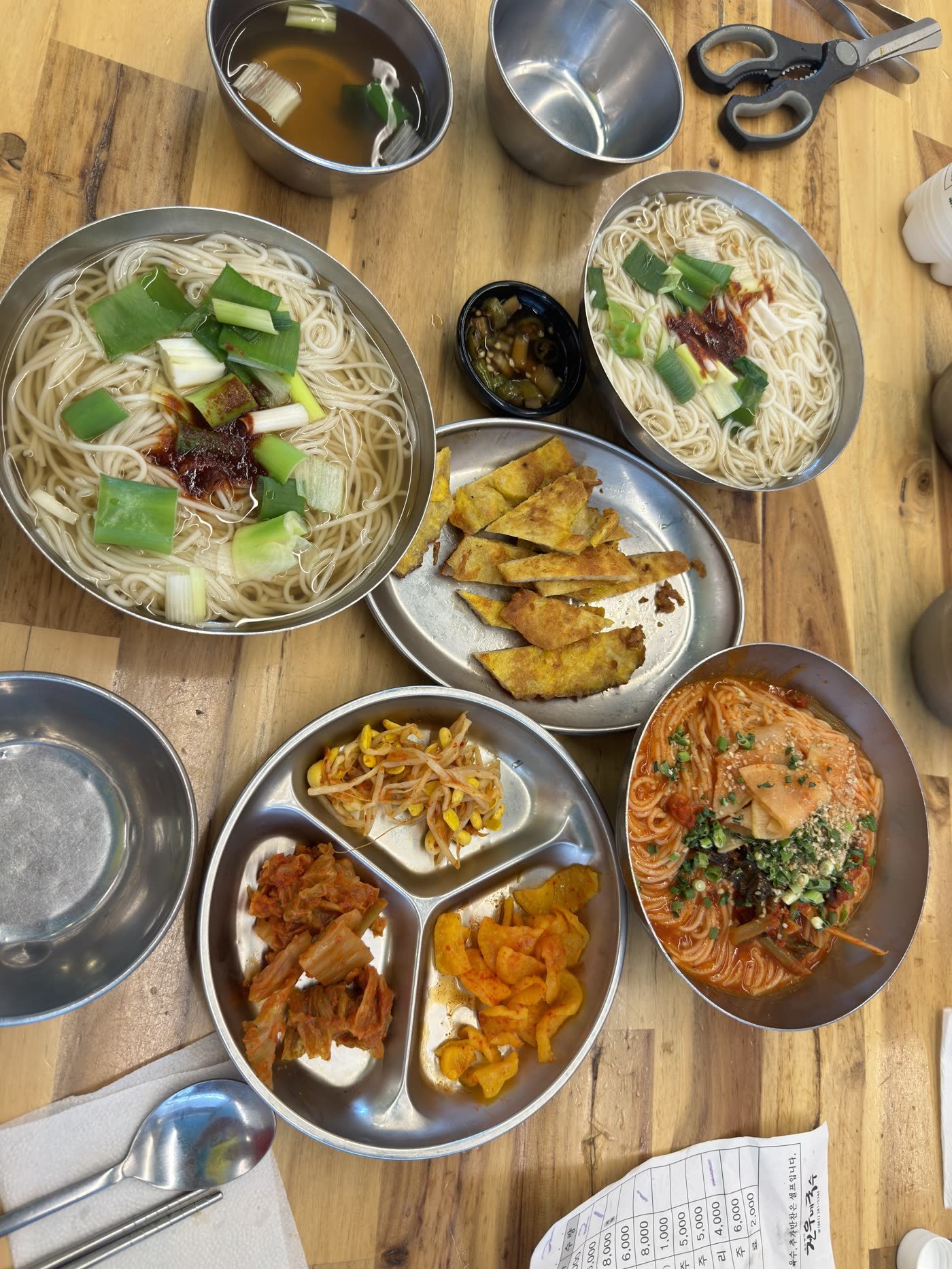
It was cheap. Genuinely cheap — you can feed four people for what one dish costs elsewhere.
And it was not good. Not bad enough to be a story, just flat. We’d eaten better the night before for not very much more.
I walked out slightly annoyed, and then realised why I was annoyed: the AI had already made that call, and I overruled it.
That is not what I expected to be writing. Everyone’s assumption — mine included — is that AI gives you the tourist-brochure version and misses the real places. Here it did the opposite. It skipped the famous thing and kept the good thing.
Day 3 — and the dish that was never on the list
Jeonju went almost exactly to schedule. Hanok Village in the morning, bibimbap at Hanguk-jip, train at two. No complaints.
But there’s one more thing the itinerary never suggested across three whole days: kongnamul gukbap, Jeonju’s bean sprout soup. We had it separately, near the hotel, because we wanted it. It’s one of the two dishes Jeonju is actually known for, and it simply wasn’t on the list — the plan spent all three “dish of the day” slots elsewhere.
So the honest verdict on the food picks isn’t “AI is bad at restaurants.” It’s narrower than that: it chose well, but it chose one thing per day, and Korean cities have more than one thing.
What I’d check myself next time
If you’re going to let AI plan a trip in Korea, these are the things I’d fix before leaving:
- Give it the season, not just the dates. Mine knew it was July and still scheduled four stops into one evening. Say “late July, very hot and humid, we will tire early” and let it cut the day down.
- Ask it for a dish list, not a dish a day. One “dish of the day” per city is too thin. Ask “what are all the foods this city is known for” and choose yourself — that’s how I’d have caught the bean sprout soup.
- Tell it how many of you there are, and make it redo the transport. Four people change the answer. Ask it directly: “we are four — compare the bus against a taxi, per person.” Left alone it will keep handing you the solo-traveller route.
- Keep one meal a day unbooked. The best thing we ate was the one we found because we couldn’t be bothered to walk. A plan with no gaps has no room for that.
- Trust it on the famous things you’re tempted to override. This is the one I’d say twice. It left the noodle street out, and it was right, and I didn’t believe it.
One thing I wouldn’t change: let it make the reservations list. Having every restaurant’s phone number in one place, with the times, saved us more trouble than anything else in the document.
Watch the trip in 48 seconds
No narration. The bamboo forest, the food, the noodle street, and the meal we found by giving up.
📍 The trip, in short
- Where: Damyang and Jeonju, Jeollanam-do and Jeollabuk-do, South Korea
- When: Three days in late July — hot and humid; the plan needs to account for it
- Getting there: Express bus from Seoul to Damyang, KTX back from Jeonju to Seoul
- Staying: SongSong Hostel in Damyang (the town has no hotels; the hostel was better than expected, the bathroom less so) · Shilla Stay Jeonju
- The one stop to keep: Juknokwon bamboo forest, first thing in the morning
- The one the AI was right to skip: Guksu Street
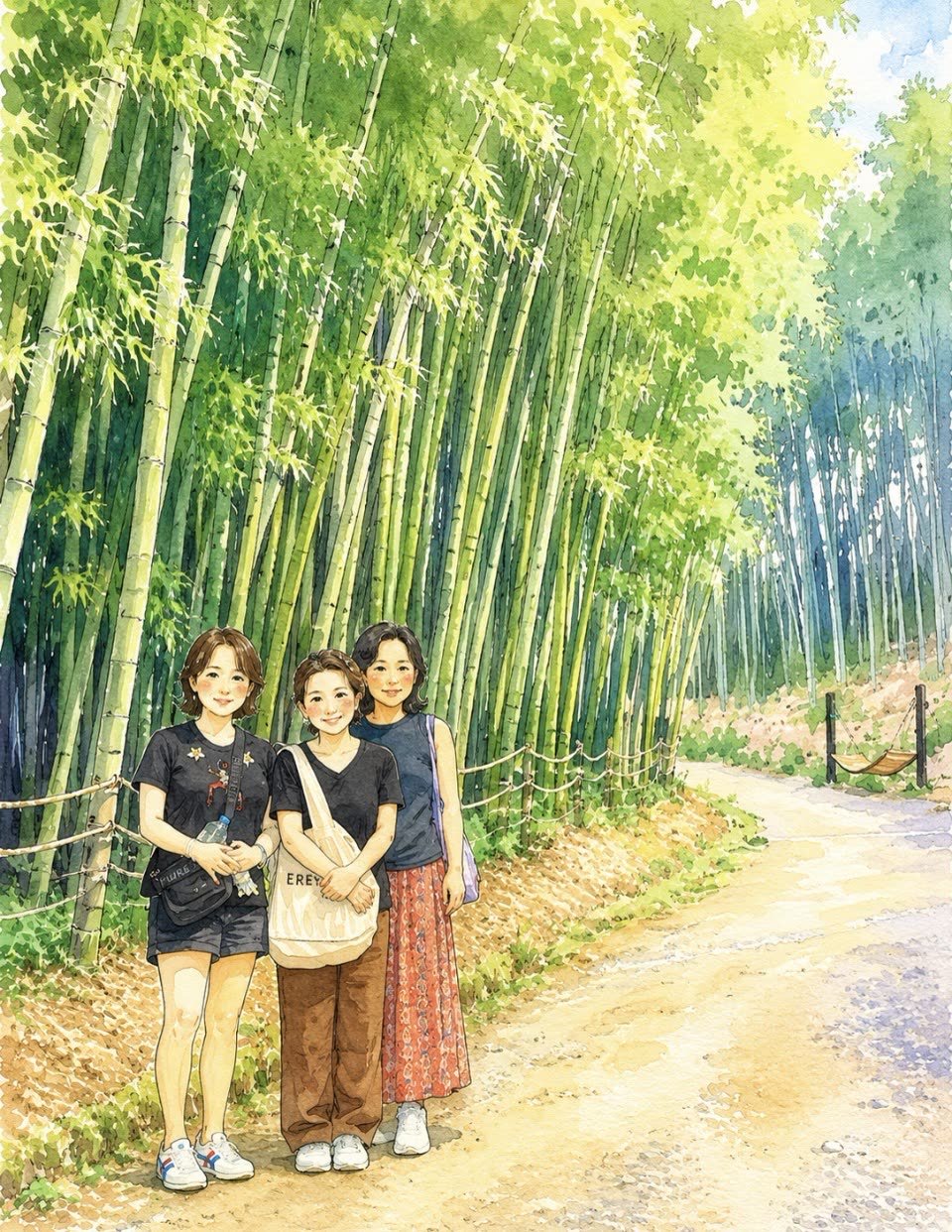
The drawings of us in this post are AI too — friends turned our photos into illustrations. Which is a strange thing to sit with at the end of a trip an AI planned: the itinerary, and then the pictures of us following it.
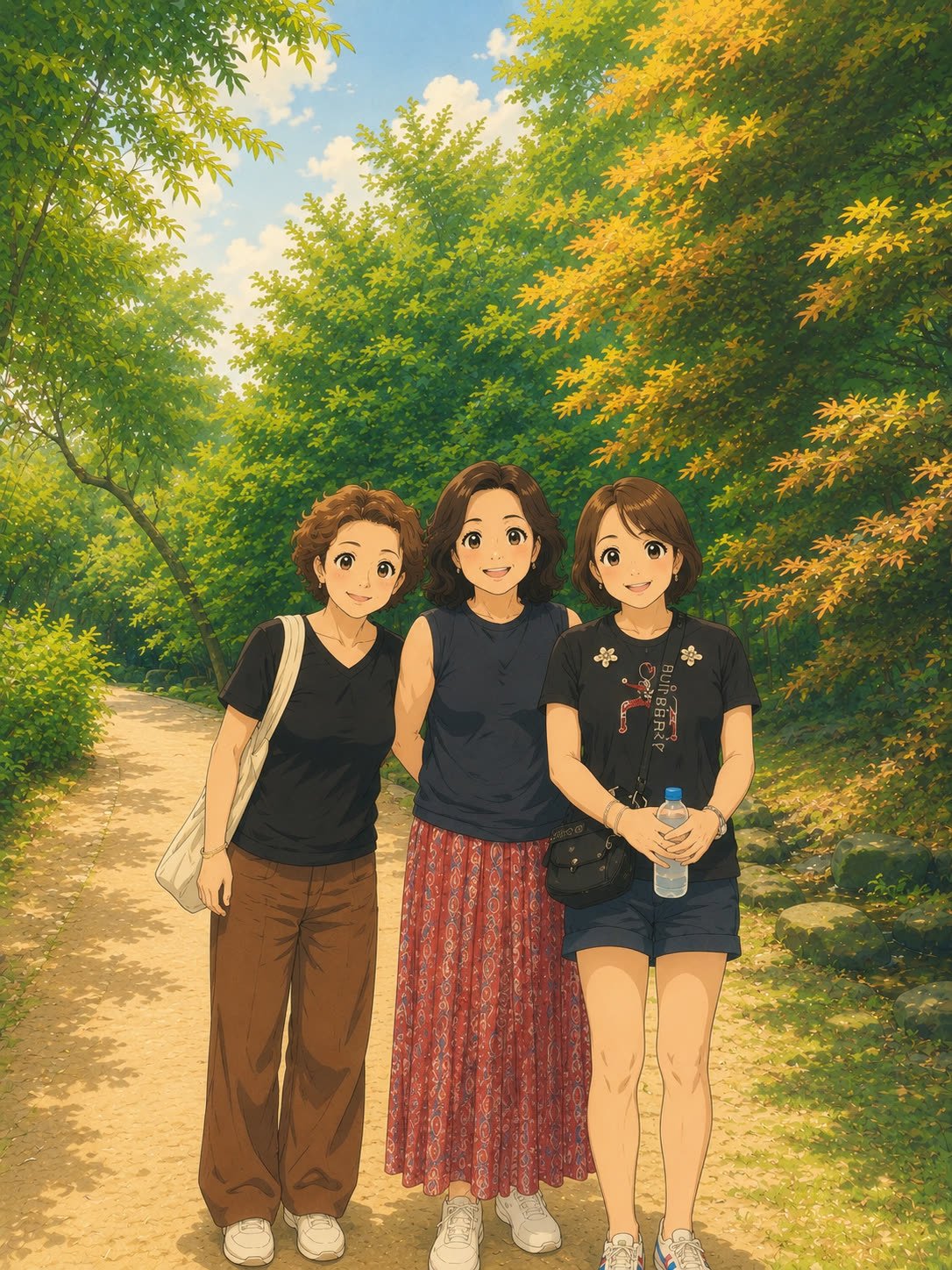
I’d use it again. Not instead of asking someone who’s been — but it got us onto the right bus, into the right forest at the right hour, and it was right about the noodles when I wasn’t.
The trip itself, with everything we ate: three days in Damyang and Jeonju
If you liked the honest-scorecard approach: what actually got views on my AI music channel — same idea, different experiment.
And the one before that: I restored my old family photo with AI
If you’ve let AI plan a trip and it got something badly wrong — or surprisingly right — tell me in the comments. I want to know whether the noodle street was a fluke.