
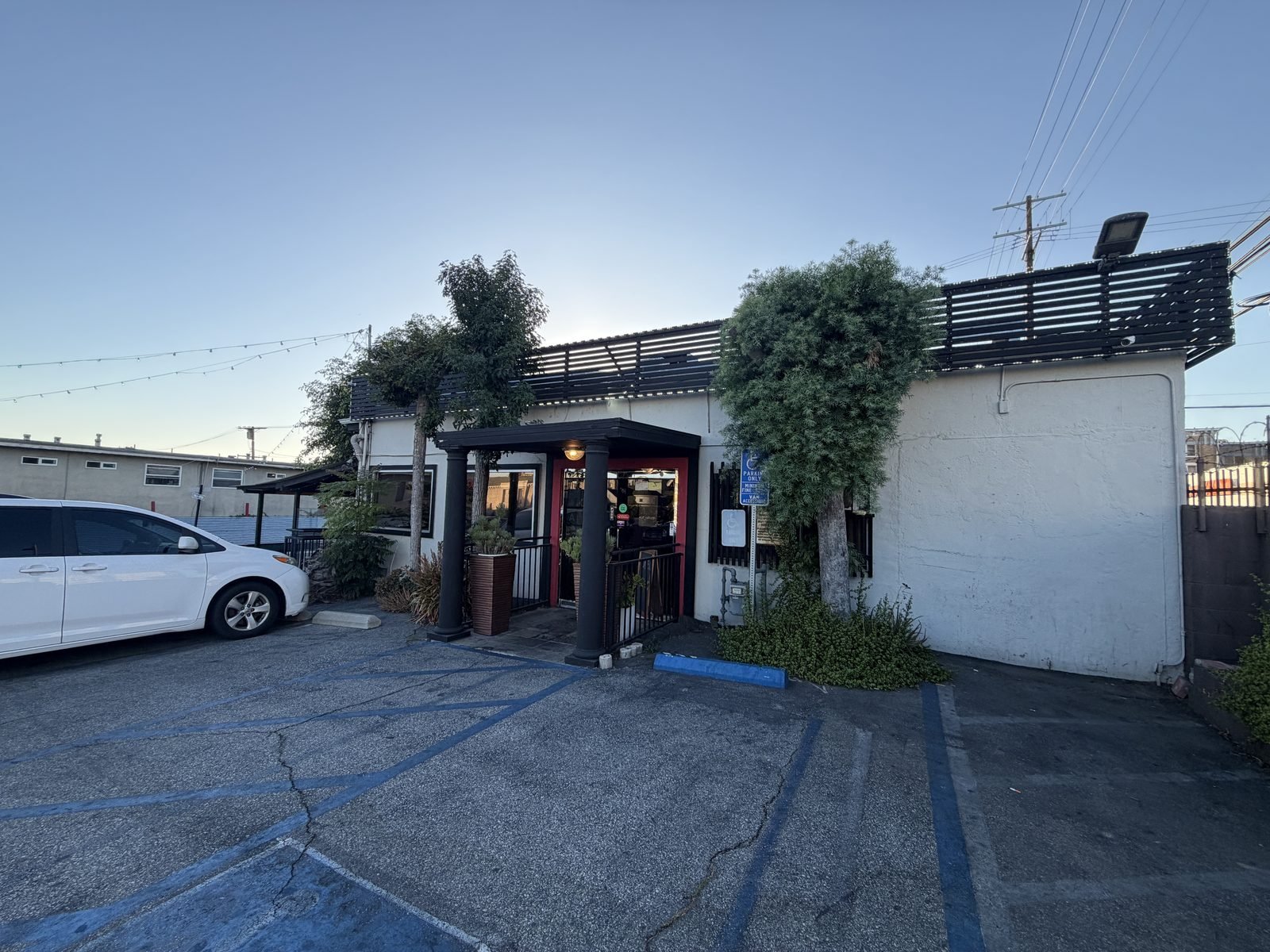
There is a sign on a telephone pole on James M Wood Boulevard with three Korean characters and a small drawing of a fish on a line. No English except the romanized name. If you were not looking for it you would drive past, and most people do.
Behind it is one of the few places in Los Angeles cooking blowfish.
What this place actually is
Most Korean seafood restaurants in Los Angeles are generalists. They do a bit of everything — some grilled fish, a stew, a few plates of raw fish — and they do it competently.
DaeBokJung is not that. The menu opens with blowfish and monkfish and stays there for most of a page: bokjjim, steamed blowfish with vegetables; bokjiri, the clear blowfish broth; bokmaeuntang, the red one. Then the same three treatments again for monkfish. Twenty numbered dishes before you reach the grilled fish, and the great majority of them are one of two fish prepared several different ways.
That is a specialist’s menu, and it tells you where to look. The name says it too — bok is the Korean word for blowfish.
Two dishes are what the restaurant is known for: bokjiri, the clear blowfish soup, and agujjim, the spicy braised monkfish. If you take only two names away from this, take those.
Start with the halibut sashimi combo
If you are four or five, this is what I would order.
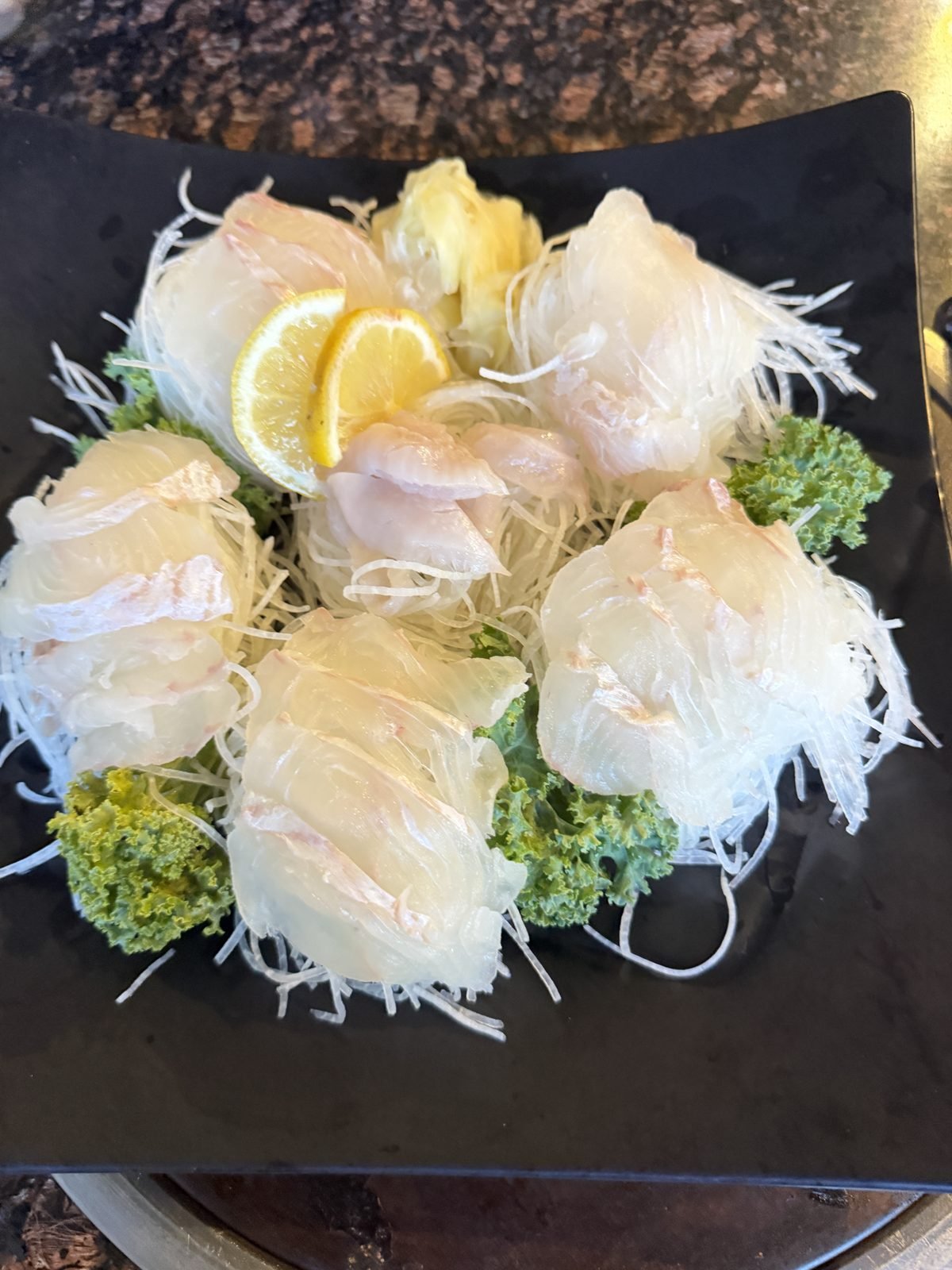
The gwangeo-hoe combos come in three sizes and each one is really a set menu built around a platter of halibut sashimi: the raw fish, then a monkfish soup in either the clear or the spicy version, then steamed monkfish, then sweet and sour monkfish, a grilled fish, steamed egg, and a kimchi pancake. One order covers the table.
The halibut arrives first, sliced thick and folded over shredded daikon, and it is worth saying that the kitchen cuts it properly — each piece has some weight to it rather than the thin, almost translucent slices you get when a place is being careful with cost. There is a smaller “halibut only” option if you just want the platter without the rest of the meal.
What makes the combo the right call is that it walks you through the kitchen’s whole range in one sitting. You end up tasting the soup, the braise, the fry and the grill without having to guess which of twenty numbers to point at.
The blowfish and the monkfish
The two soups are the heart of this place and they are opposites.
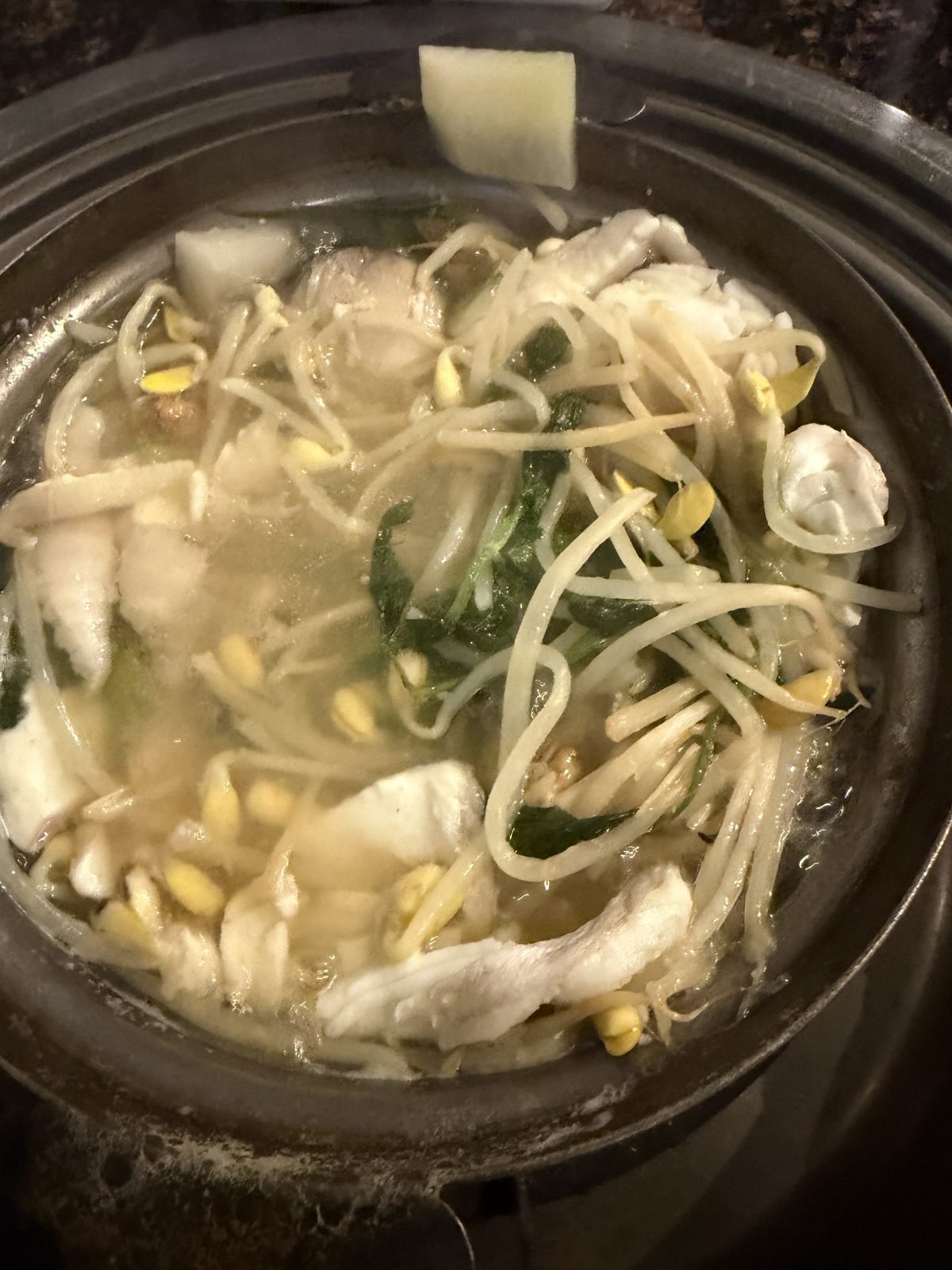
Jiri is the clear one — fish, bean sprouts, radish, a little green onion, and almost nothing else. It is seasoned at the table rather than in the pot, which is traditional and which also means the first spoonful tastes like very little until you adjust it. Give it that. Underneath the plainness there is a clean, almost sweet broth, and it is the version most Korean diners order when they want to taste the fish rather than the seasoning. The monkfish version is the one I come back for.
Maeuntang is the red one, and it does what you expect.
And do not let them clear the pot. When the soup is mostly gone, someone comes over and turns what is left into juk — rice stirred into the remaining broth until it thickens into porridge. It arrives at the end of the meal, and it is the strongest argument for ordering the clear soup rather than the red one. The fish has been in that broth the whole time; the porridge is where you finally taste it.
There used to be a step before that one. The kitchen made its own sujebi — hand-torn dough, rolled so thin it was nearly translucent and kept frozen — and you would drop it into the jiri after the fish and before the porridge. It was the best thing on the table. They have stopped making it; it takes too much hand work. I still think about it.

Then there is agujjim, the braise — monkfish and a mountain of bean sprouts in a thick red sauce, served in a wide bowl and meant to be shared. The sauce clings rather than pools, and the bean sprouts stay crisp, which is the part most places get wrong. It is the dish this place is known for, and it earns that.
A note on blowfish, since people ask: it is a regulated fish and preparing it requires specific training, which is exactly why so few restaurants carry it. That scarcity is the reason to come here rather than a reason to hesitate.
The grills and the fried things
Past the soups the menu opens up.
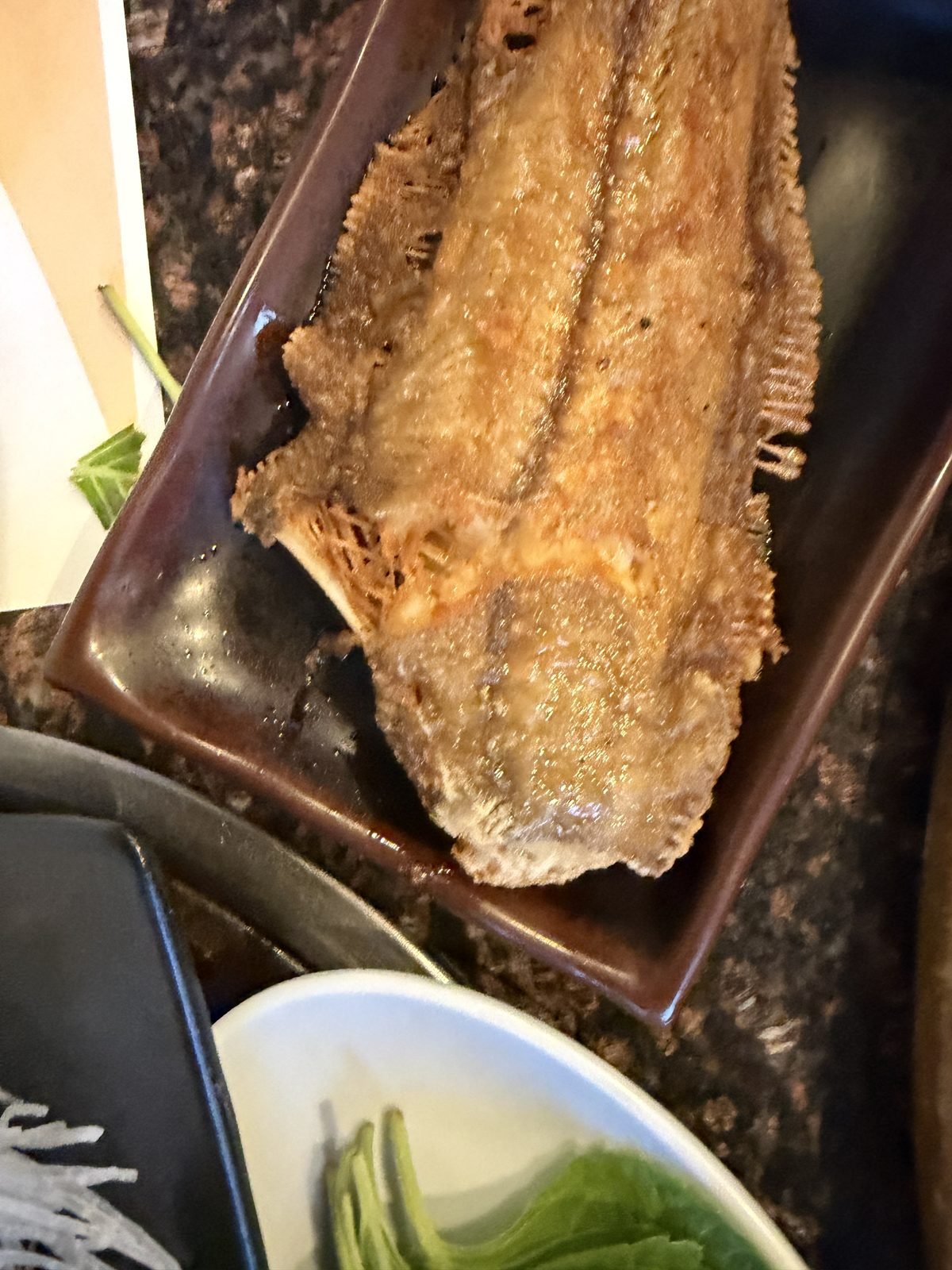
The grilled fish list is long — pollock, atka mackerel, flatfish, croaker, mackerel, freshwater eel — and they come out whole, skin crisp, nothing on them but salt. The flatfish is the one I would point a first-timer at: it is cooked hard enough that the fins go brittle and you can eat the edges.
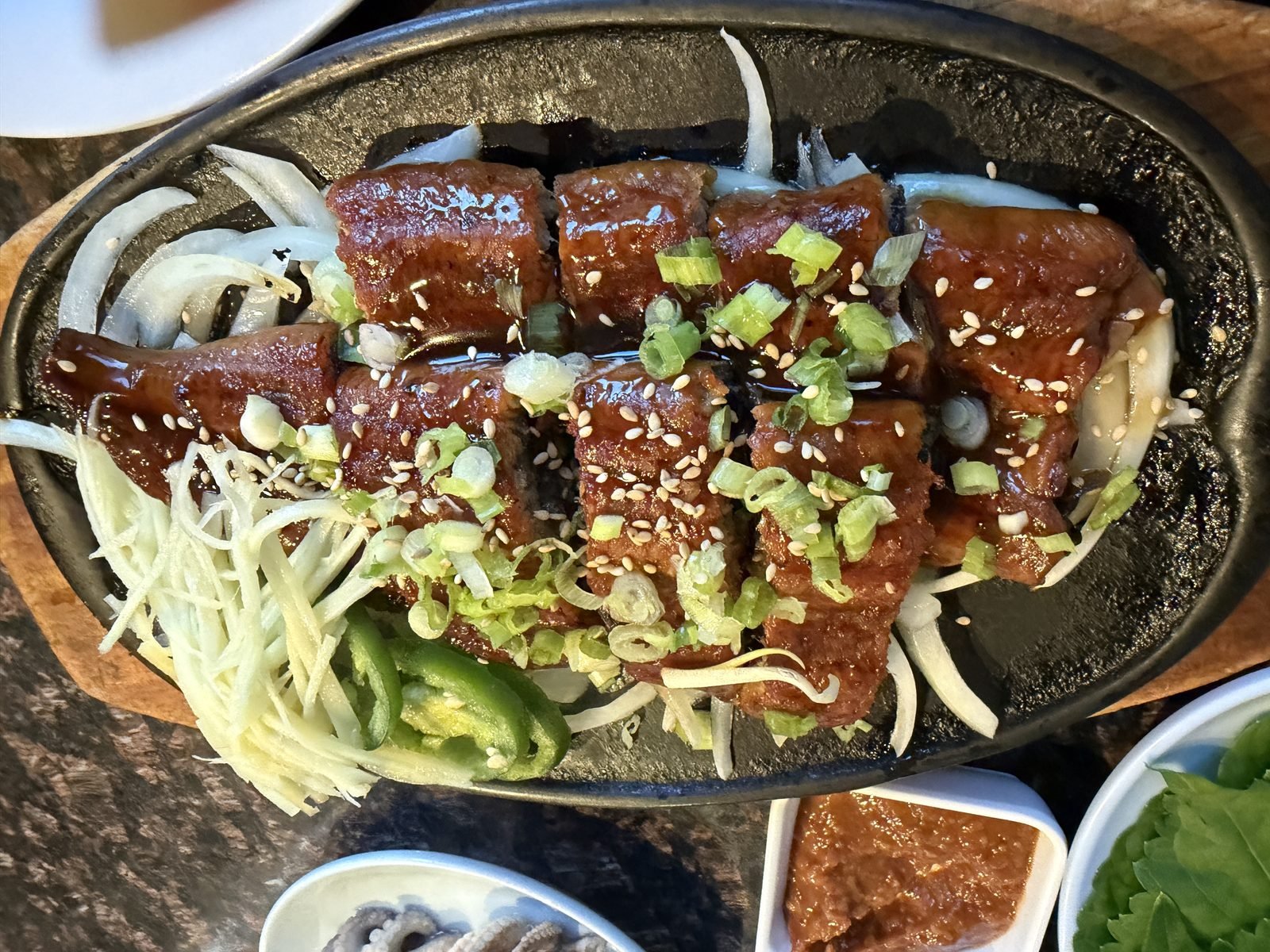
The glazed eel comes to the table on a hot plate over onions and cabbage, cut into sections and scattered with sesame and green onion. It is the sweetest thing on the menu and it goes quickly.
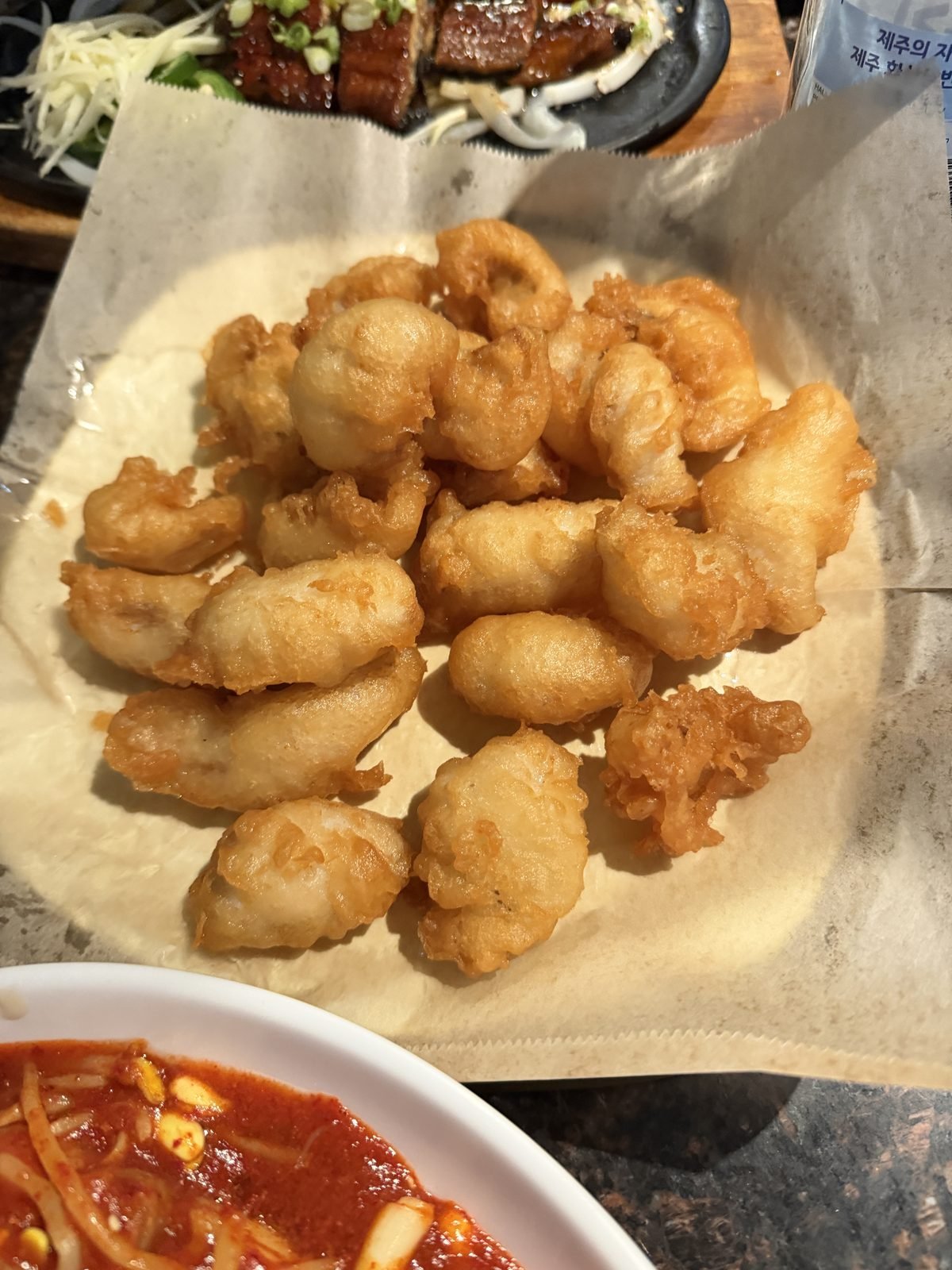
And then the fried monkfish, which is the sleeper. It arrives on paper, pale gold and barely battered, with the sweet and sour sauce in a separate bowl rather than poured over the top. That is the detail that matters — the pieces stay crisp for the whole meal because nothing is sitting in liquid. If you have anyone at the table who is nervous about blowfish and bean sprouts, order this for them and the problem solves itself.
The banchan

Small and a little unusual: kimchi, seasoned seaweed, pickled radish, and — this is the one that surprised me — a macaroni salad and a plate of plain steamed broccoli with gochujang to dip. Not a long parade of dishes, but it suits the food. When the main course is a clear fish broth you do not want eight competing side dishes in front of it.
The menu
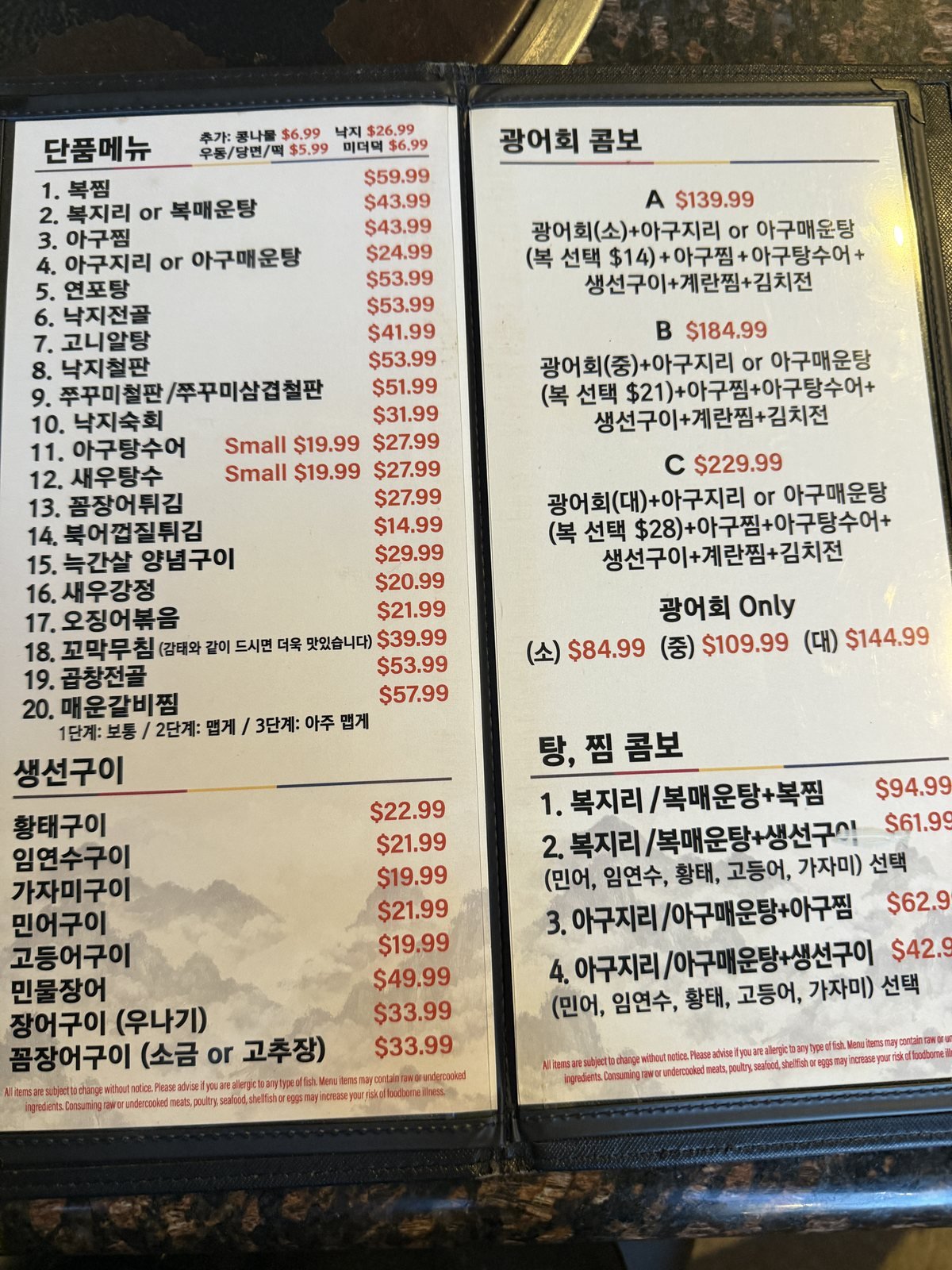
It is written in Korean, but the numbered list makes it workable even if you do not read it — say the number, or point. The first four items are the whole idea of the restaurant: steamed blowfish, blowfish soup in either version, braised monkfish, monkfish soup in either version. Everything after that is the supporting cast.
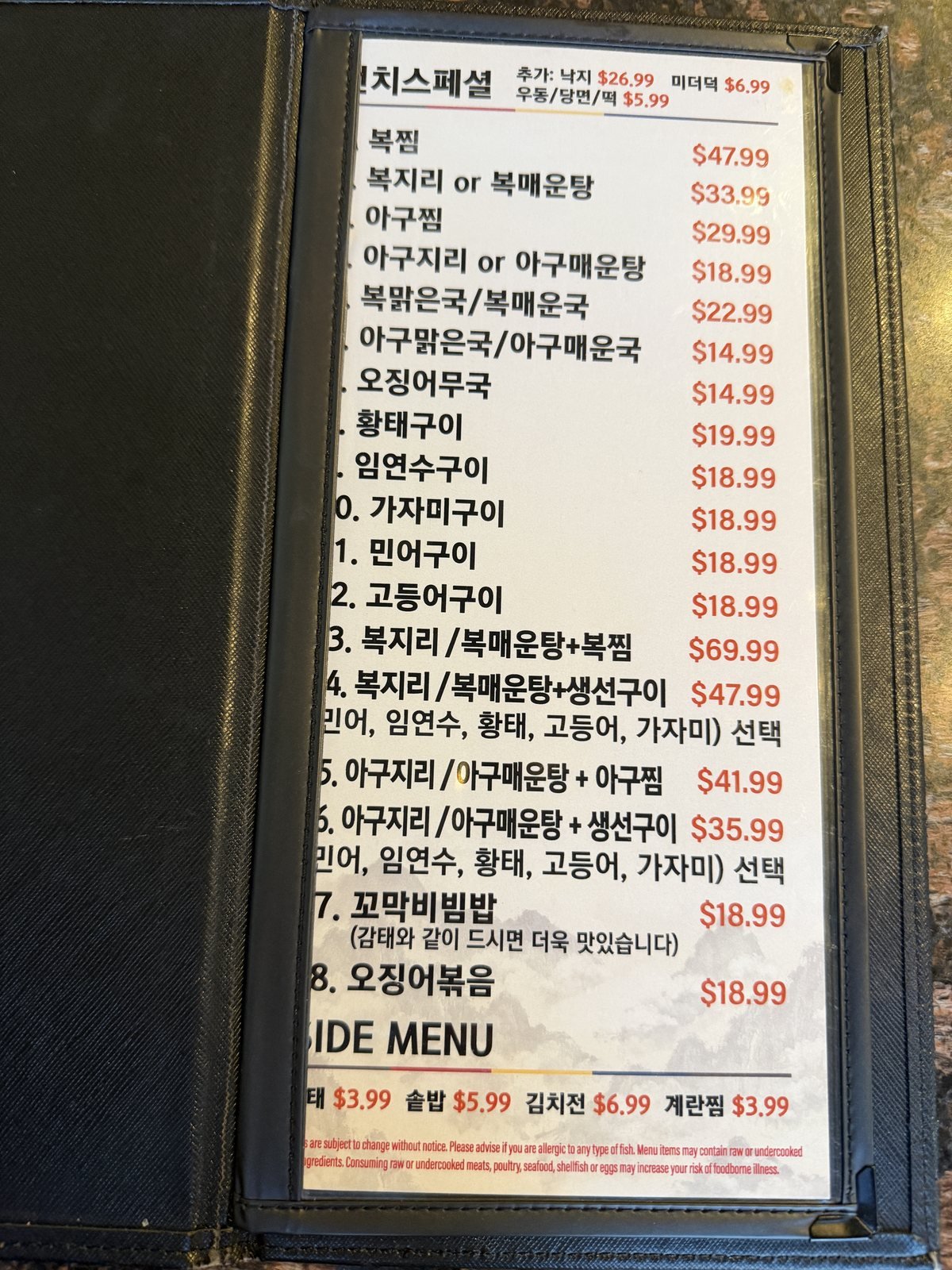
There is also a separate lunch sheet, which is the one I would point a first visit at. It runs most of the same dishes in smaller portions, including the monkfish soups and the grilled fish, and it makes this a much easier place to try on a weekday than the full combos suggest.
Three things worth knowing before you go

Parking is not a problem, which is rare. There is a real lot behind the building, free-standing and large enough that I have never had to circle. In this part of town that alone is worth something, and it is the difference between a weeknight dinner and a logistics exercise.
Bring four or five people. This is not a solo lunch spot. The combos are built for a table, and at four or five one set puts enough different dishes in front of you that everyone gets the whole range. Two people can eat well here off the single dishes, but the kitchen is clearly set up for a group.
They also sell groceries. One wall is papered with product sheets — Jeju silver cutlassfish, abalone, packaged seaweed, imported butter, tteokbokki kits. It operates like a small shop alongside the restaurant, and that side is cash only, so if anything catches your eye on the way out, plan for it.
Location and details
DaeBokJung (대복정)
2010 James M Wood Blvd, Los Angeles, CA 90006
(213) 386-6660
It sits just east of Koreatown proper, in Westlake, on a residential-feeling stretch where you would not expect a restaurant at all. Listings put the hours at roughly 11am to 10pm with a later start on Sunday, but I have seen them written differently in different places — please confirm before you drive over.
The service is part of why it works. Nobody rushes you, nobody minds explaining what is in the pot, and the porridge at the end arrives without being asked for.
What stays with me about this place is how narrow it is willing to be. There is no bulgogi, no galbi, no safe order for the person who did not want Korean food. It cooks two fish extremely well and expects you to have come for that. In a city with as many Korean restaurants as this one, that kind of confidence is getting harder to find.