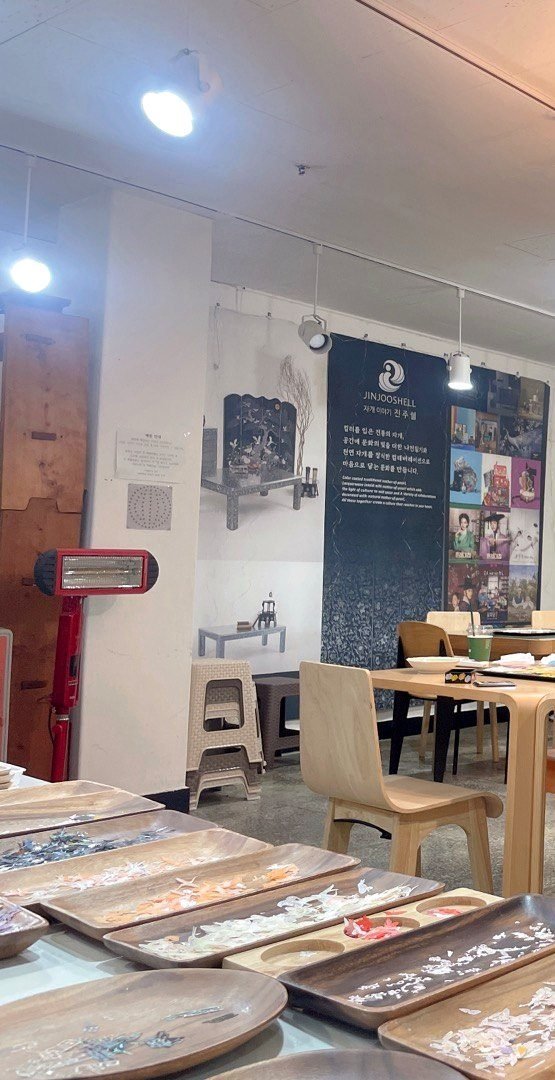
The shell pieces come in long shallow trays, sorted by shape. Petals in one. Leaves in another. Butterflies, small round blossoms, thin curling stems. You walk along the table and pick what you want with your fingers, the way you’d pick buttons out of a tin.
I asked the teacher how many I was allowed to use.
She said as many as I like.
That turned out to be the most dangerous sentence of the afternoon.
What najeon actually is
Najeon is Korean mother-of-pearl inlay. Thin slices of shell, cut into shapes, set into a lacquered surface. You’ve seen it on black chests in museums and in your grandmother’s house — the kind of black that isn’t really black, because the whole surface moves when you move.
Traditionally it takes weeks. The lacquer goes on in layers, each one dried and sanded before the next. A one-day class condenses that into an afternoon by starting you with pieces that are already prepared, already lacquered, already waiting. Your job is the part that’s actually fun: deciding where the flowers go.
Booking it
We went to a studio in Jongno, in central Seoul. It sits on a quiet side street, down from the hanok lanes where everyone takes photographs.
You book ahead. The regular daily session runs in the early afternoon and they’re closed Sundays, so a weekday or Saturday is the plan. Korean booking goes through the usual local platforms, and there are English-language booking sites too, which matters if you’re visiting rather than living there. Prices depend on which object you choose, and the objects range from small keychains up to proper trays, so the number moves with the size.
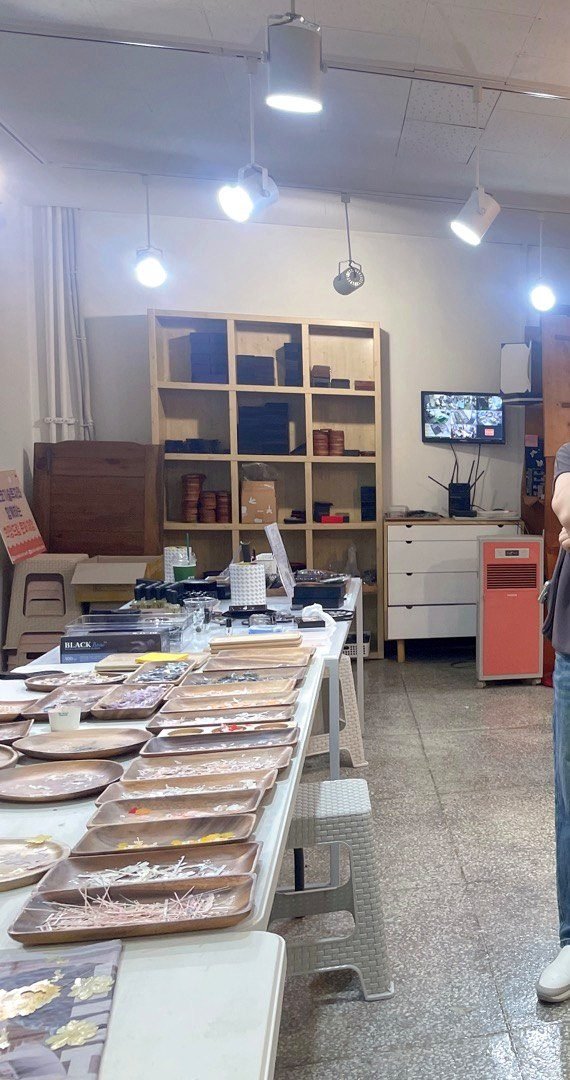
Three of us went. Two of us took the class.
What the afternoon is actually like
You sit at a long wooden table. There’s music on, not quiet reverent craft-studio music, just music. People talk. It is not a silent room, and I was glad about that.
Our teacher was a young man, the owner’s son-in-law. He moved between the tables without hurrying anyone, answered the same beginner questions three times over without a flicker of impatience, and had a way of looking at what you had done and finding the one true thing to say about it. He is also the one who told me I could use as many pieces as I liked. I have decided not to hold it against him.
First you choose your blank — the wooden object you’ll be decorating. Then you go to the trays and choose your shell.
This is where I lost my head.
The pieces are already cut, which removes the hardest, slowest part of real najeon work and leaves you with the pure pleasure of arrangement. I had intended something restrained. A few blossoms in one corner, the way the studio’s own pieces are composed — big peonies, balanced scrollwork, a lot of calm black left showing.
That is not what I made.
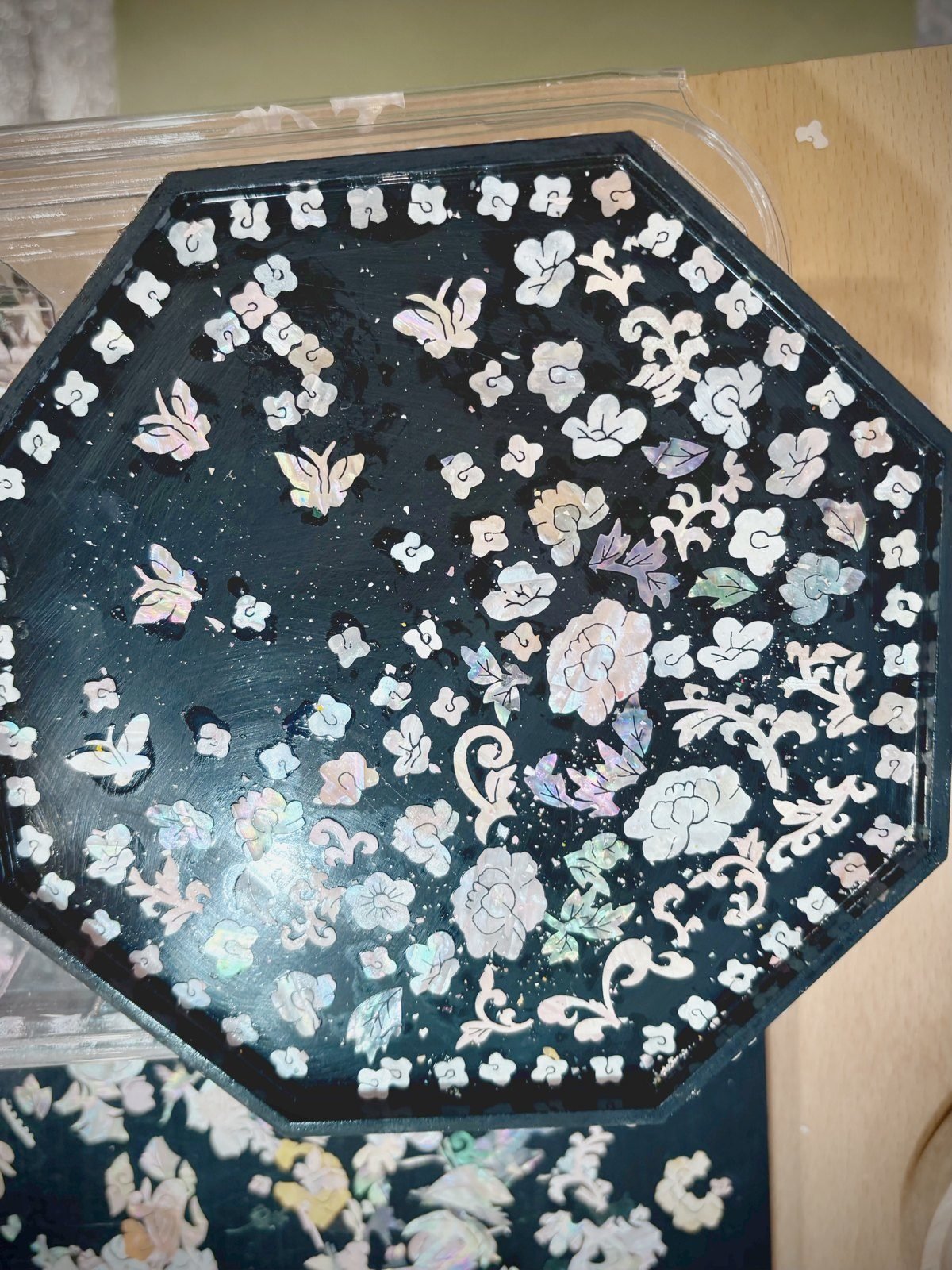
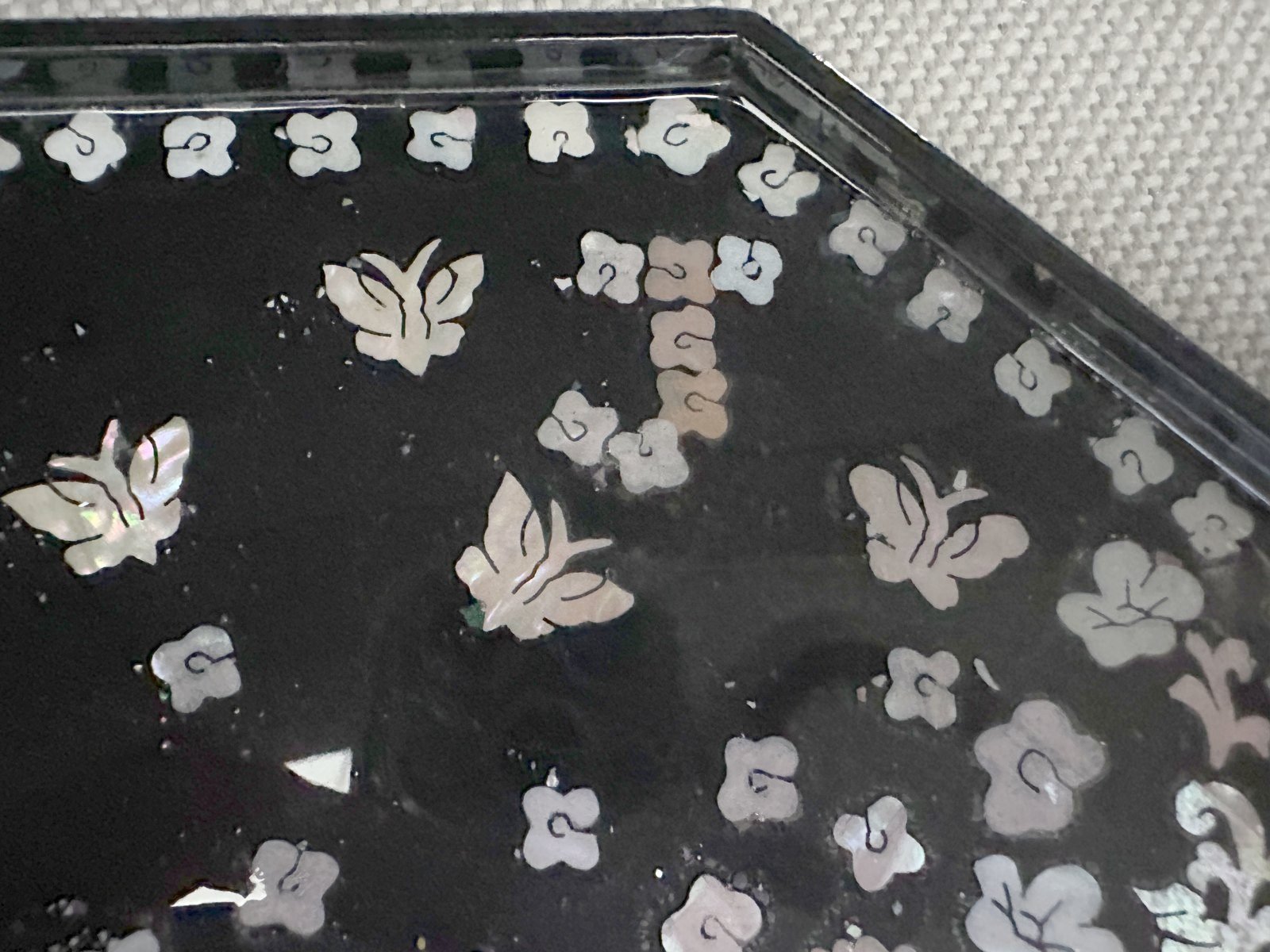
I made a sky. Small flowers scattered edge to edge, butterflies drifting between them, a border of tiny blossoms running all the way around the rim. When I stepped back from it I laughed, because it looks exactly like a person who was told she could use as many as she liked.
The hands-on part took somewhere between an hour and a half and two hours. Not rushed. There’s a point in the middle where you stop fussing and just start placing, and the time disappears.
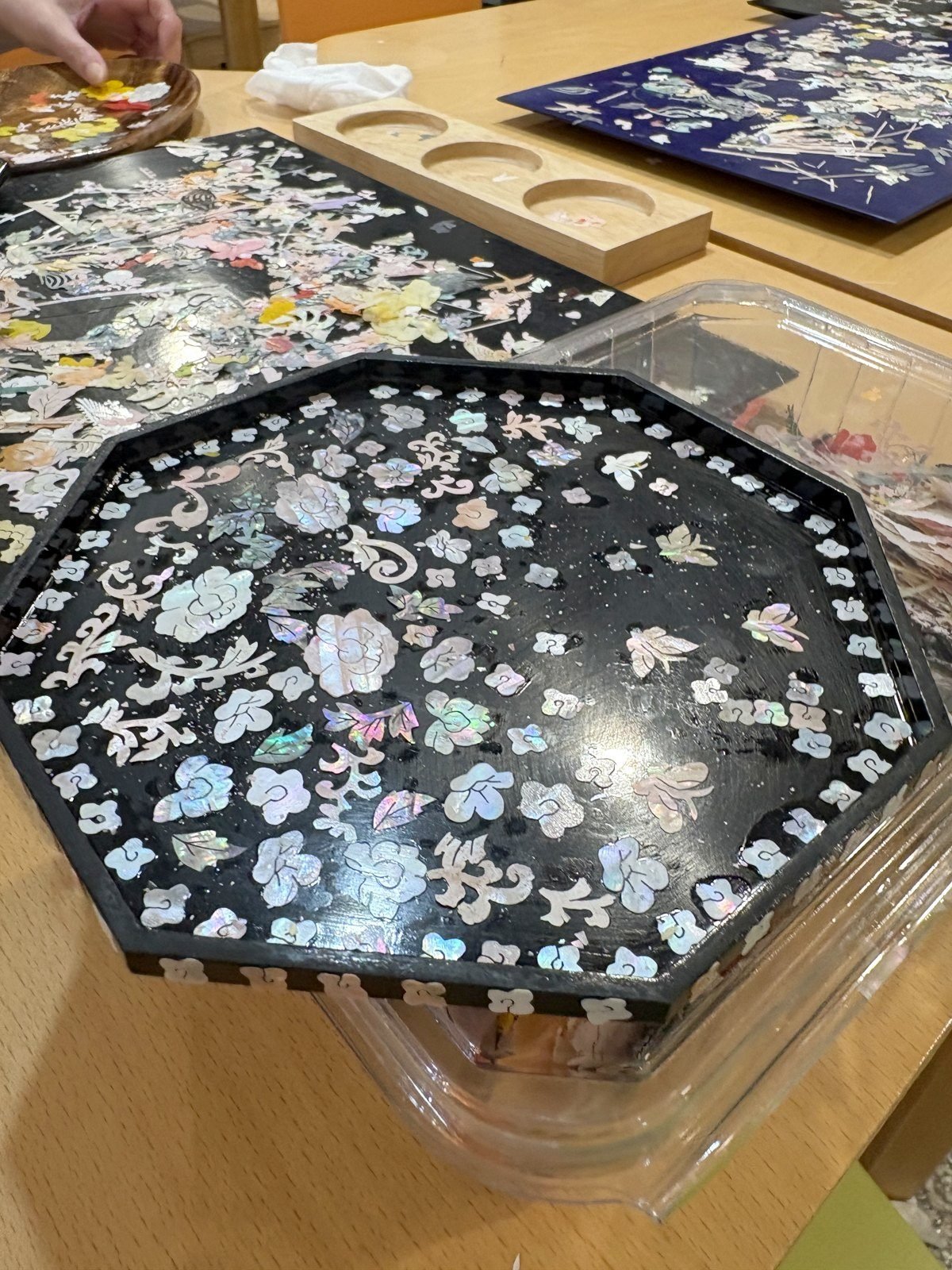
Three of us, three different afternoons
One friend made a jewelry box. Deeper than a tray, with a lid, and she worked much more carefully than I did.
The third friend didn’t make anything at all. She sat with us, drank coffee, and talked the entire time. Nobody minded. She had a better view of both our tables than we did and gave a running commentary on our choices, most of it unhelpful and all of it welcome.
I’d say that out loud to anyone planning this with a group: not everyone has to sign up. If someone in your group isn’t a maker, they can still come and sit. The afternoon is as much about the table as the craft.
What to know before you go
Book ahead, and check the day. Sessions run in the early afternoon and Sundays are closed. If you’re on a tight Seoul itinerary, this is a half-day block, not a drop-in.
Choose your object by what you’ll actually use. I wanted a small tray — something to carry one cup of coffee and a little plate from the kitchen to the sofa. That’s what I made and that’s what I use. A keychain is a sweeter souvenir to post home; a tray is the one you’ll see every day.
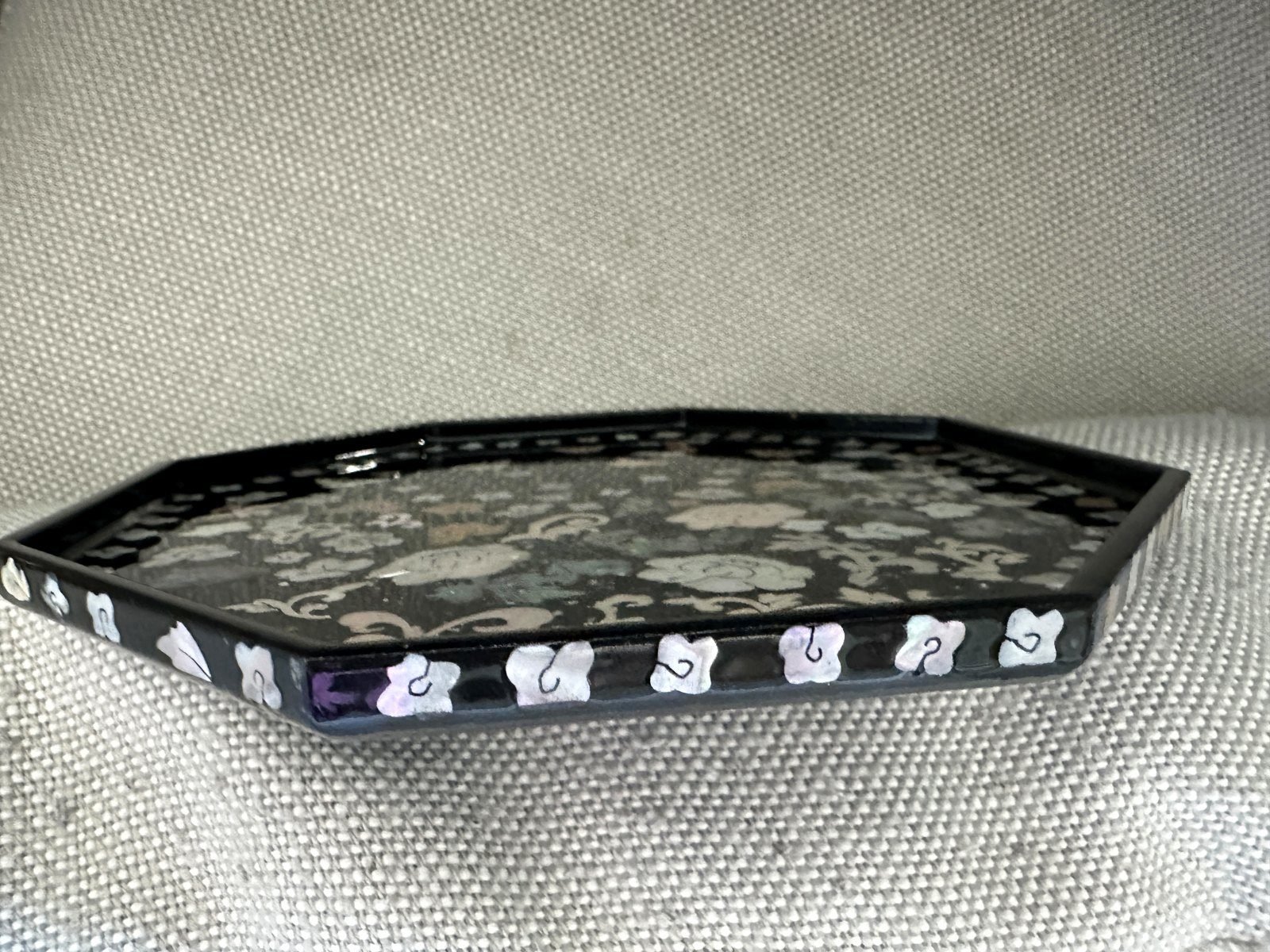
Give it a night before you use it. The lacquer needs time to cure underneath even when the surface feels dry. The studio suggests waiting until the next day. If you’re flying out the same evening, plan your packing around that.
Decide your design loosely, not firmly. You’ll change your mind once you see the shell in the trays. Everyone does.
Bring the friend who isn’t making anything. Really.
The shop
The studio sells finished work as well, and this is where the rest of my luggage allowance went.
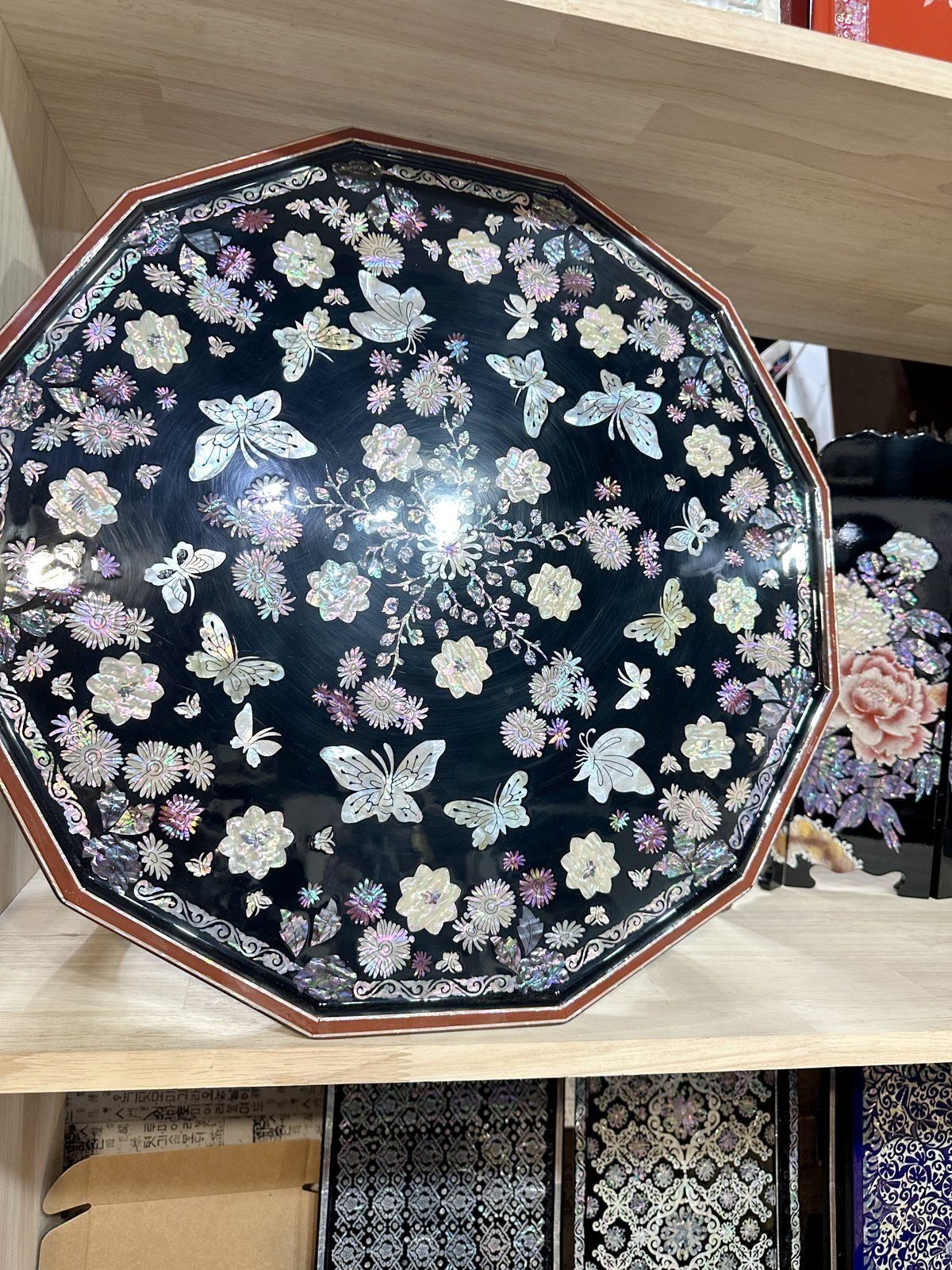
Their pieces are composed the way I had meant to compose mine — large peonies, symmetrical vine work, generous black space. Seeing them next to my scattered-flower tray made me laugh again, but I’m not sorry. Mine looks like a day I had. Theirs look like objects that know what they’re doing.
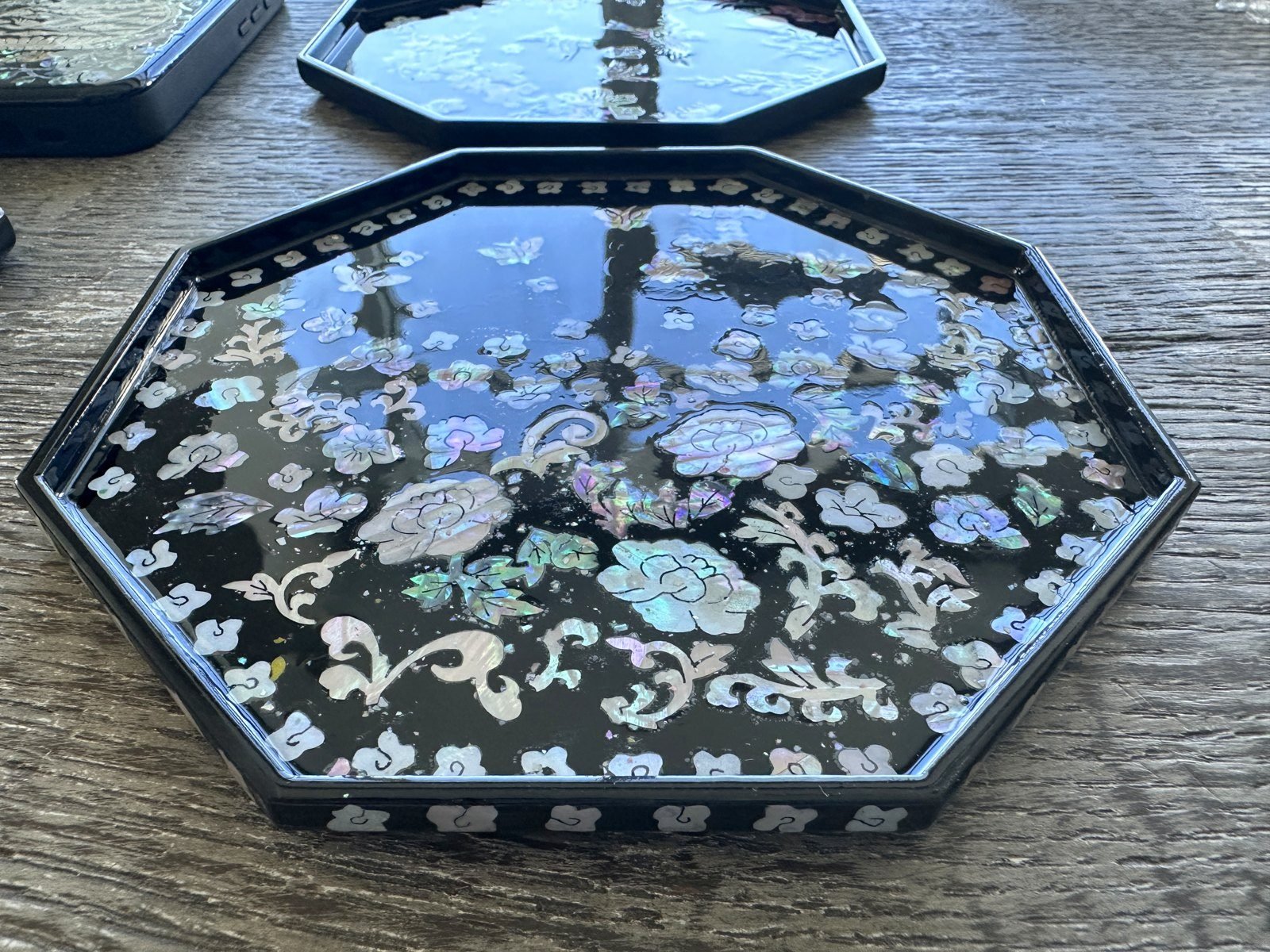
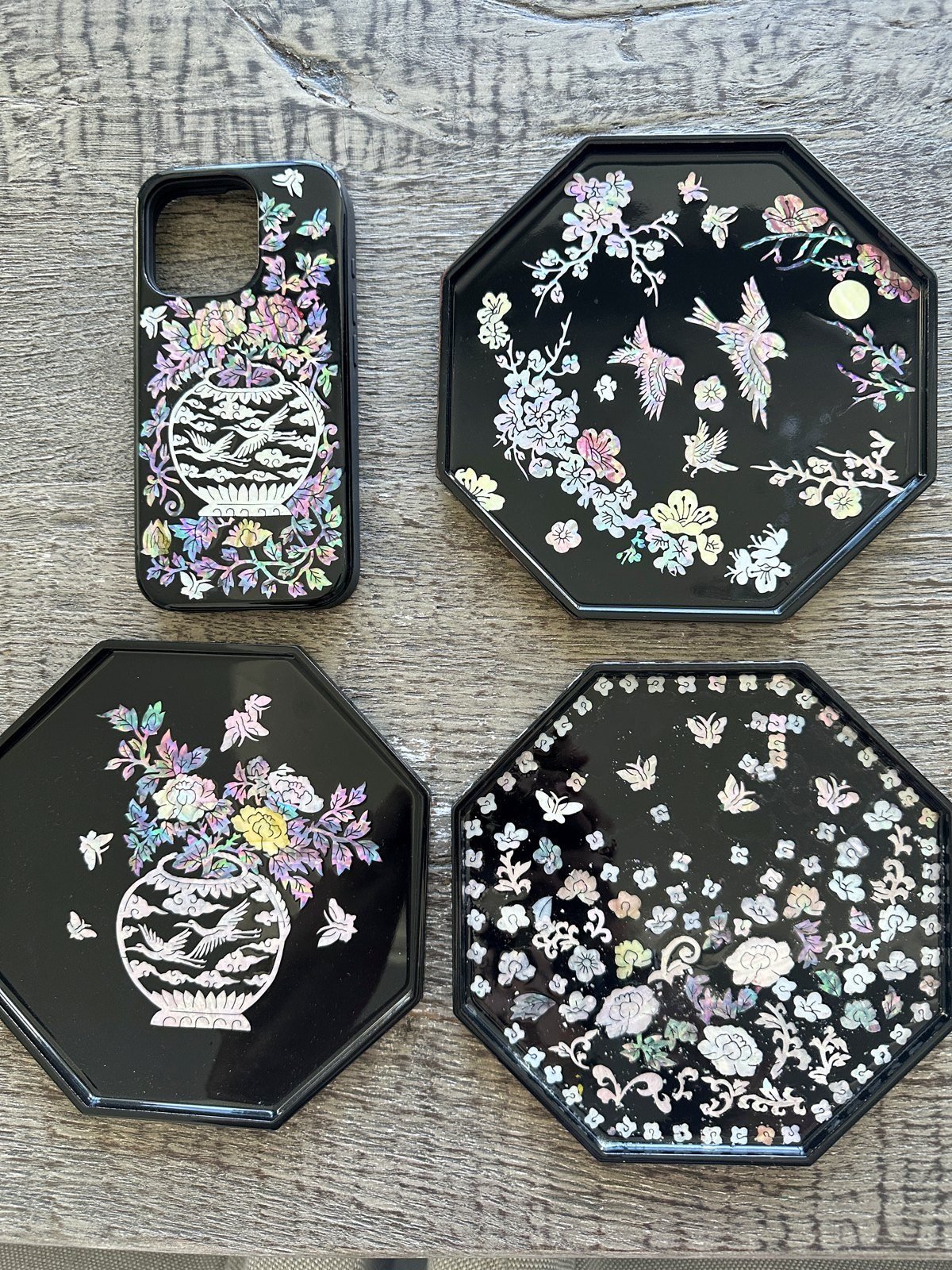
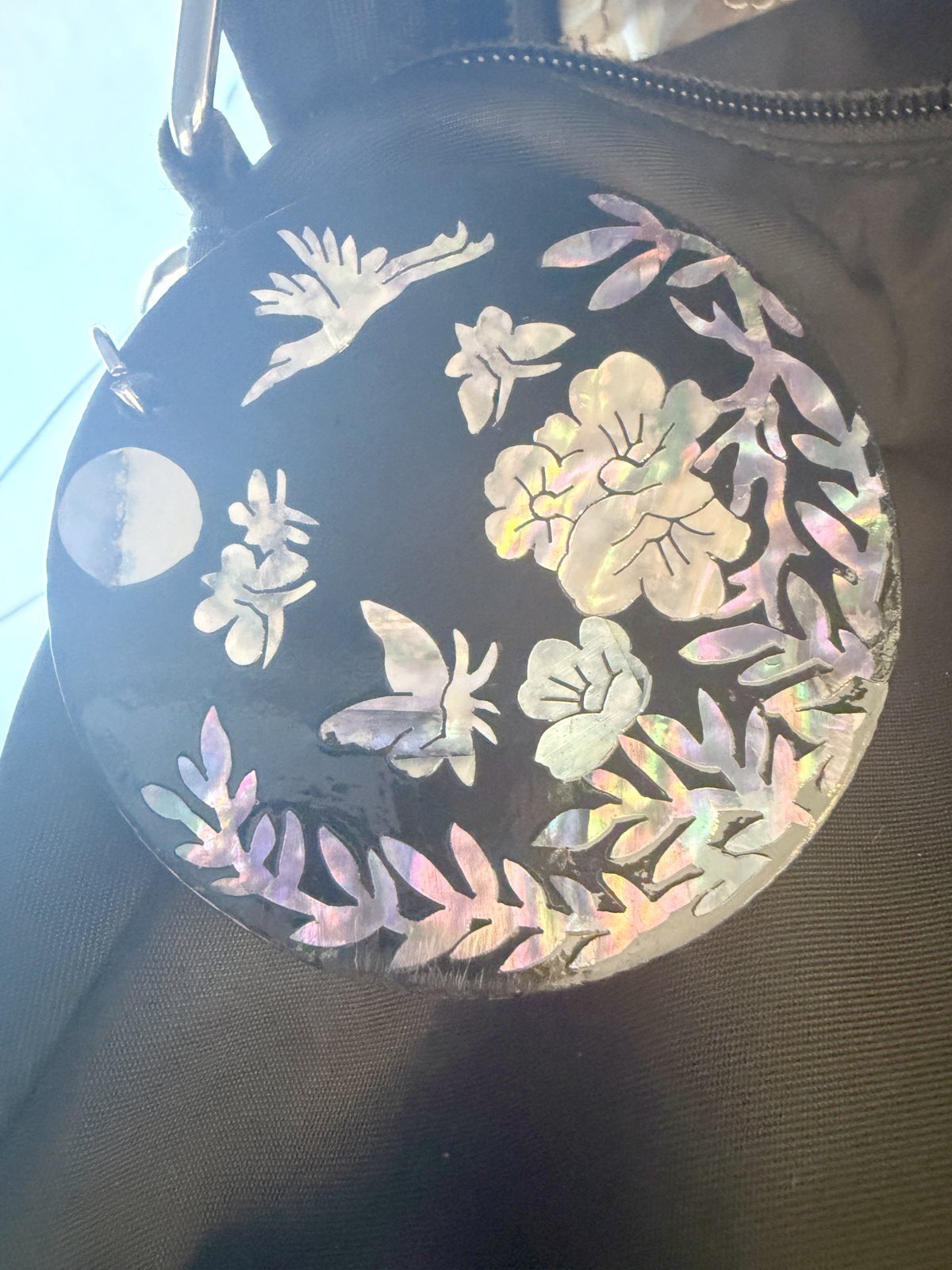
I brought home two more small trays, a phone case, and a couple of keychains with single blossoms on them. The keychains were the ones I ended up giving away, and the ones people asked about most.
Location and details
Jinjoo Shell (진주쉘)
42-3 Bukchon-ro, Jongno-gu, Seoul — 1F and B1
Tel: 02-2253-7585
Website: jinjooshell.com/class
Regular daily sessions run in the early afternoon, Monday through Saturday; closed Sundays. Group bookings are possible and should be arranged well in advance. Hands-on time is roughly 1.5 to 2 hours. Booking is available through Korean platforms and through English-language booking sites. Please confirm current times, prices and availability directly with the studio before you go, as these change.
The tray, at home
It sits on the kitchen counter now. In the morning I put a cup of coffee on it and carry it to the window, and the surface shifts green and pink as it moves through the light. Nobody who sees it guesses it took one afternoon.
That’s the part I keep thinking about. Not that I learned a traditional craft — I didn’t, not really, not in one day. But I spent an afternoon arranging flowers on black lacquer with my friends talking around me, and I came home with a thing I use.
If you’ve taken a craft class on a trip — the kind where you make something you still have — I’d love to hear what you made. Tell me in the comments.