Mount Fuji was wearing a hat.
Not a wisp of cloud passing over it. A proper white cap, sitting on the summit the way a lid sits on a pot, with clear sky on either side. I found out later the Japanese have a name for it — kasagumo, umbrella cloud — and that it usually means weather is coming. It did not feel like a warning. It felt like the mountain had dressed for us.
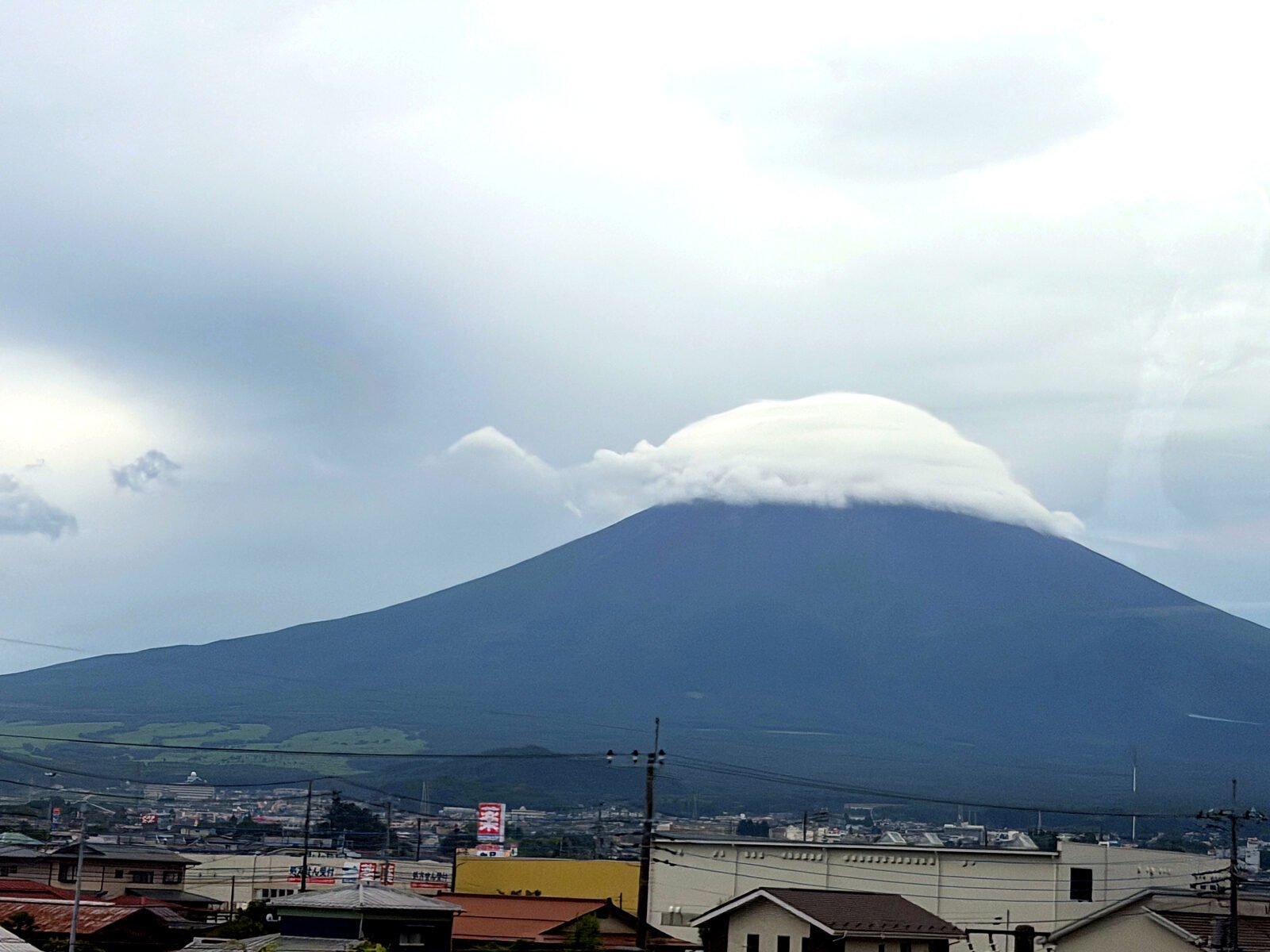
We were standing at the edge of Lake Yamanaka by then, near the end of a long day, and there was almost nobody else there.
Why I hired a guide instead of taking the bus
I had looked at doing it ourselves. There are buses from Shinjuku. There are trains, and then local buses, and then more walking. On paper it works.
On a real day, with a real body, at the end of a long trip, it looked like a lot. Timetables I couldn’t read. Stops I’d be anxious about missing. And a day that would be spent mostly getting places rather than being in them.
So we booked a private guide through MyRealTrip, the Korean travel platform. You search “Tokyo tour” on their site and a long list comes up — different guides, different vehicles, half-day and full-day, group and private. Prices move around depending on season and how many people, so there is no number worth quoting here. Look at the listings yourself and compare; that is genuinely the only way to know what today’s rate is.
What I will say is that it turned out to be the best decision of the trip.
The car at the hotel
He came to the hotel in a large SUV. Not a van full of strangers — just us, and him, and a plan he had thought about in advance.
That is the whole difference, and I didn’t understand it until I was in it. A tour bus takes you to the places on the list. A private guide takes you to the places on the list in the order that makes sense today, and then waits while you stand somewhere longer than scheduled because you want to.
The village of ponds
The first place he took us was a cluster of thatched-roof houses around a set of spring-fed ponds. I didn’t write the name down at the time, and looking at the photographs since, I think it was Oshino Hakkai — if you know the area and I have that wrong, tell me. What I do remember is the water. It comes from snowmelt that has spent decades filtering down through the mountain, and it is so clear that the fish look like they are floating in air.
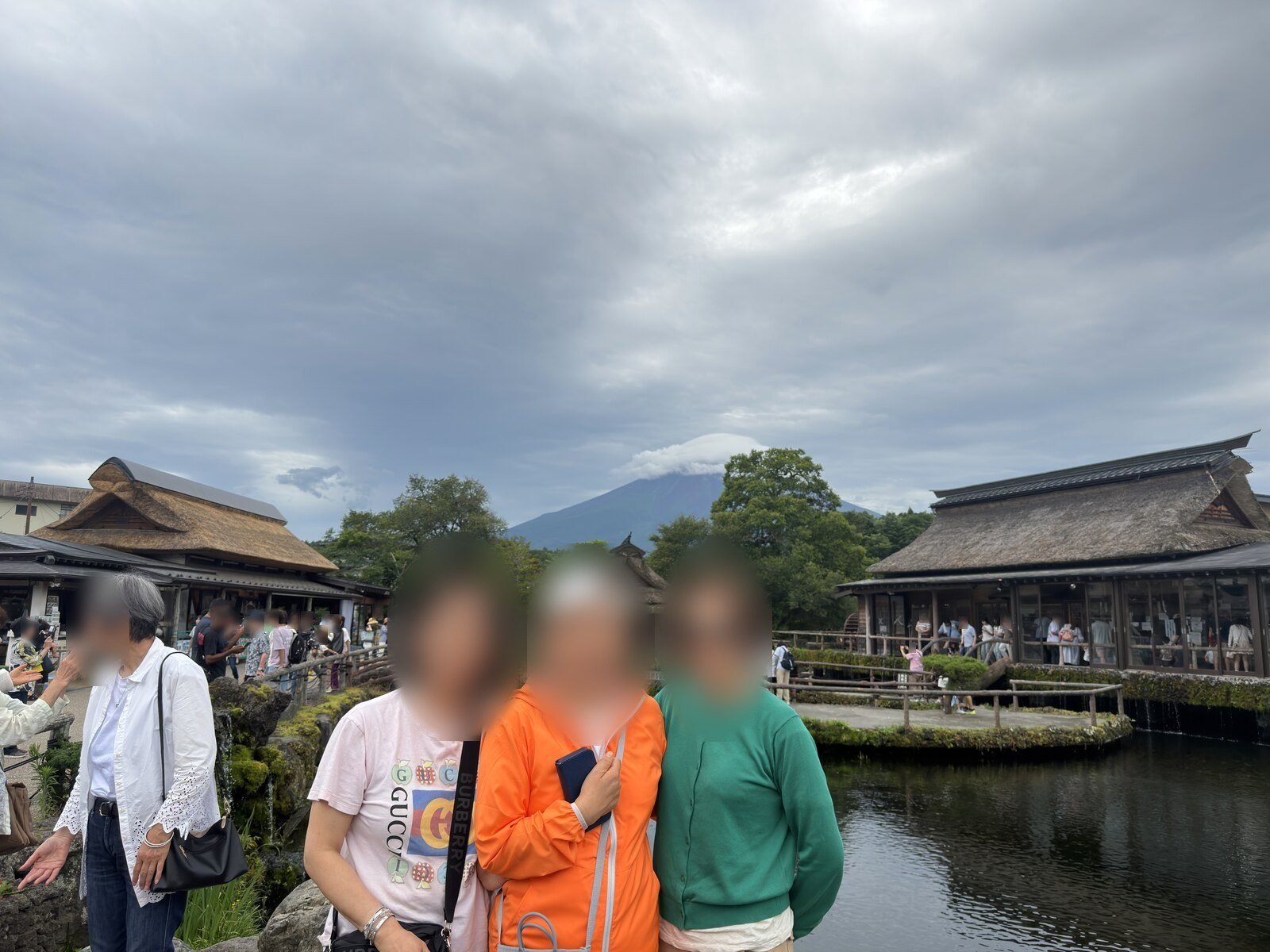
It is a popular stop, and it was busy. Fuji was somewhere behind the cloud. We walked it, looked into the ponds, and moved on, which is exactly the right amount of time to spend there. This is the part of a guided day I would not have planned myself and was glad to have been handed.
The shrine at the foot of the mountain
The next stop was Kitaguchi Hongu Fuji Sengen Shrine, in Fujiyoshida.
I had not heard of it before we arrived, which is a little embarrassing to admit, because it turned out to be the place I thought about most afterwards.
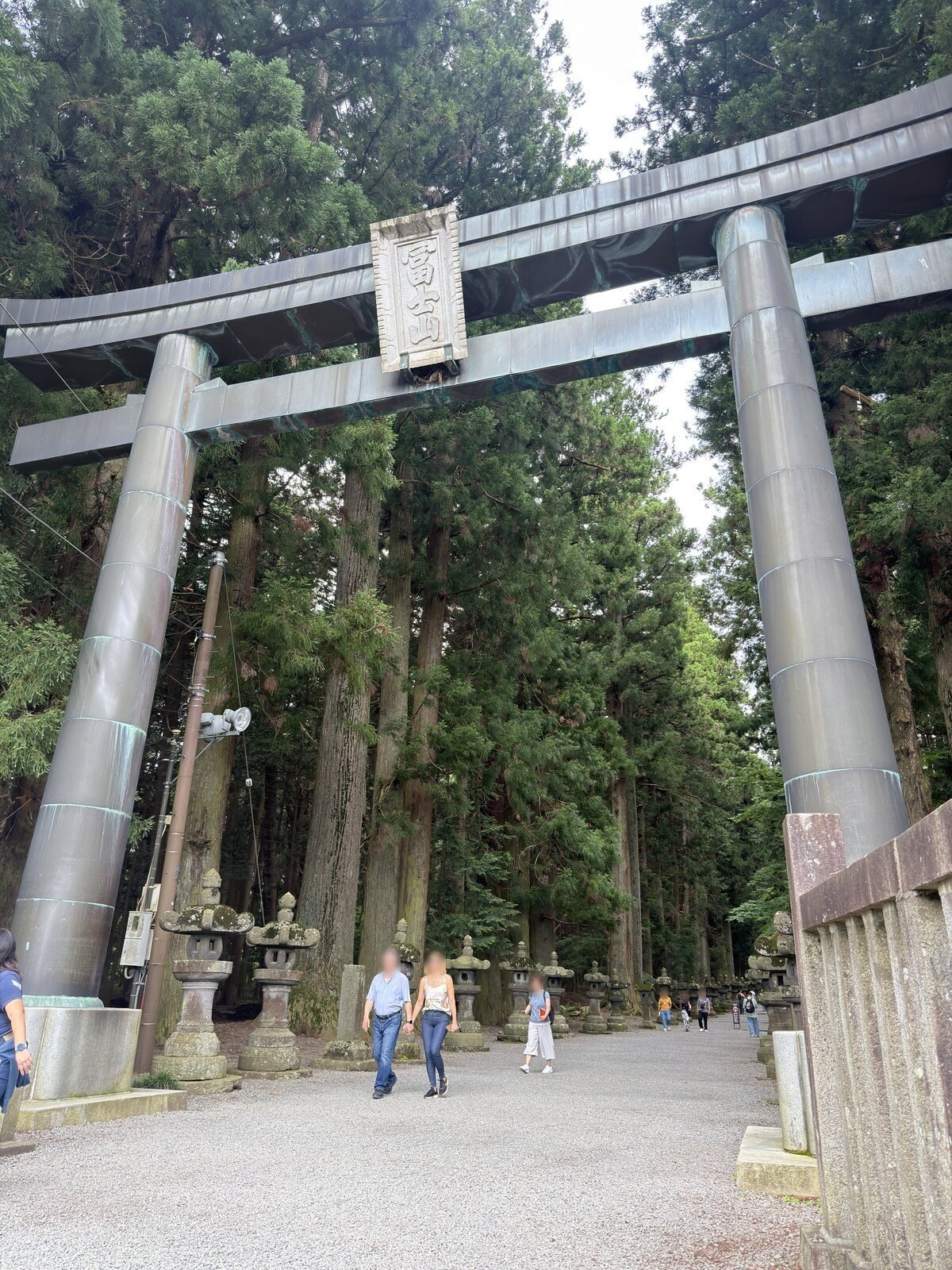
You walk in under an enormous wooden torii gate, and then the path goes straight ahead for a long way, and on both sides there are stone lanterns — dozens of them, mossed over, uneven, clearly very old — and above them cedars so tall you have to tip your head all the way back to find the tops. The ground is gravel. The light comes down green.
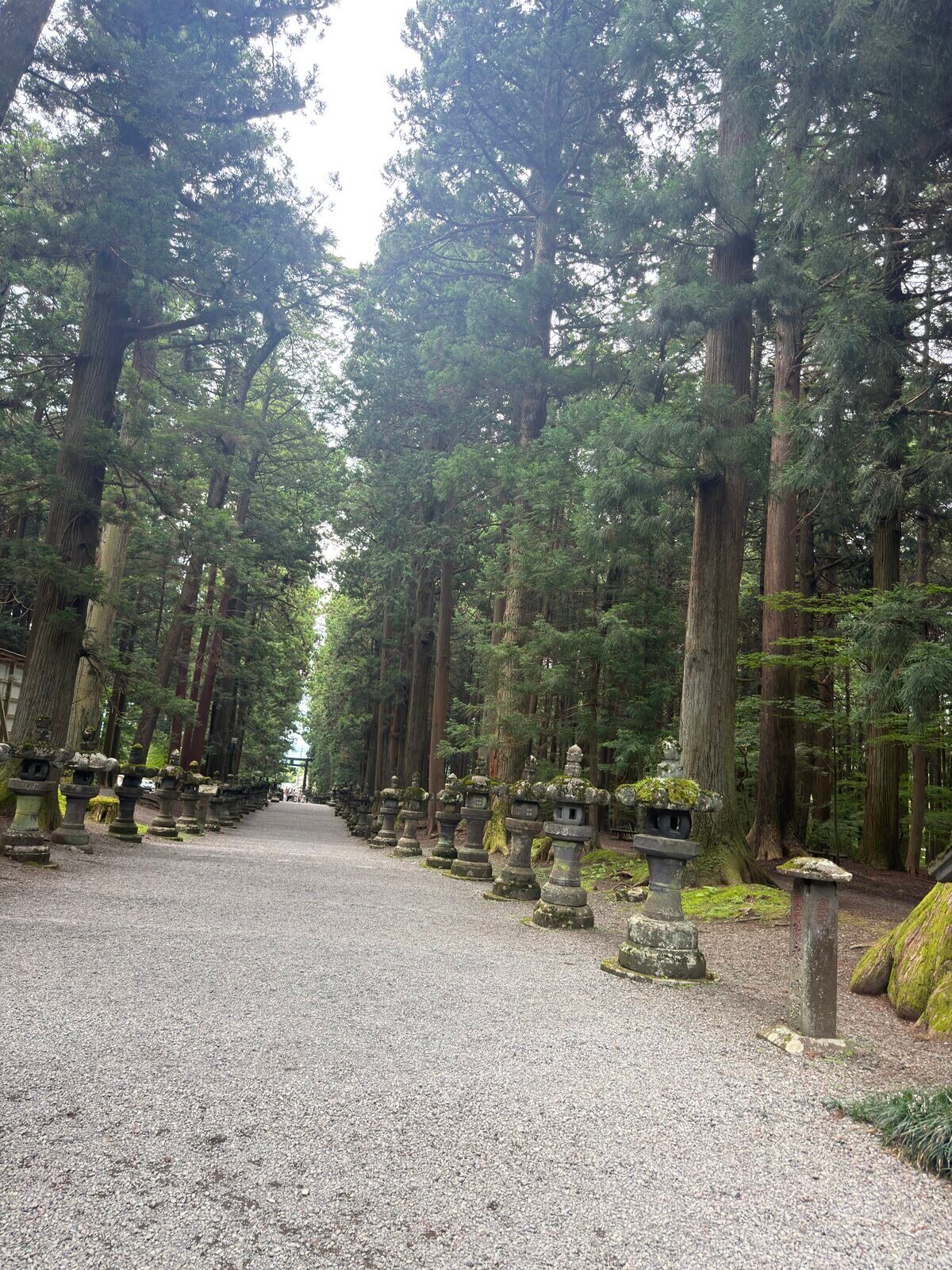
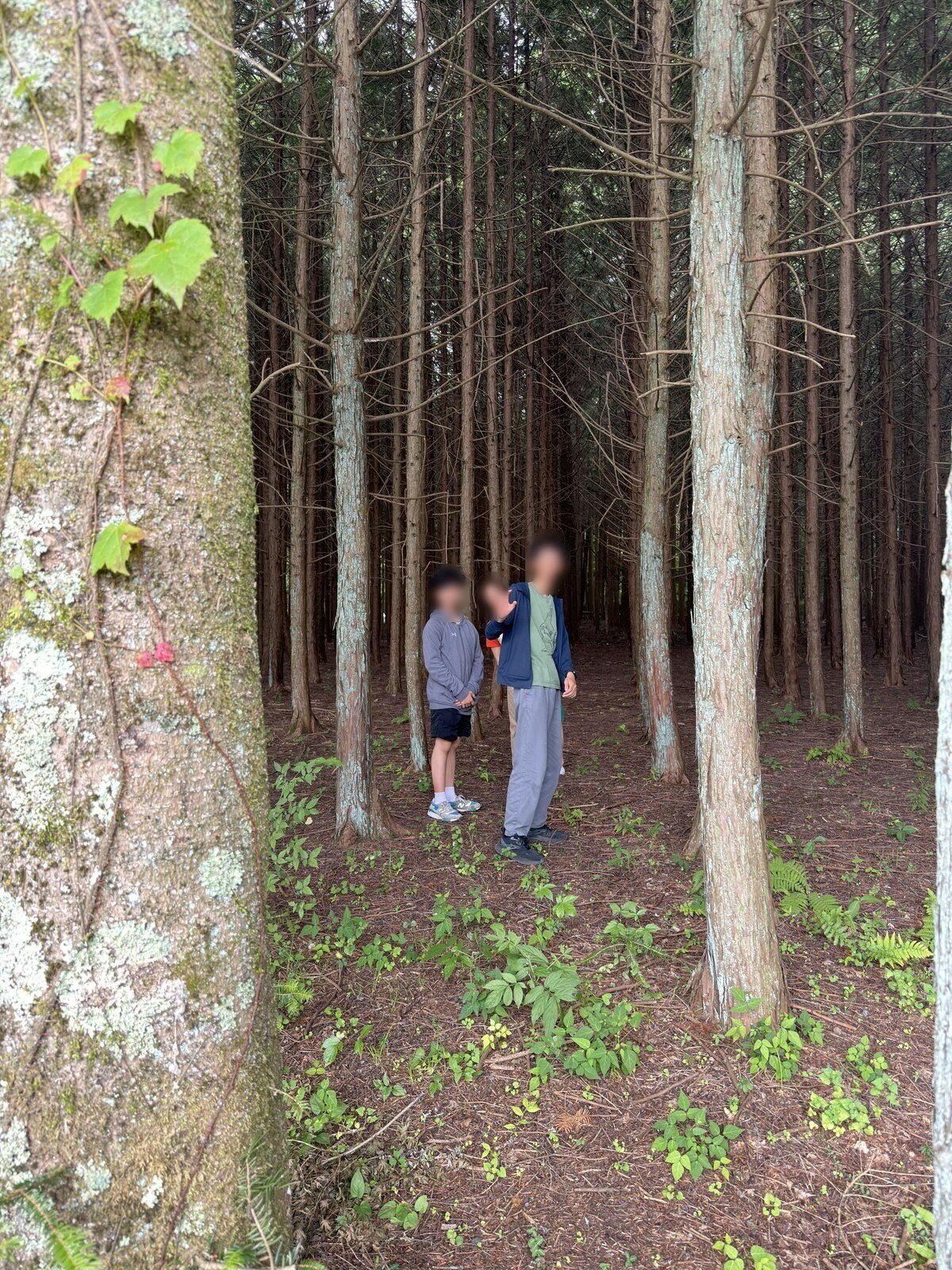
It is quiet in the way that very old forests are quiet, which is not silence exactly, but a kind of thickness in the air.
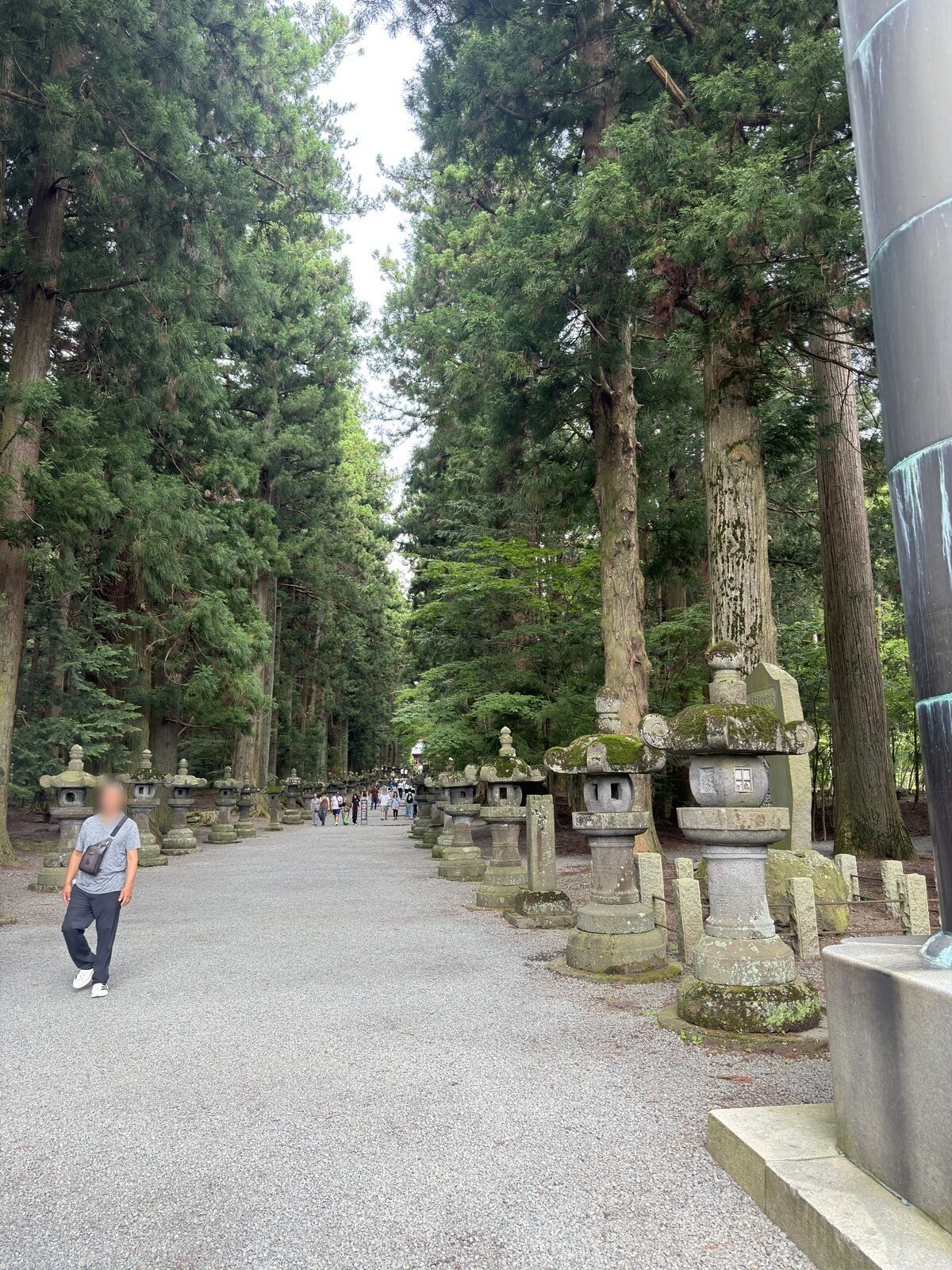
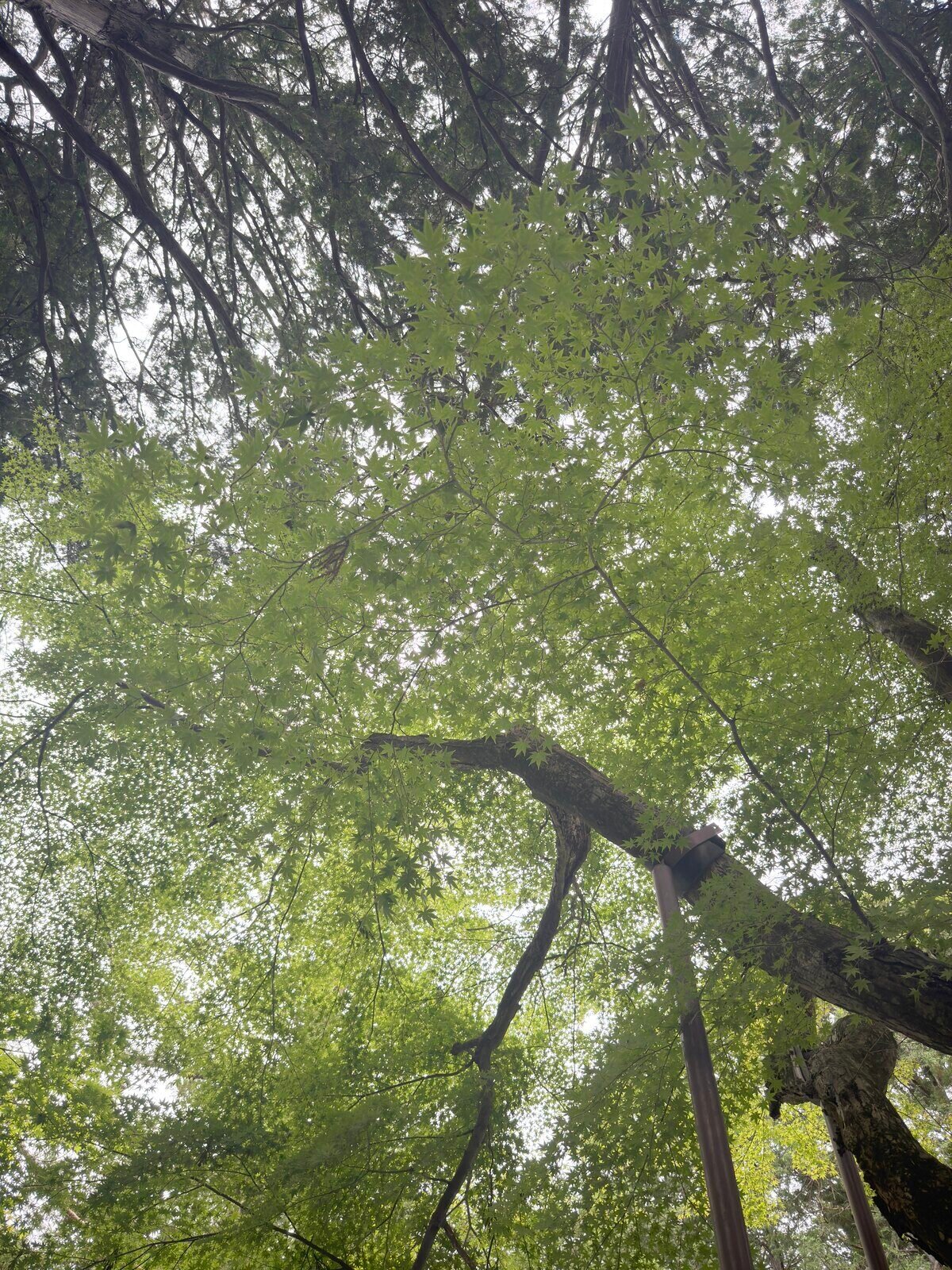
At the end of the avenue there is a red torii, and then the shrine buildings, dark wood with gold fittings and a roof that curves.
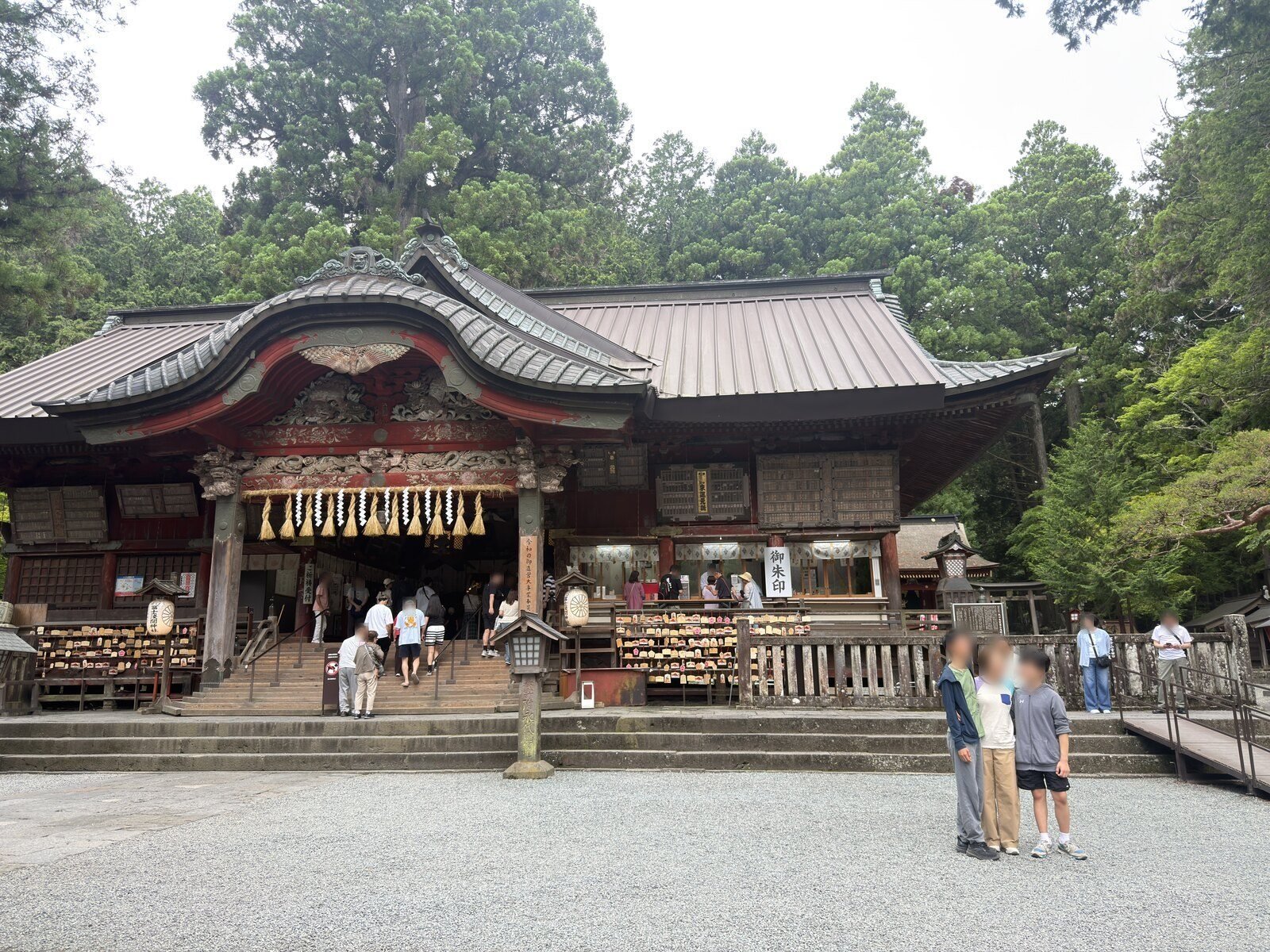
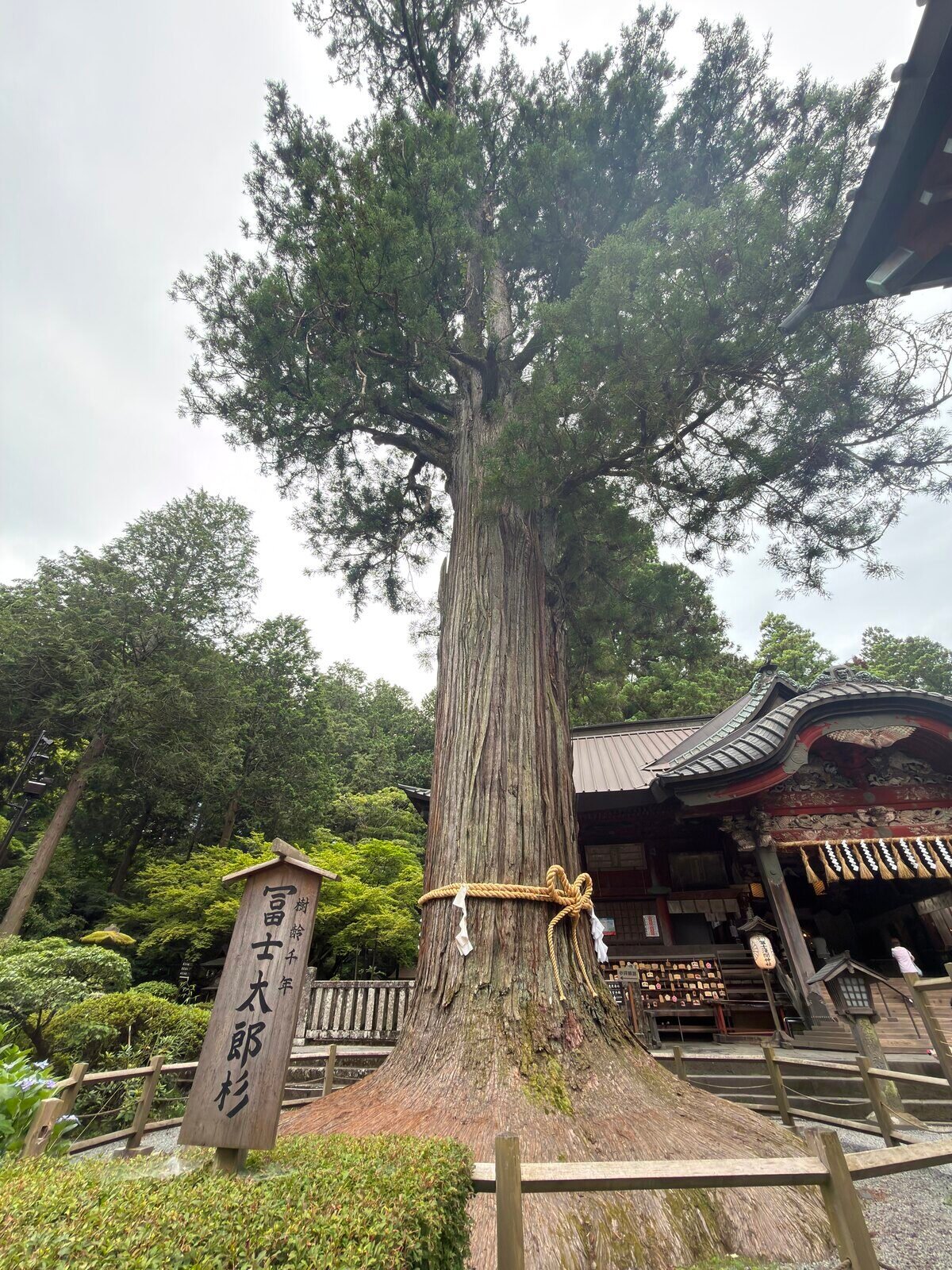
Beside it stands a cedar with a straw rope tied around its waist — the rope marks it as sacred. The trunk is so wide that photographing it doesn’t work; you can’t get far enough back.
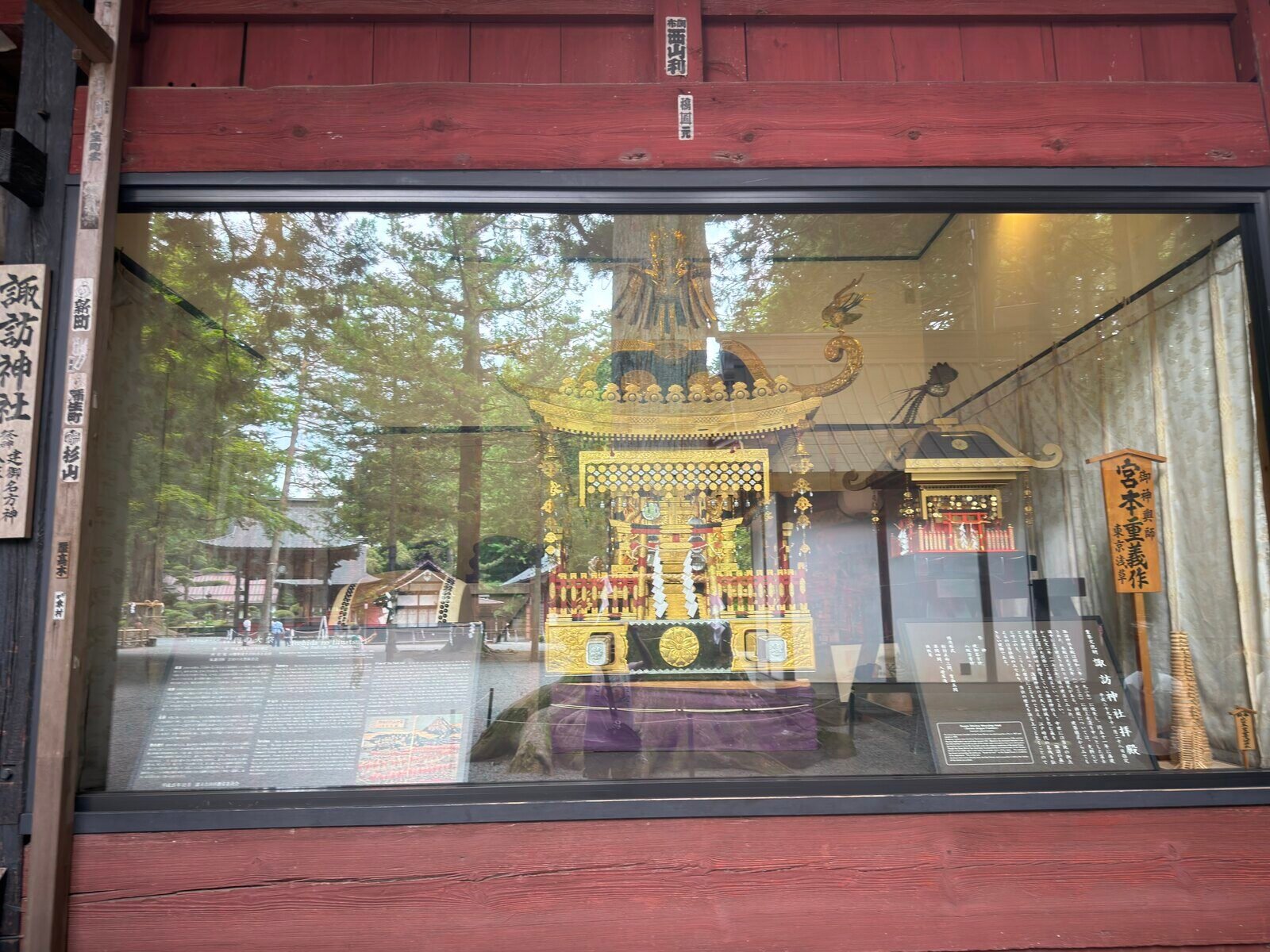
This shrine sits at the start of the Yoshida trail, the old pilgrimage route up Mount Fuji. For centuries, people who were going to climb the mountain came here first. Standing in that avenue, you understand why they would.
Lunch: hōtō
Our guide took us somewhere nearby for lunch and said we should have the local thing.
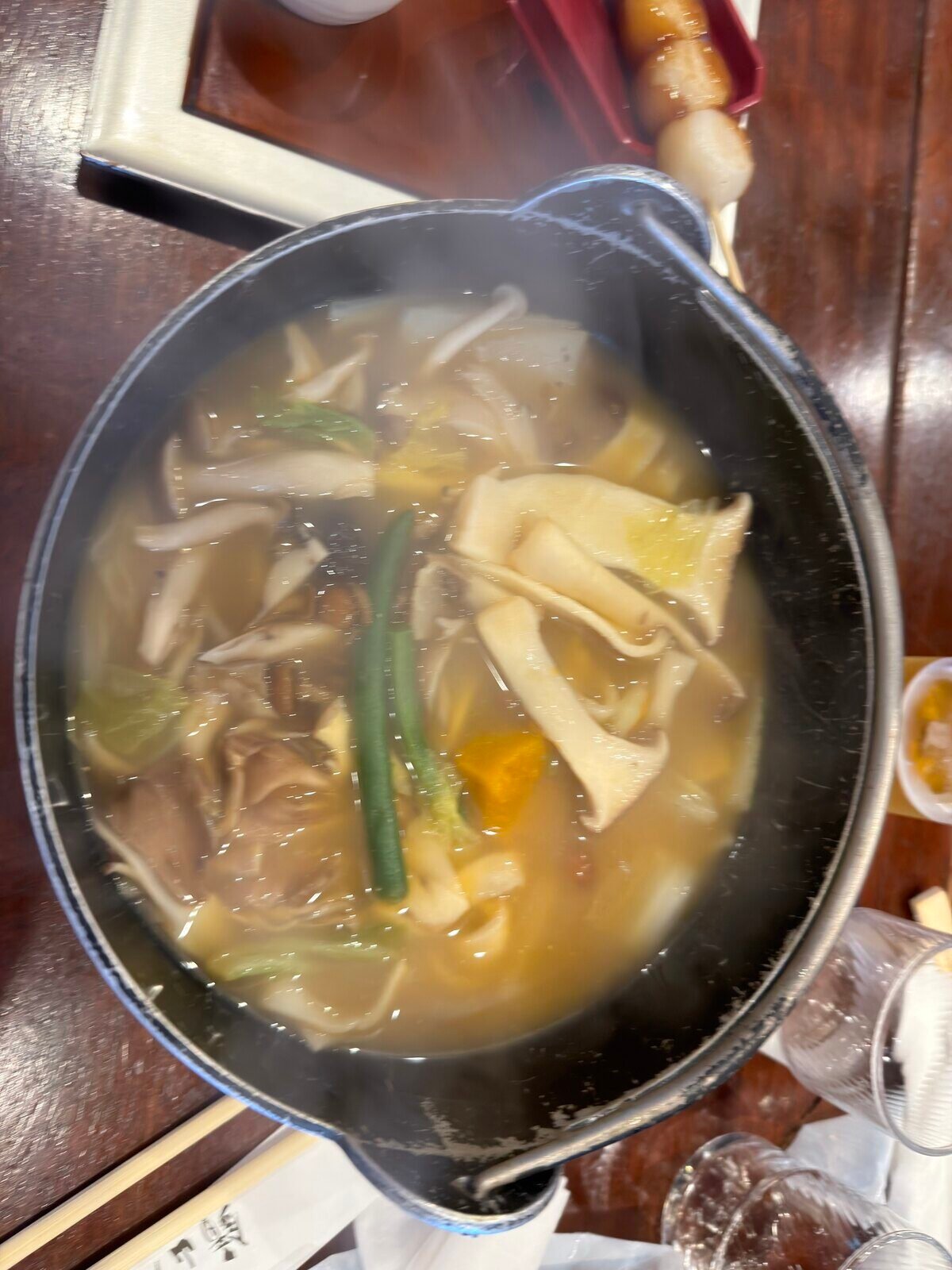
The local thing is hōtō — flat, wide wheat noodles simmered in a miso broth with vegetables, served in a cast-iron pot that arrives still bubbling. Mine had mushrooms, green beans, and pumpkin, which sounds odd in a savory soup and is not odd at all; the pumpkin goes soft and sweetens the broth. It came as a set, with rice, pickles, and a little skewer of dango.
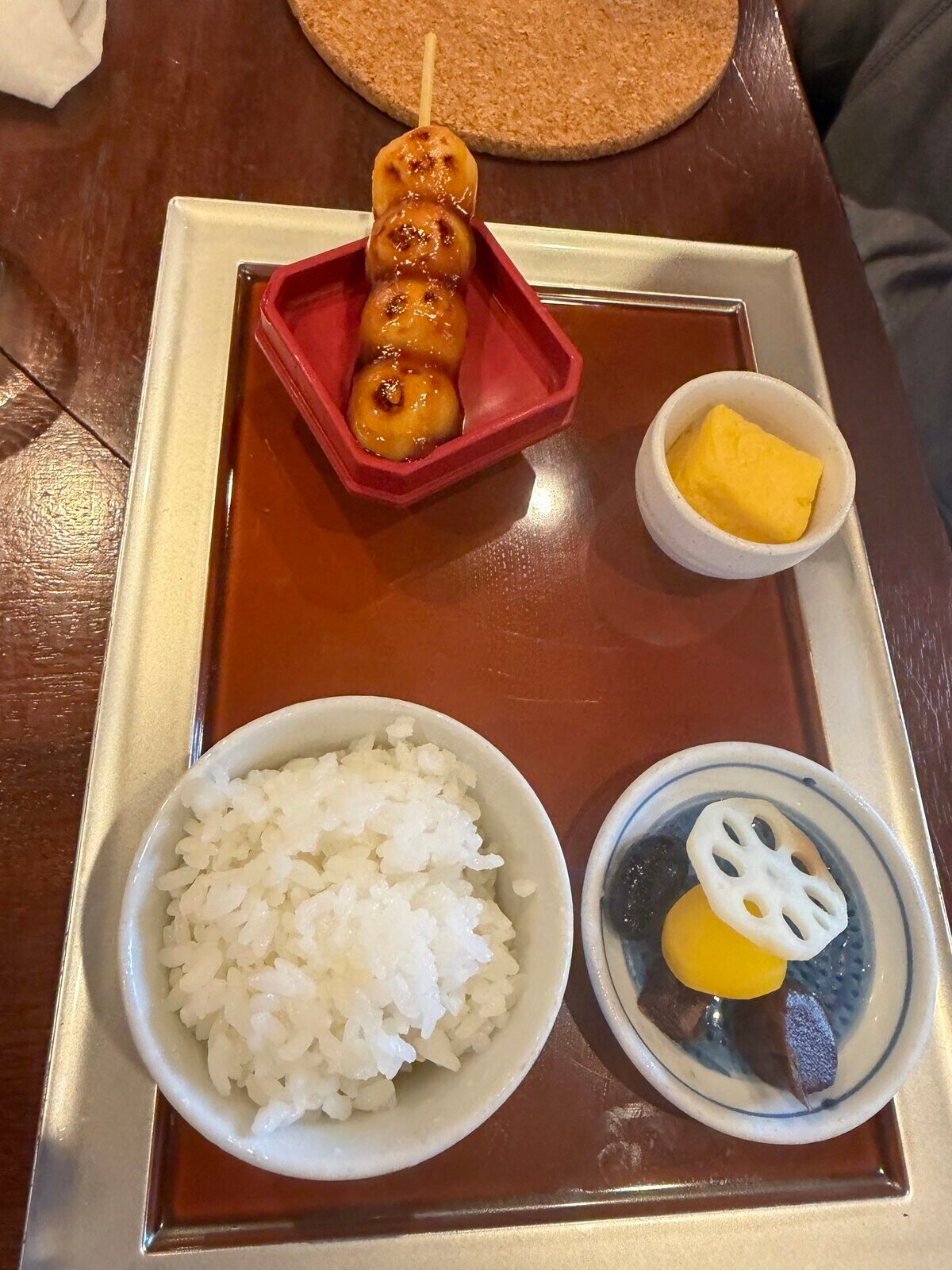
It is Yamanashi’s regional dish, and it is the kind of food that makes sense for a region at the base of a cold mountain. Heavy, warm, filling, no ceremony.
Our guide ate with us. I want to note that, because it changed the shape of the day. He wasn’t a driver who waited outside. He sat down and ate and talked, and that is when you actually learn things about a place.
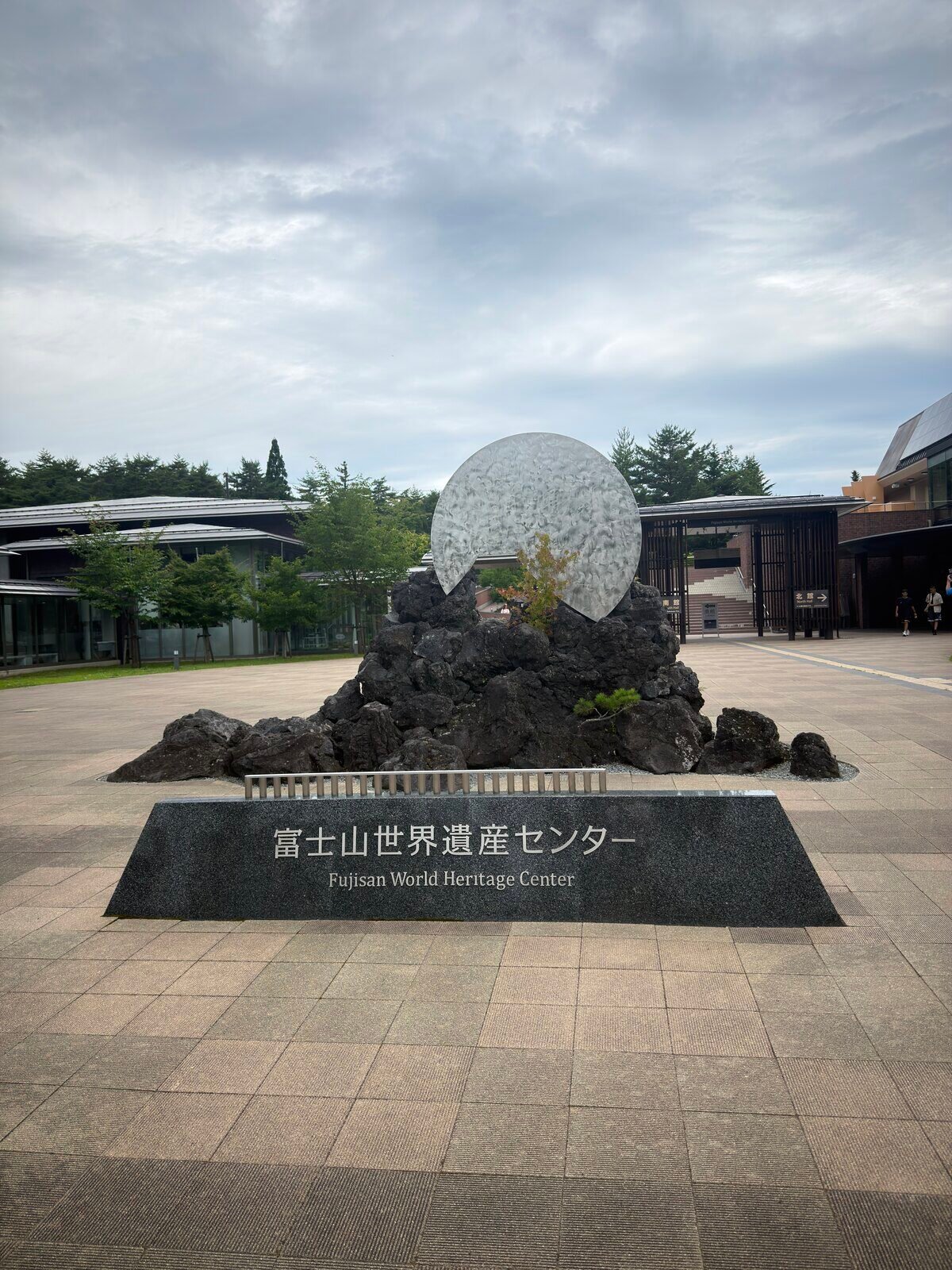
The Fujisan World Heritage Center
After lunch we went to the Fujisan World Heritage Center, the prefectural one near Lake Kawaguchi.
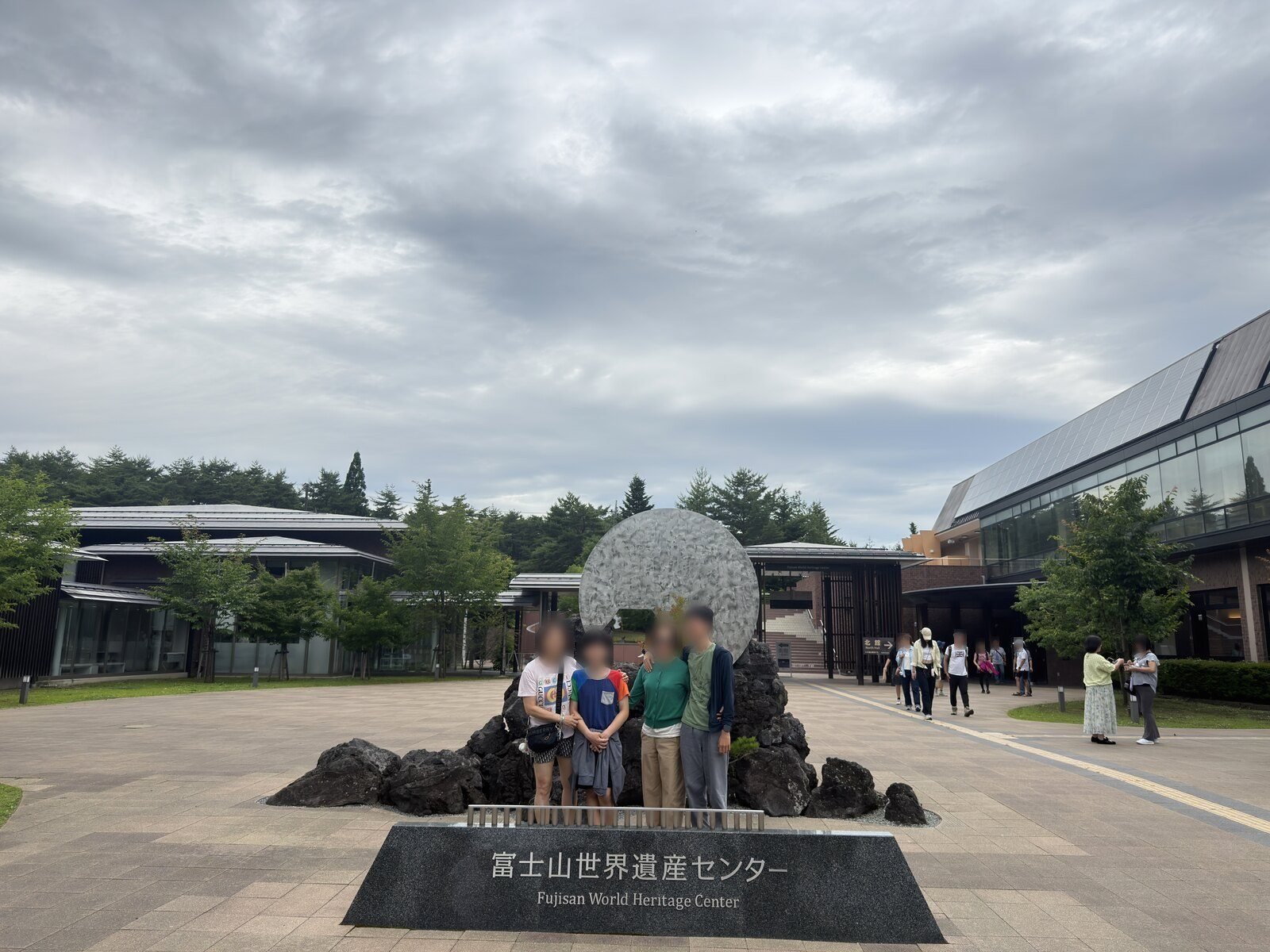
I’ll confess I did not expect much from a museum about a mountain. I was wrong about that too.
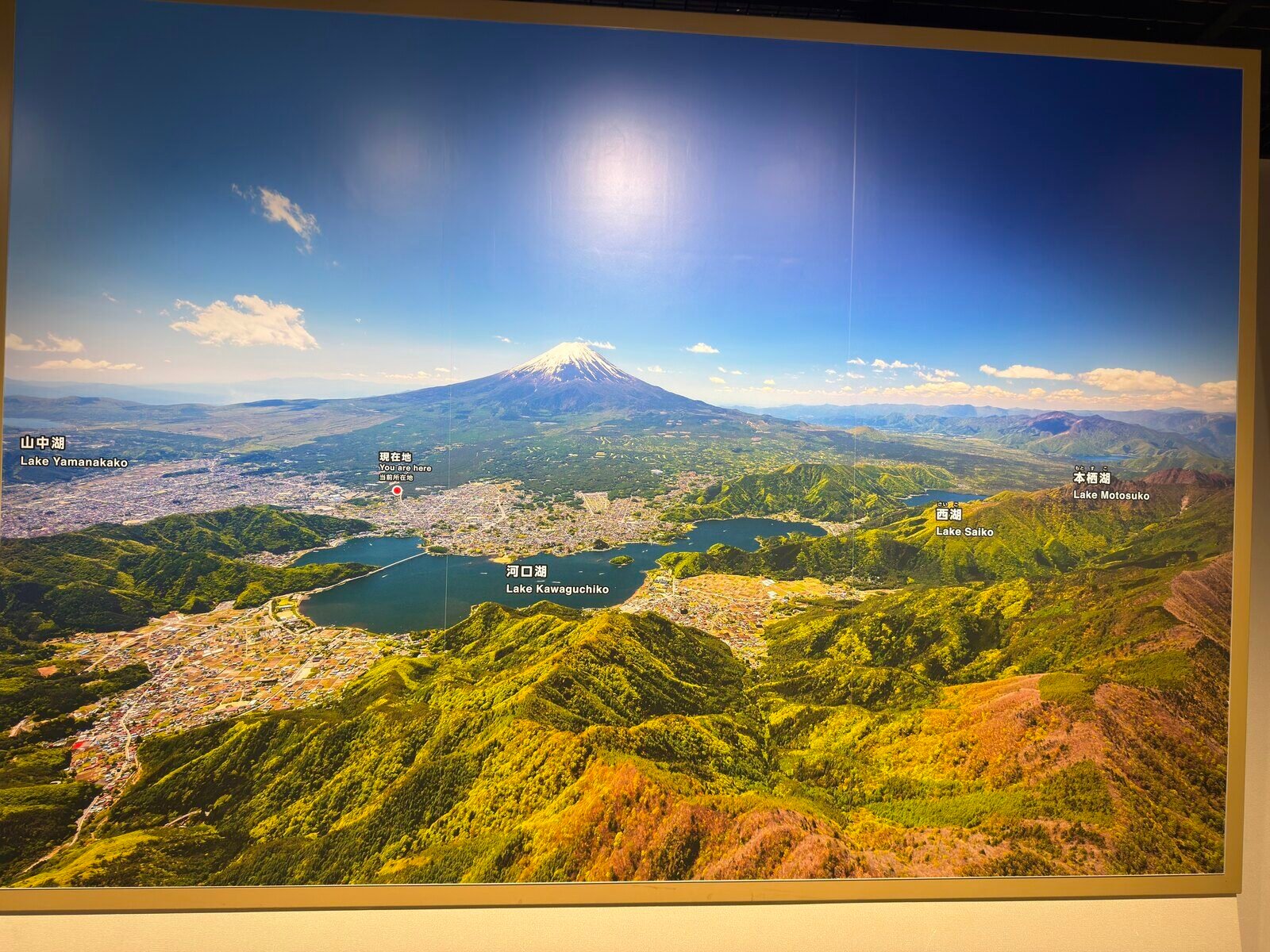
The exhibits are about what Mount Fuji has meant to people — as a volcano, as a thing to be afraid of, as a thing to climb for religious reasons, and eventually as a thing to paint. There is a huge satellite photograph of the mountain with the lakes labeled around it, and you can finally see how the whole area fits together. There are objects in cases, small and strange and old.
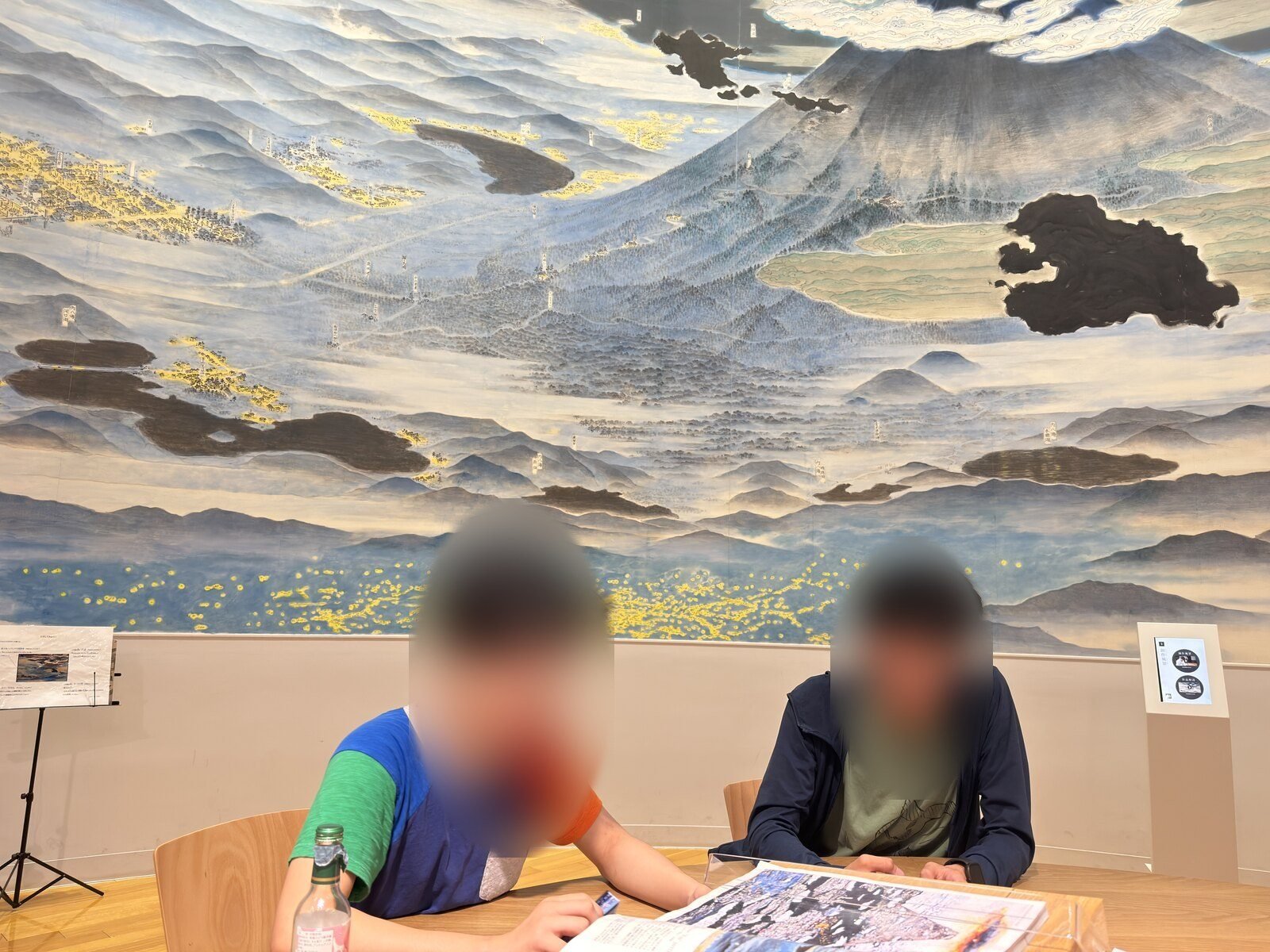
And there is a room with an enormous painted Fuji on the wall — the mountain half buried in clouds, done in the soft blue-gray of old screens — with tables in front of it where you can sit and read. We sat. Somebody had left out a picture book.
Admission was free, which still surprises me for how good it is. Check current hours before you go; they change with the season.
The lake
Then Lake Yamanaka, and the hat on the mountain, and the swans.
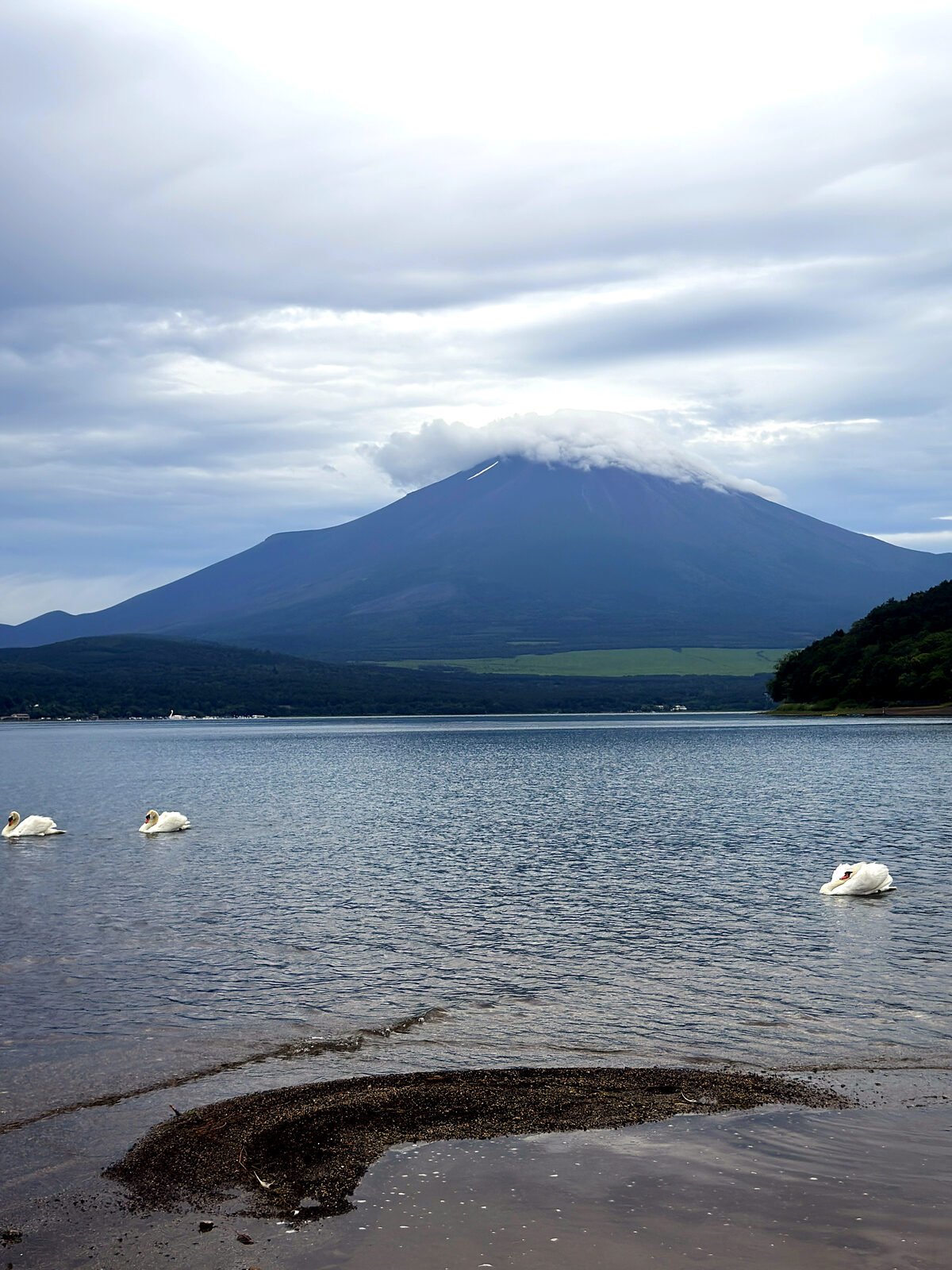
I asked whether the swans had been brought in for the tourists. They had not. They live there. They were spread out across the water in twos and threes, unbothered, and the water was flat, and the far shore was a low green line with Fuji rising behind it.
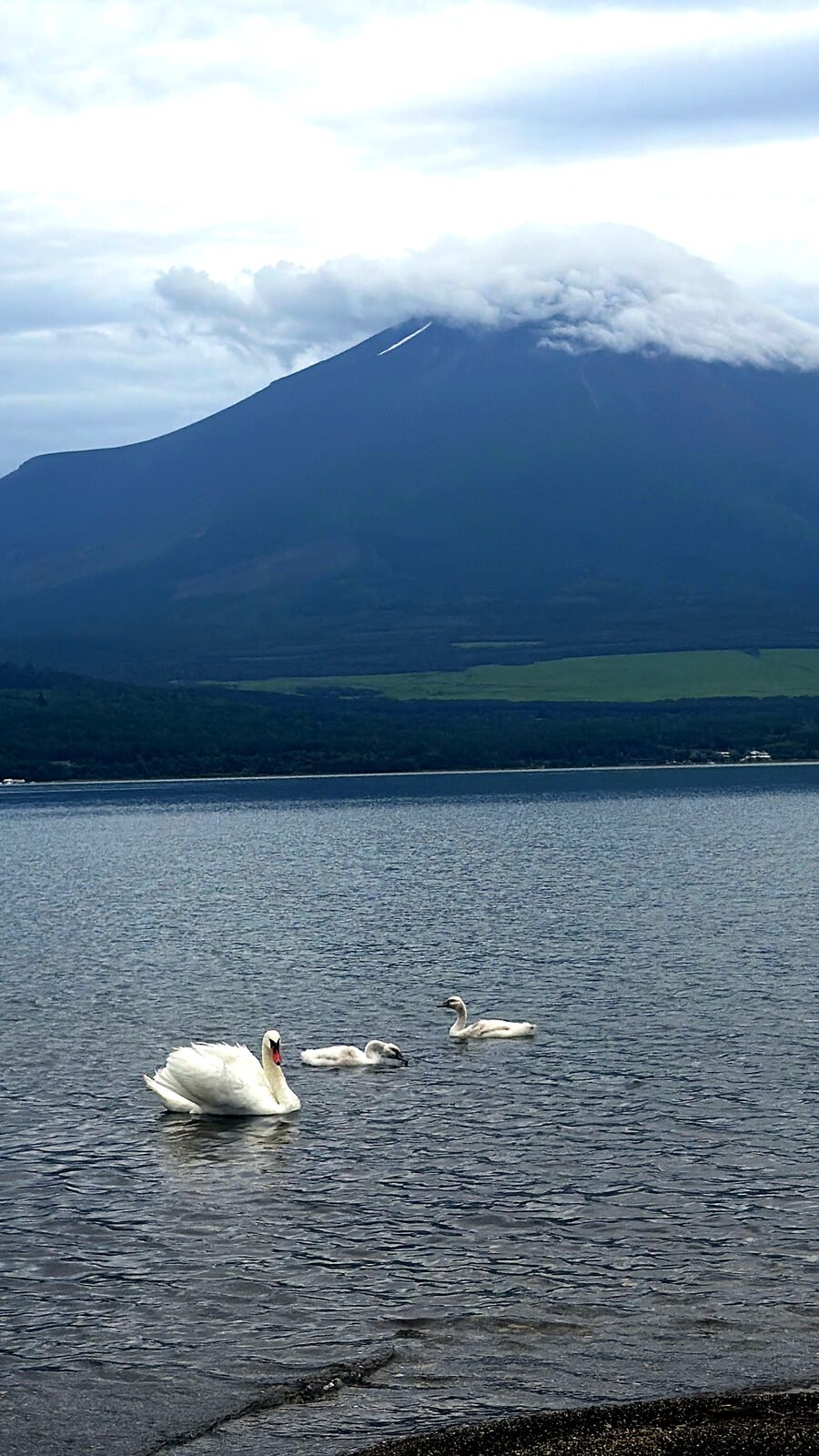
We didn’t get on a boat. We didn’t walk a trail. We stood and looked at it, and then we stood and looked at it a while longer. There were maybe four other people on the whole stretch of shore.
I keep coming back to that. The most famous mountain in Japan, in the middle of the day, and we had it nearly to ourselves.
I filmed a little of it, if you want to see the cap cloud and the swans move:
Lake Yamanaka, and the hat on the mountain.
The sake shop
At the end of the day, I told our guide I wanted to buy sake. Not a souvenir bottle — something good, and I was willing to pay for it.
He thought about it for a second, and then drove us to a shop that sells only the expensive ones.
That is it. That is the whole story, and it is the reason I would book a guide again. I said what I wanted out loud, and it became part of the day. No bus would have done that. No itinerary printed a month in advance would have had a sake shop on it. The bottle came home in my suitcase wrapped in a sweater.
What to know before you go
Search the platform yourself and compare. On MyRealTrip, “Tokyo tour” brings up many options — guide, vehicle size, private or shared, full day or half day. Read a few listings side by side. Prices shift with season and group size, so check current rates directly rather than trusting any number you read in a blog post, including this one.
Private costs more than a bus, and is worth it if stairs and timetables are a factor. If you are traveling with anyone who gets tired, or who would rather not navigate a transfer in a language they don’t read, this is where the money goes furthest.
Say what you want. Out loud, early. Our guide rearranged the end of the day around one sentence about sake. Guides can only do that if you tell them.
Eat the hōtō. Don’t look for something familiar. You are in the one place that makes it properly.
The shrine deserves more time than you think. If your guide offers twenty minutes there, ask for forty. The walk up the lantern avenue is the thing, and walking it slowly is the only way to get it.
There are night tours too. We booked one separately and saw Tokyo Tower and the city after dark. Different day, different guide, same platform — worth knowing it exists if your evenings are free.
Getting there
Kitaguchi Hongu Fuji Sengen Shrine (北口本宮冨士浅間神社)
5558 Kamiyoshida, Fujiyoshida, Yamanashi
Fujisan World Heritage Center (富士山世界遺産センター)
6663-1 Funatsu, Fujikawaguchiko, Yamanashi — roughly eight minutes by bus from Kawaguchiko Station. Open from 9:00, with shorter hours in winter and longer in midsummer; last entry thirty minutes before closing. Admission free.
Oshino Hakkai (忍野八海) — the village of spring-fed ponds between Fujiyoshida and Lake Yamanaka that most Fuji day tours stop at. Free to walk; some ponds sit on private land with a small charge.
Lake Yamanaka (山中湖) — the largest of the Fuji Five Lakes, about twenty minutes by car from Fujiyoshida.
Please confirm hours and access before you travel; these change.
Afterward
I have been home a while now, and the thing that stayed isn’t the mountain.
It is the lantern avenue — the green light, the gravel underfoot, the cedars going up and up. And the quiet at the lake, which I had assumed would be impossible at a place that famous.
Both of those happened because somebody who knew the area decided when we should be where. That is what you are actually buying. Not transport. Timing.
If you have taken a day trip with a private guide somewhere — the kind where you would have seen half as much on your own — I would like to hear where you went. Tell me in the comments.