My mother loved to make clothes.
She doesn’t sew anymore. But a while back my younger sister brought me a bundle of fabric from Korea — leftovers from my mother’s sewing, folded away and kept for more than forty years. A red knit scattered with small white daisies.
I looked at it for a long time before I cut into it.
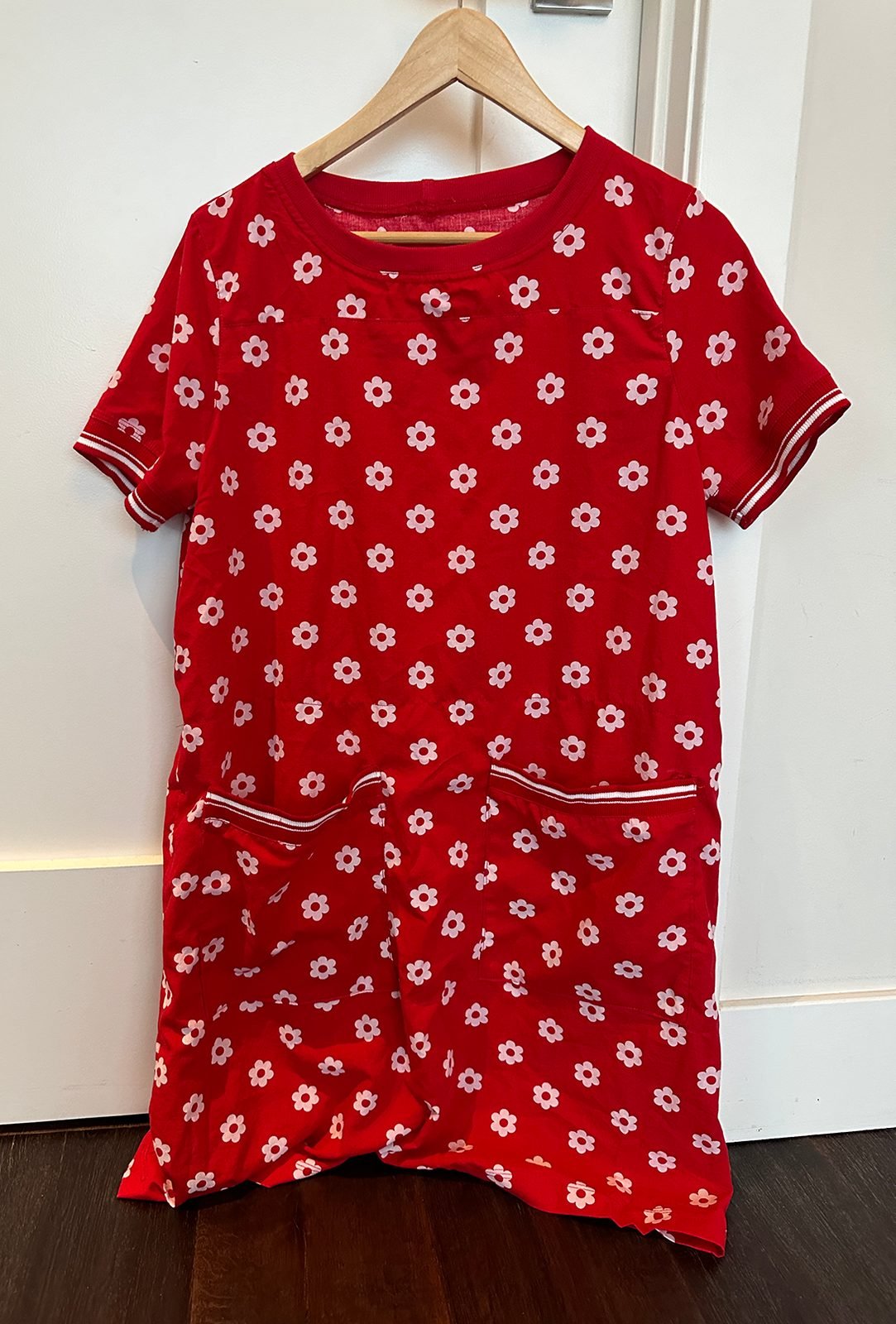
What I made from it was a dress for my older sister. An easy shape, nothing fussy, something she could pull on and wear all day. Three sets of hands have now touched that cloth: my mother chose it, my younger sister carried it across an ocean, and I cut it.
That is the thing nobody tells you about sewing. You think you are making a garment. Half the time you are making something for somebody.
Here is what came off my machine recently, and who each piece was for.
For my older sister
The red daisy dress. The one from my mother’s fabric. Soft knit, so it needed no zipper and no fitting fuss — the right call for a fabric you have one piece of and cannot replace. Cut it wrong and there is no second chance.
The black beaded lace shift. Also hers. Beaded lace is slow to sew and worth it. The beading does all the work, so the shape can stay plain; a simple shift lets the fabric be the whole event.
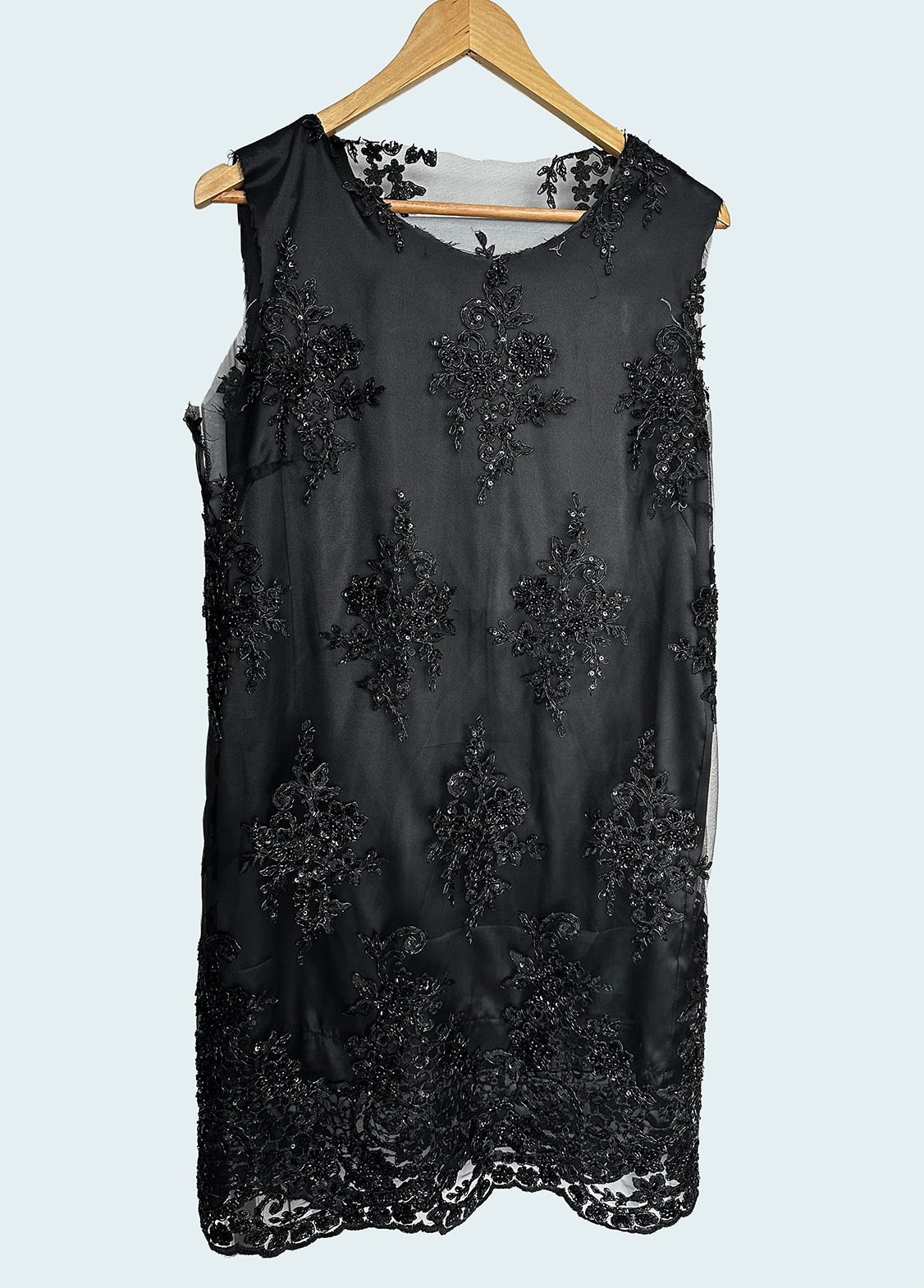
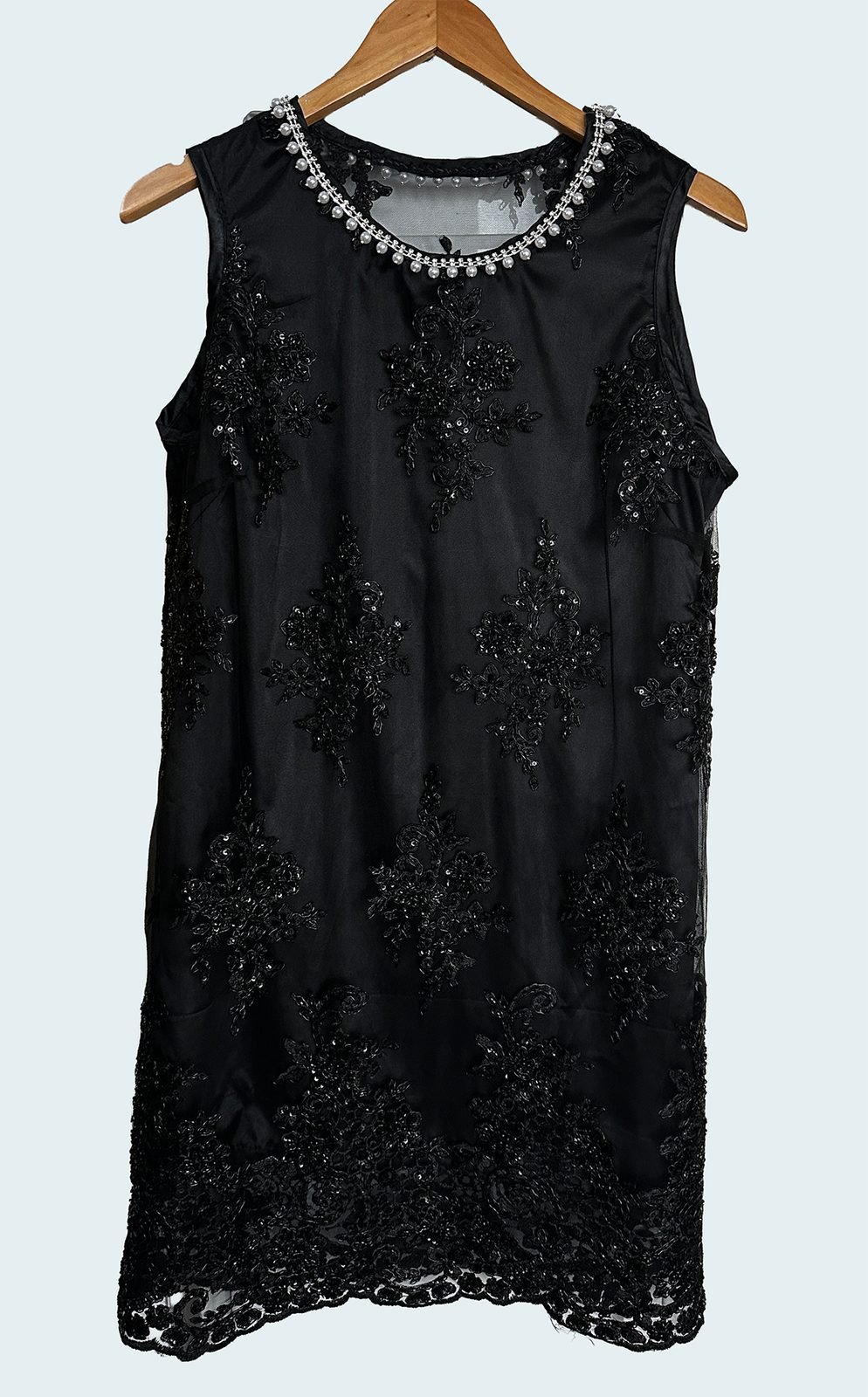
Afterward I went back and hand-stitched pearls along the neckline. It is the same dress, and it is not the same dress. If you have something that is almost right, look at the neckline before you look at anything else. That is where the eye lands.
The lavender dress with silver leaf. Also hers, and this one is plain satin. Nothing expensive — and that is the point.
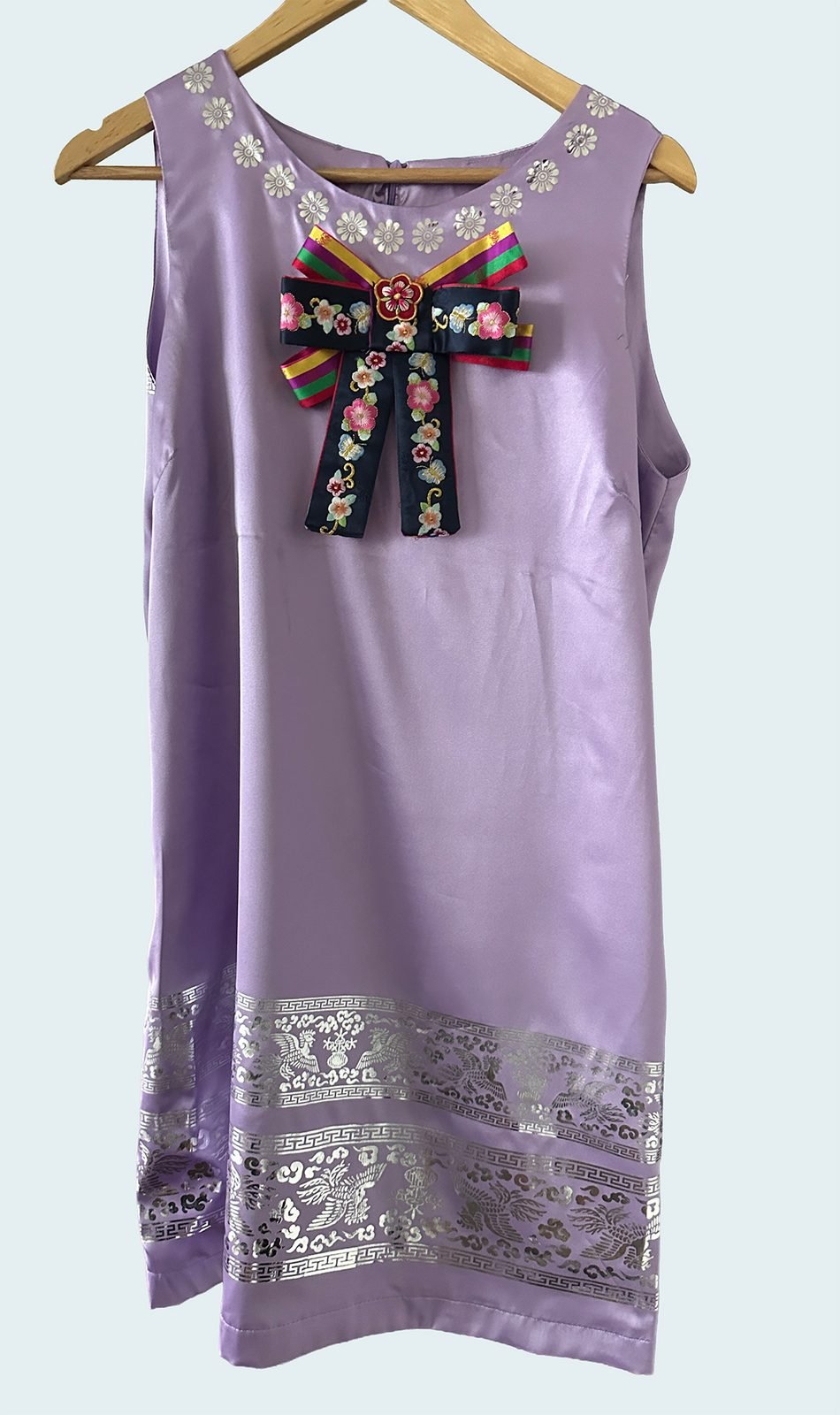
What makes it is the metallic work: small silver blossoms scattered around the neckline, and two wide bands of silver at the hem, phoenixes and a running key pattern. This is geumbak, the Korean technique of applying gold or silver leaf to hanbok fabric. In its proper form it is a serious craft — there is a workshop in Seoul that has been doing it for over a century and a half.
Mine is the home version. I bought heat-transfer foil in Korea — at Daehan Geumbak, on the second floor of the hanbok fabric market in Dongdaemun, Seoul. You go in person, you look at what they have, and you carry it home. Then you press it on with an iron.
Then I added a hanbok-style ribbon at the chest, with embroidered flowers and bright stripes, and the dress stopped reading as a plain shift entirely.
This is the one I would tell people to steal. The satin cost very little. The foil did the work. If you have been looking at expensive brocade and wondering how anybody affords a dress like that, this is one answer.
The pressing itself was easier than I expected, and the whole trick is one step: lay a cloth or a sheet of baking paper over the foil before the iron touches it. Never iron it bare. With the cover on, it goes down cleanly.
Washing is the part I am careful about. I have not put this dress through a machine and I would not. If it needed cleaning I would wash it gently by hand. Treat a foiled piece as something you spot-clean and hand wash, and plan for that before you decide what to make.
That makes three dresses for the same person, which I did not plan and did not notice until I laid them all out. She is easy to sew for, and I think I like having a reason.
For a friend
There is a woman I know, older than me, who has been kind to me for a long time. She takes me out to eat. She has done a great many things for me that she did not have to do.
You cannot really pay that back. But I can sew, so I made her a dress.
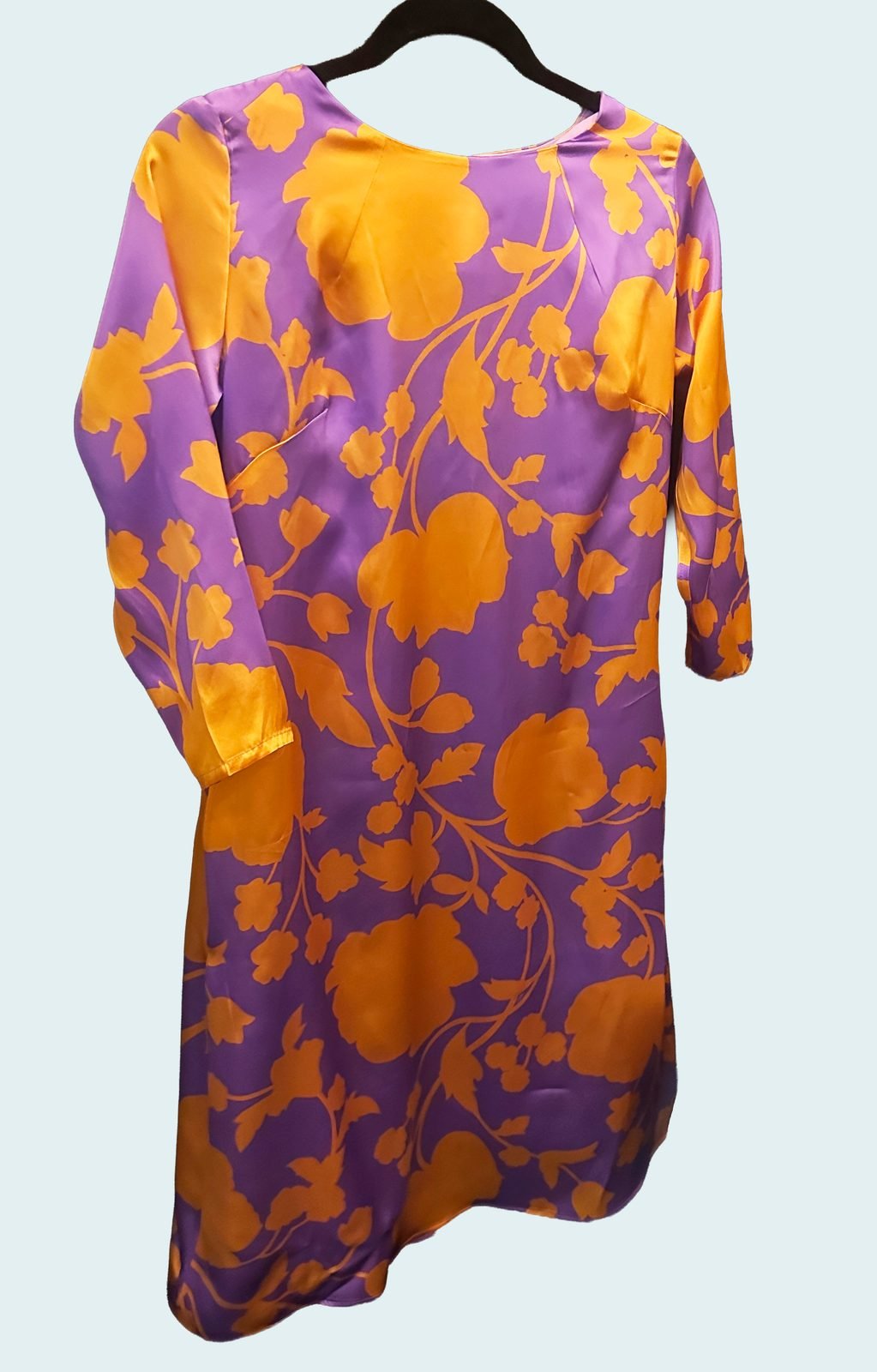
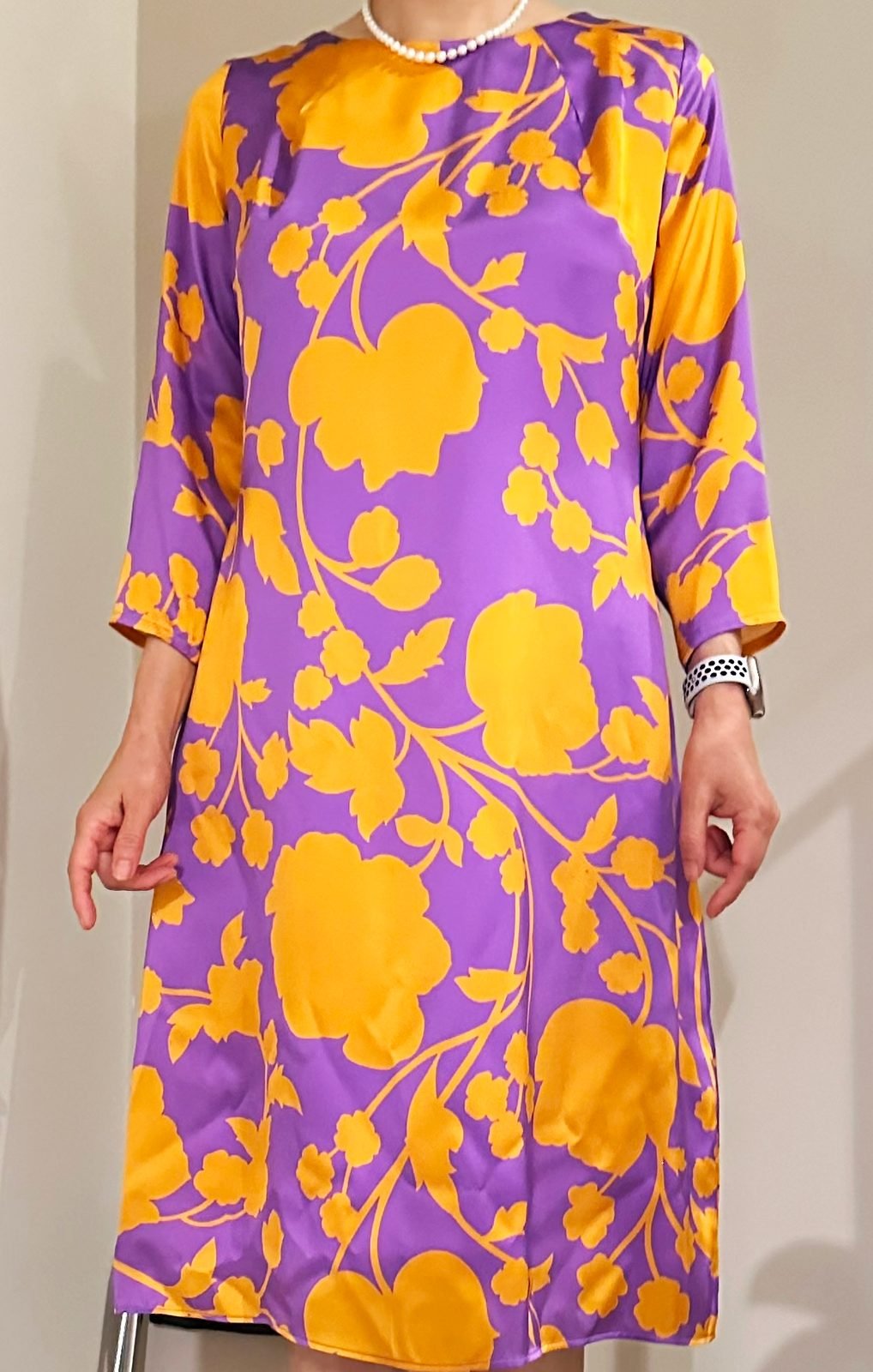
I chose the fabric for her, not for me. A pink-toned purple, closer to orchid than violet, with big orange flowers thrown across it. She has very fair skin, and I was fairly sure the pink in it would be her color — not the pink I would wear, the pink that would look right next to her face. That is a different calculation, and you can only make it if you are thinking about one specific person standing in one specific light.
Then I saw her wearing it, and it did suit her. I had been right about the pink.
That is the most satisfying thing that has happened to me at a sewing machine. Not a neat seam. A guess about somebody else’s face, confirmed across a room.
If you are making something for someone, hold the fabric next to their face, or picture it there. The color that flatters you is not the point.
The gala dress
This one started on paper.
I drew it first — black sequinned mesh, elbow sleeves, a long sweep at the back, and a band of green at the neck. Then I made the thing I had drawn.
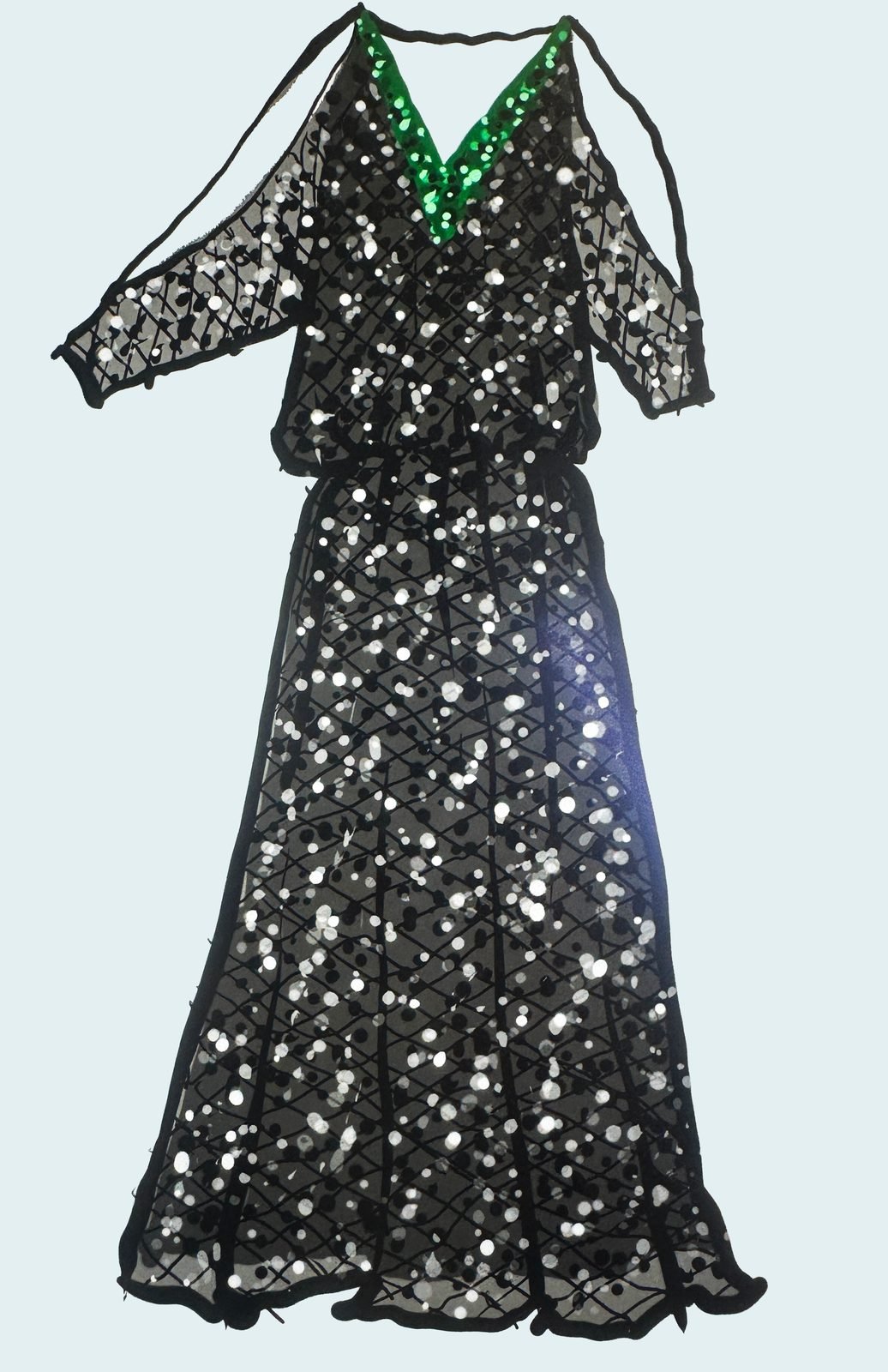
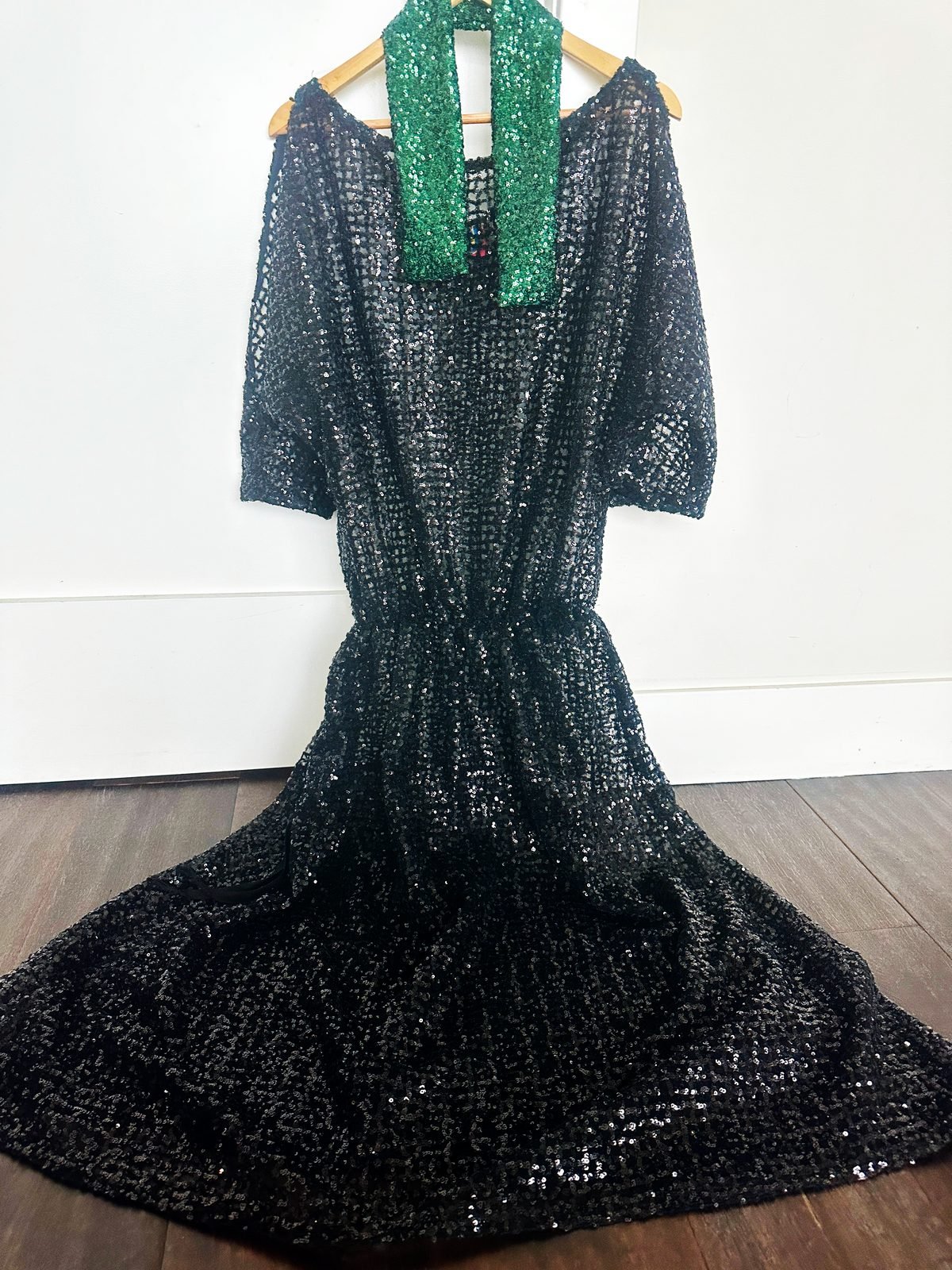
The green was the whole decision. In all black it would have been a dark dress in a dark room. One band of color at the neckline, where people actually look, and it becomes a dress somebody remembers.
And then the part I am most pleased with, which does not show in any photograph: the waist is elastic.
A gown with a fitted waist and a zipper is a gown you spend the evening sitting up straight in, not eating very much, waiting to get home. I did not want that evening. I wanted to go, sit down, eat dinner, and stay until the end. So I built the dress around the evening I actually wanted to have.
Nobody could tell. The sequins and the sweep of the skirt carried the formality; the waist just quietly did its job.
If you make something formal, ask yourself what you will be doing in it for four hours. Then design for that, not for the photograph taken in the first ten minutes.
For me
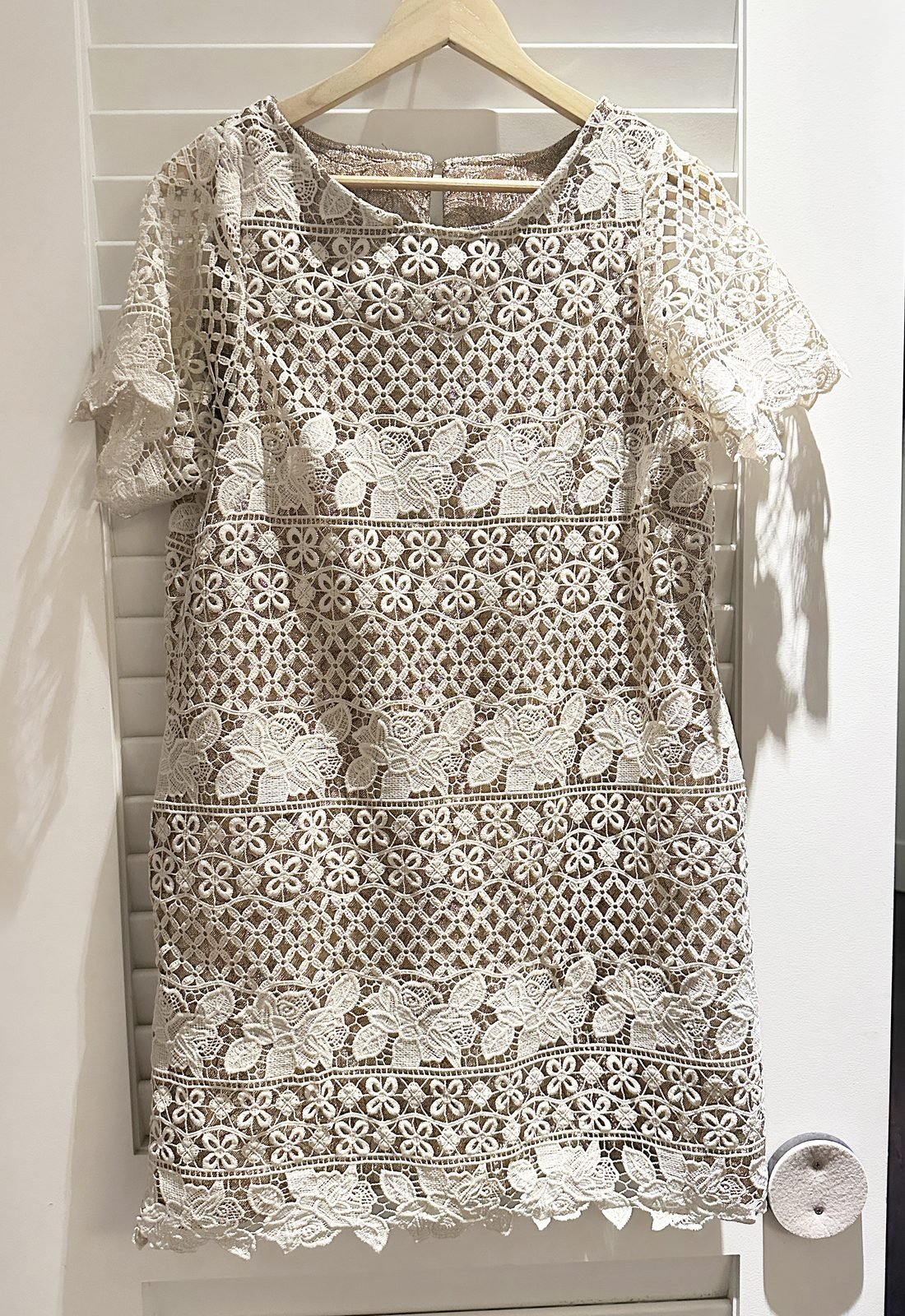
The ivory guipure lace dress. I wanted a lace dress. That was the whole reason — not an occasion, not a plan. I just wanted one, so I made one. You are allowed to do that.
The teal and gold rose print, twice. A shirt and a sleeveless dress from the same silk.
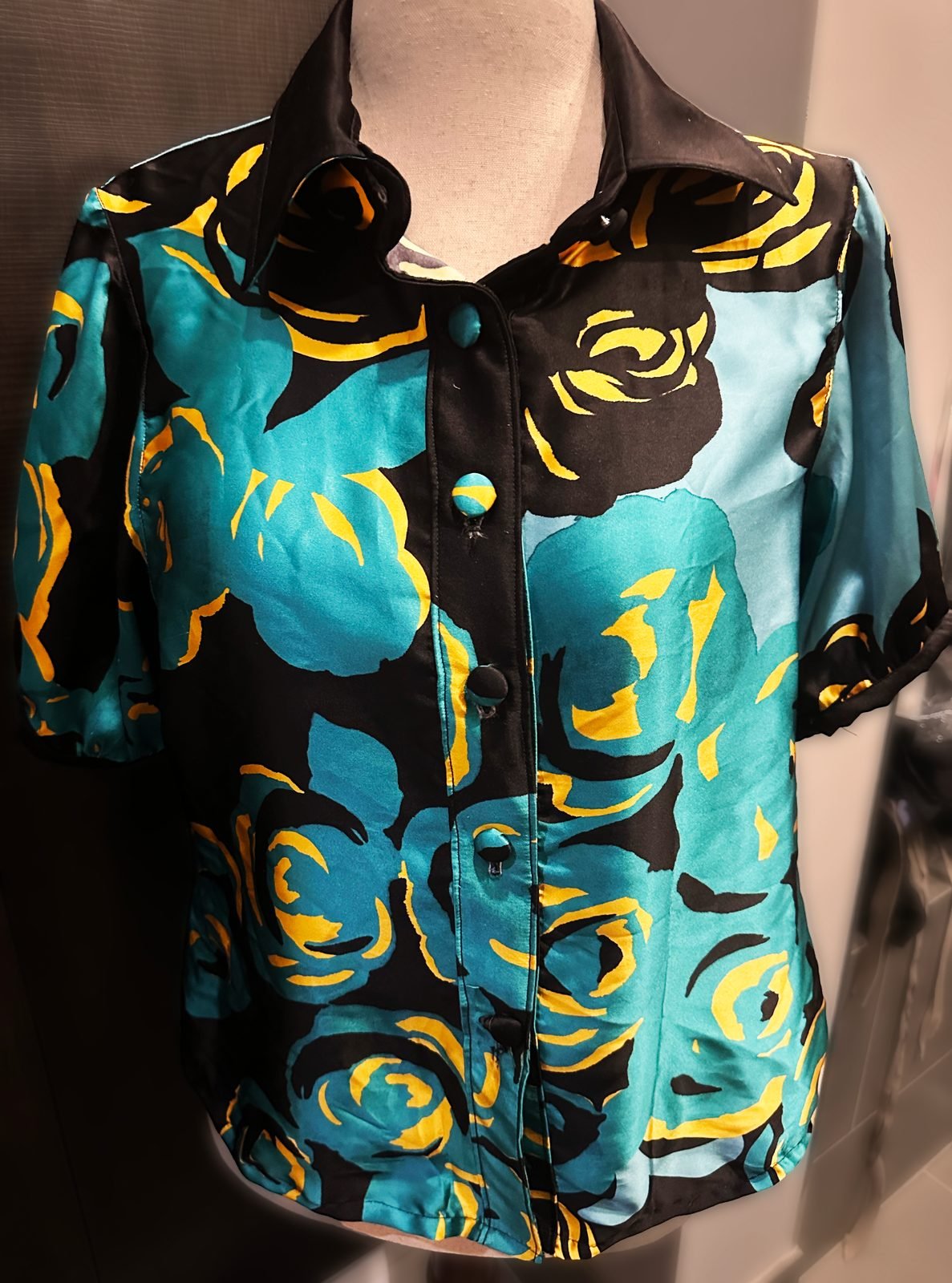
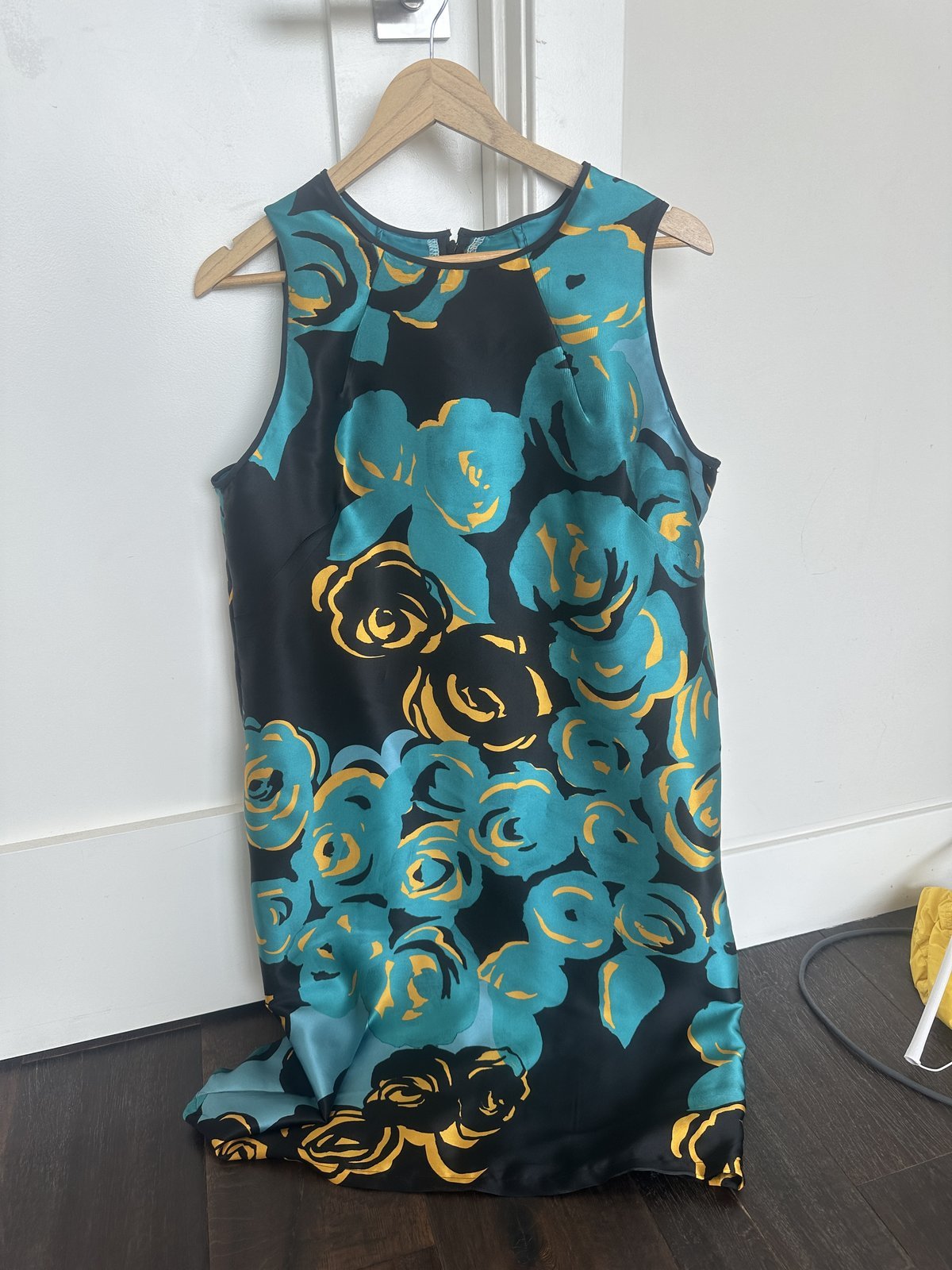
That fabric came with a method I now use every time. I was at Mood standing in front of the silks and I could not tell which color was mine. So I held each one up under my chin and took a photo of my own face with my phone. Not a mirror — a photo. Then I looked at the photos side by side.
The difference was obvious in a way it had not been while I was standing there. One made me look rested. Another made me look like I needed to sit down. I bought the one that made me look rested.
And here is the part I did not expect. It suits my coloring, and I still do not reach for it often. Something about it reads older than I feel. A color can be right for your skin and wrong for you, and you will not know which until you have worn it a few times. That is not a wasted project. That is information.
The grey chiffon dress with the embroidered collar. This is the one I am proudest of, and the reason is a piece of it about the size of my palm.
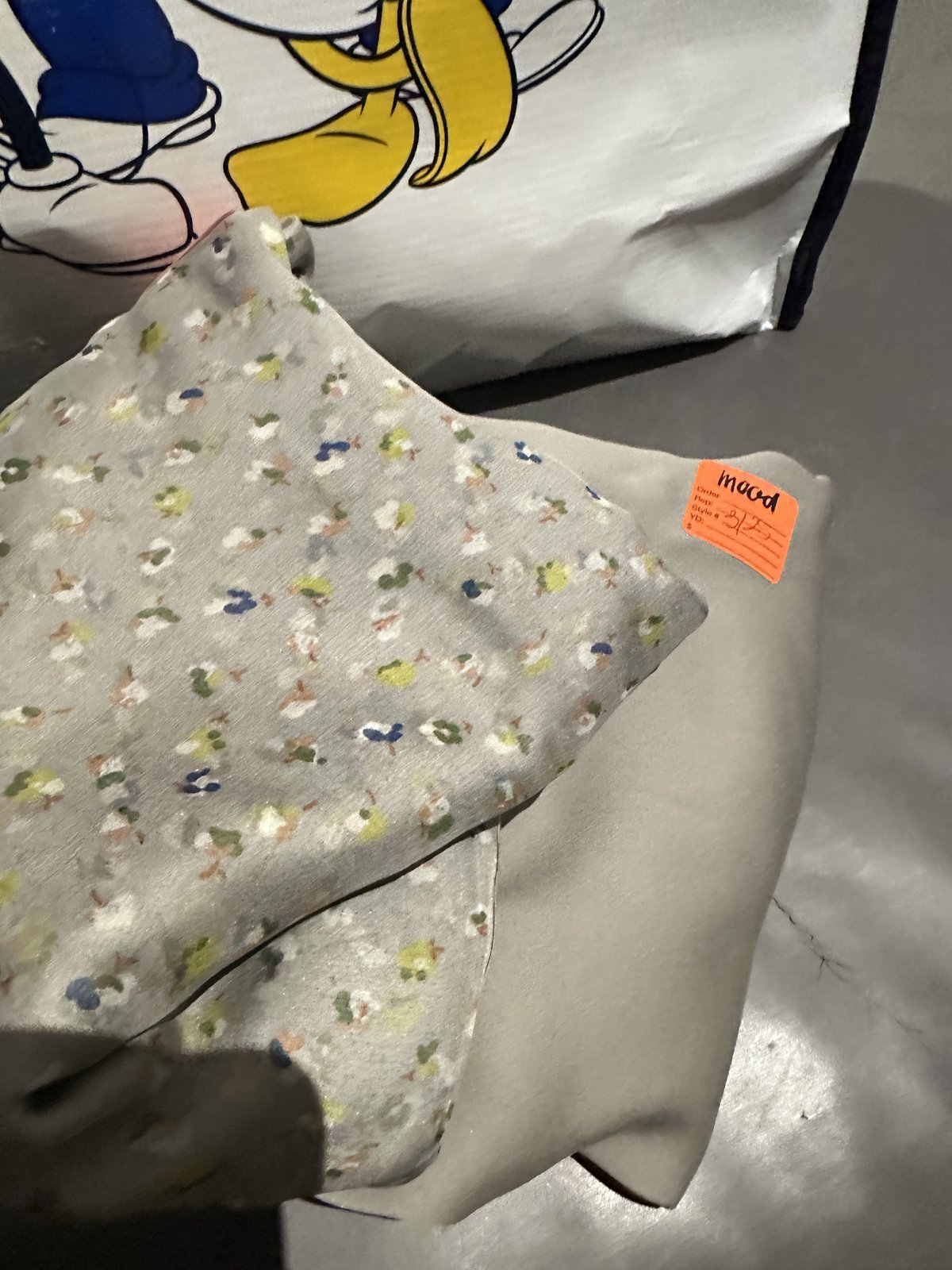
The silk came from Mood here in Los Angeles. A soft grey chiffon scattered with tiny flowers in yellow, orange, blue and green — the kind of print that is charming up close and turns into a grey haze from across a room.
I made it into a dress with ruffles down the front, soft sleeves, a dropped waist and a gathered tier at the hem, with buttons covered in the same print. Then I put a collar on it in plain grey silk, no print at all.
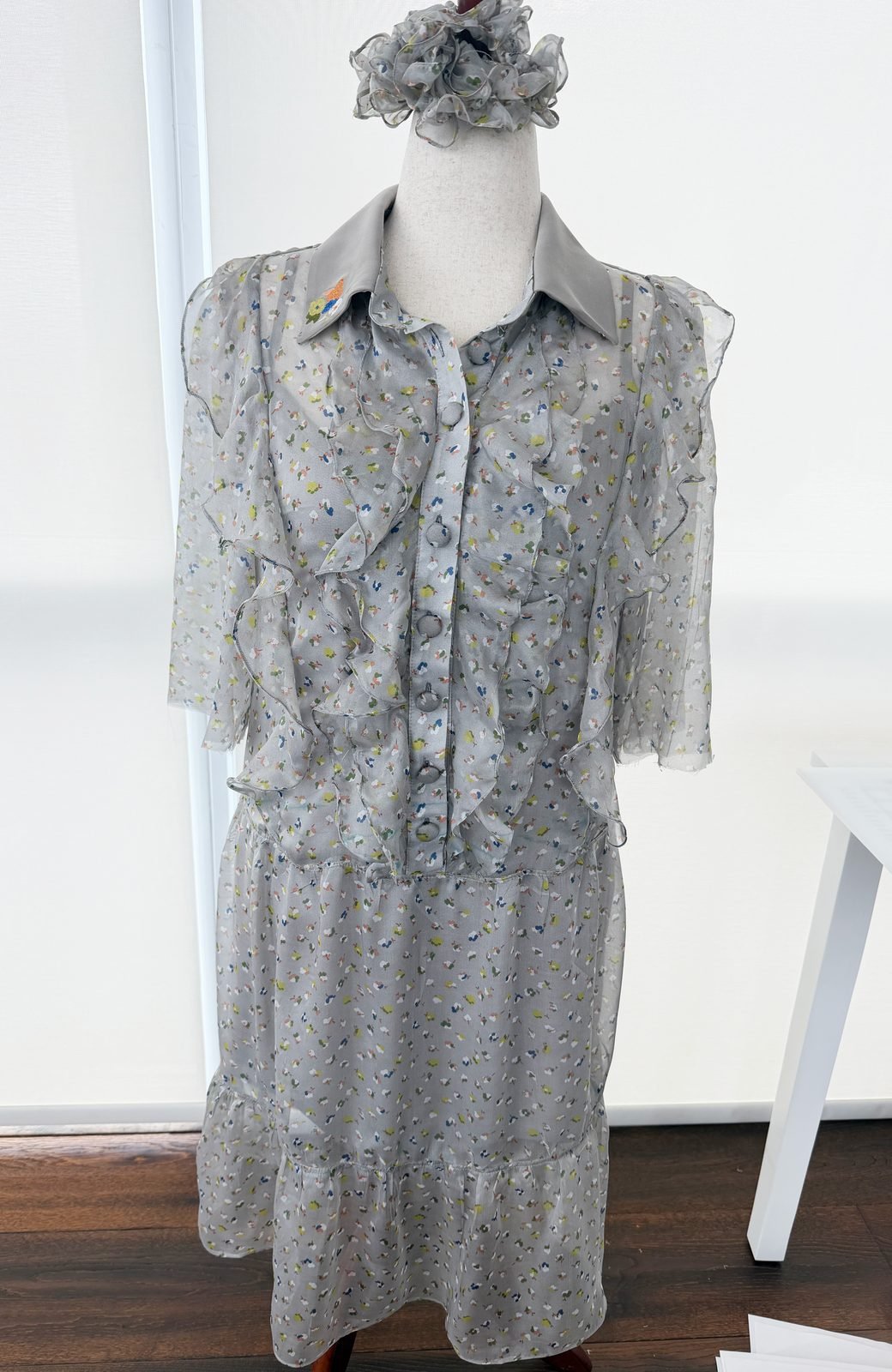
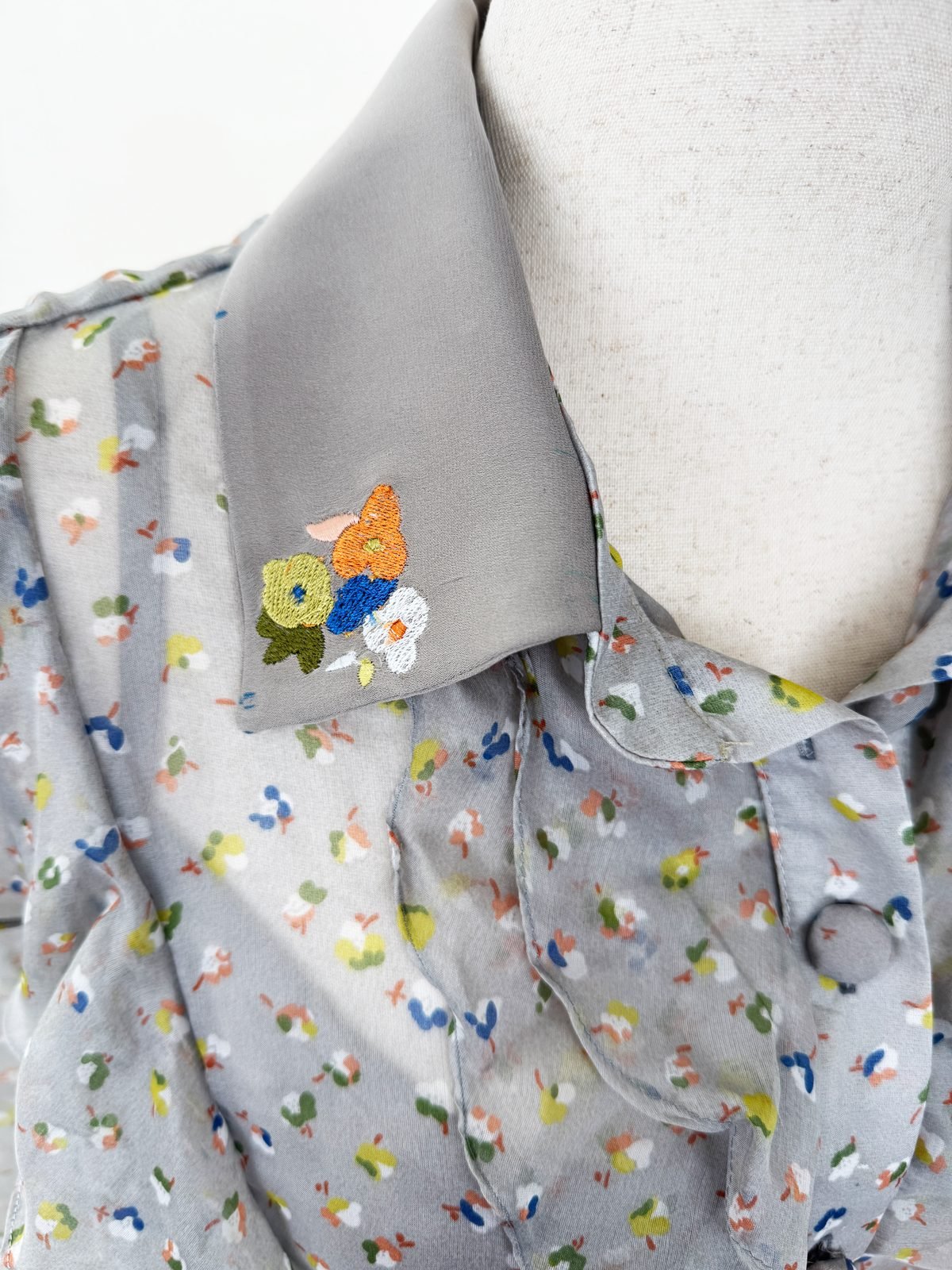
And then I did the thing I would do again on every print I ever sew. I took one of those tiny flowers, scaled it up until it was many times its printed size, redrew it, and embroidered it on the collar with my machine.
So the collar carries the same flower as the dress. Same shapes, same colors — just enormous. It belongs completely, and it is the only place on the garment where your eye can rest.
That is the whole idea, and I use it constantly: a busy print needs one quiet area, and the quiet area is where you put the good detail. Nobody has ever looked at this dress and seen a print with a collar stuck on it. They see a dress that was designed.
The chiffon was also sheer enough to see through, so the dress is really two garments. I made a slip dress to go underneath in a solid, and the outer dress hangs over it.
That part is not glamorous and it is the reason the dress is wearable at all. If you fall for a sheer fabric — and you will, the good ones are usually sheer — buy the solid for the slip on the same trip. Otherwise you end up with a beautiful thing you cannot leave the house in.
The retro print shift. Pink, raspberry, cream and dark brown, in rows of scalloped medallions — a print that would have been at home in 1968 and looks right again now.
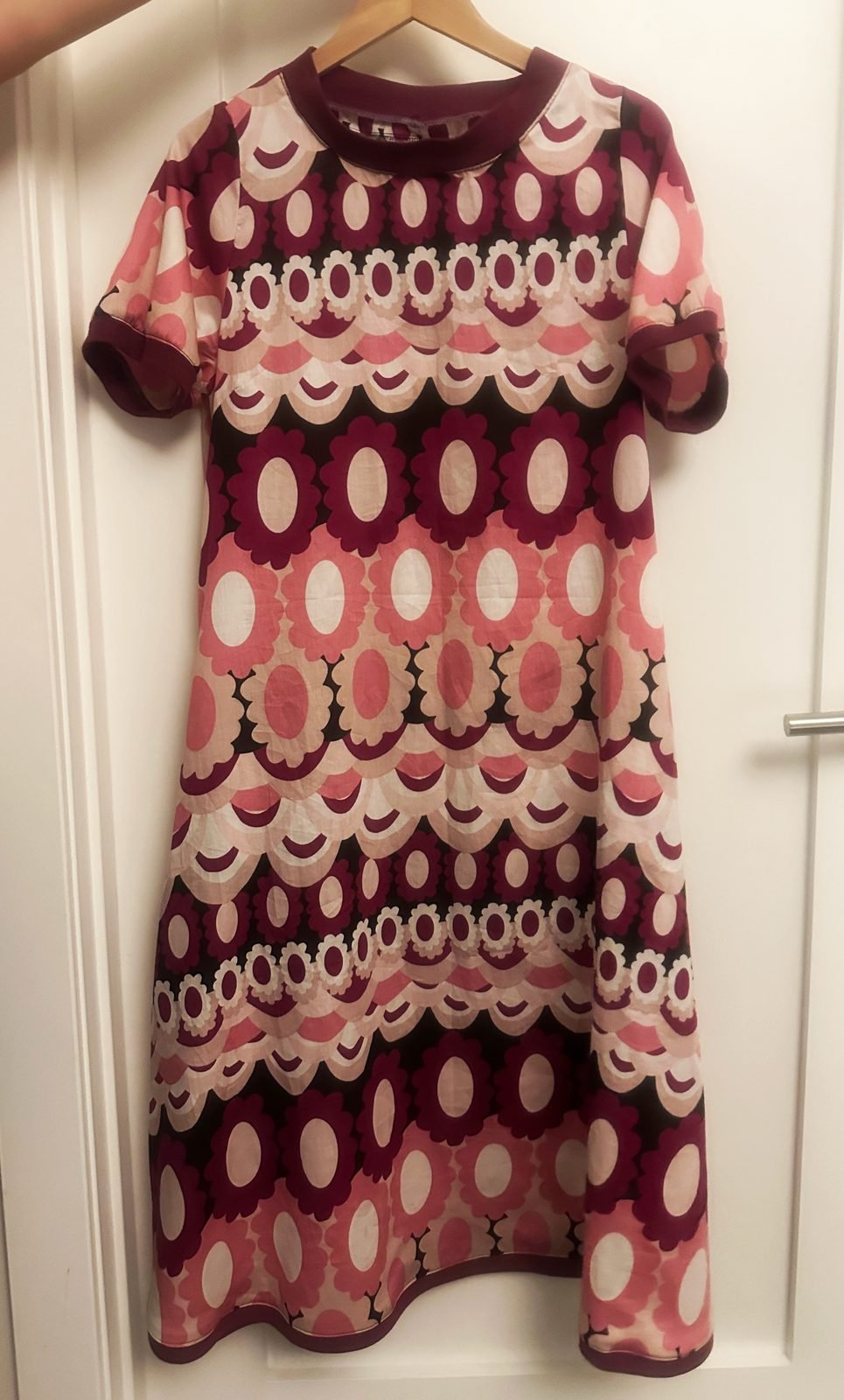
A print that loud needs a plain shape, so the dress is a simple A-line with short sleeves. But the part that makes it is the edges. I bound the neckline, the cuffs and the hem in solid burgundy, pulled from the darkest color already in the print.
That is the trick, and it costs almost nothing: when a print is busy, finish the edges in one solid color taken from inside the print. It gives the eye a boundary. Without it the dress reads as a length of fabric with armholes; with it, the same dress looks finished.
This is also the one I reach for most. Comfortable, easy to put on, no thinking required — which is a reminder that the piece you wear most is rarely the one you worked hardest on.
The beige ruffle blouse. I have been in a ruffle mood for a while and I did not fight it. I made the blouse I wanted to keep wearing.
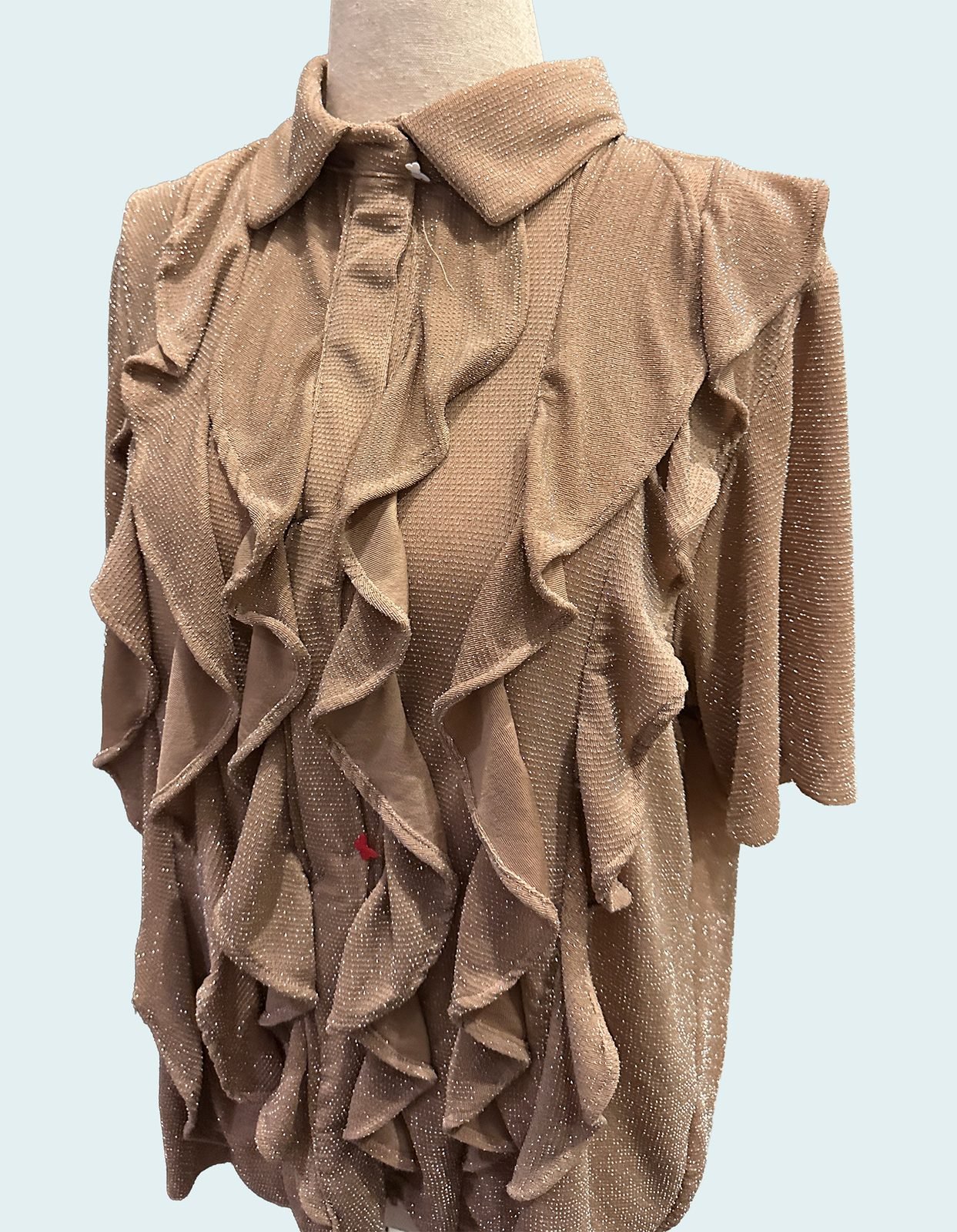
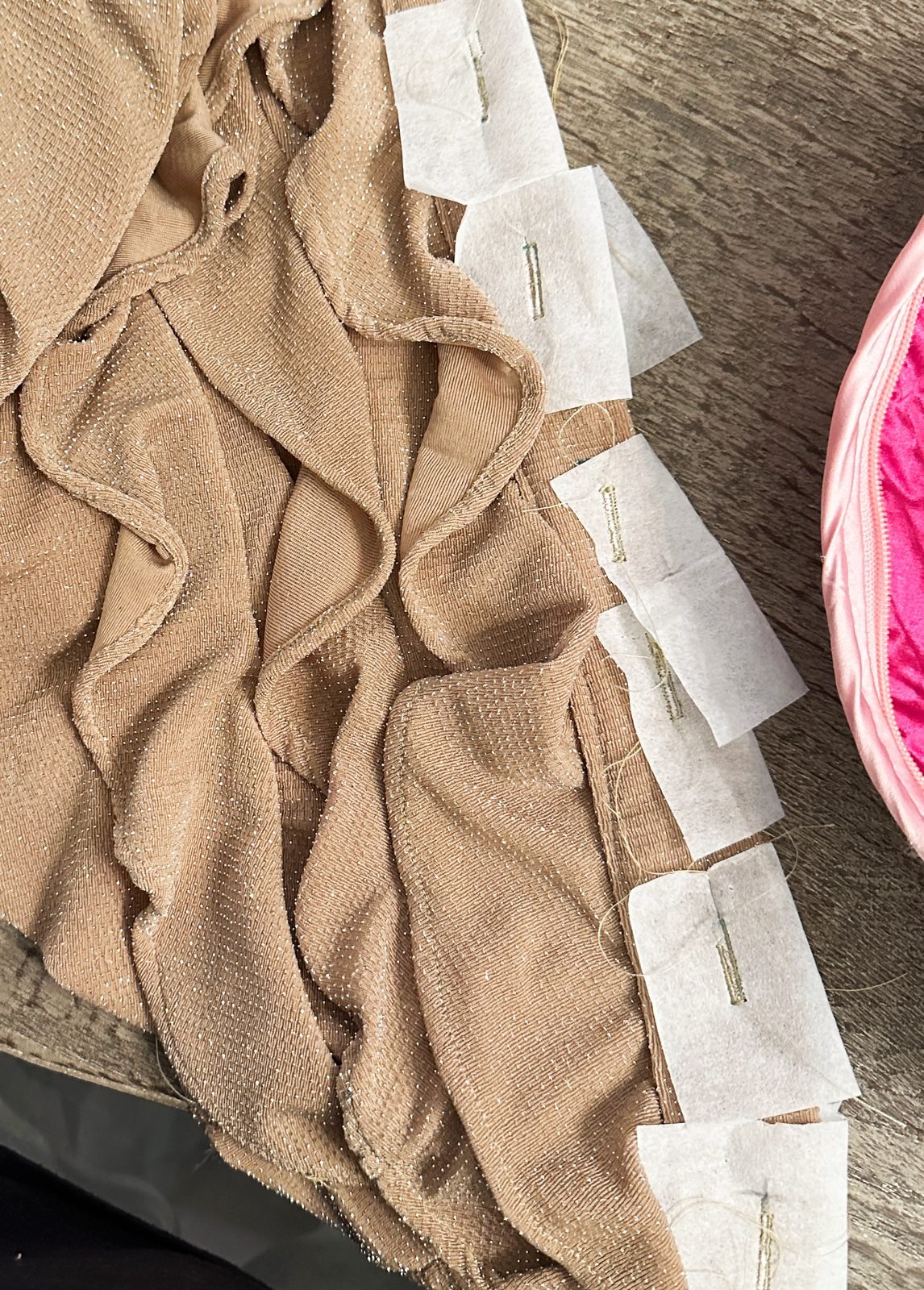
One note on that fabric, because it caused the only real trouble. It was so soft it would not hold still — the machine kept pulling it down into the needle plate and the stitches gathered. For the buttonholes and the embroidery I slid a sheet of tear-away stabilizer underneath and sewed through both layers, then tore the paper away afterward. It costs very little, and it is the difference between a buttonhole that looks bought and one that looks homemade. On anything drapey I now reach for it before I start rather than after I have unpicked something.
This is the one that surprised me. No occasion attached, made purely because I wanted it — and it has become the thing I reach for when there is a dinner. The pieces you make because you want them get worn. The pieces you make because you should tend to hang there.
The mustard winter dress. The fabric was a gift from someone I know. Knit, warm, right for winter.
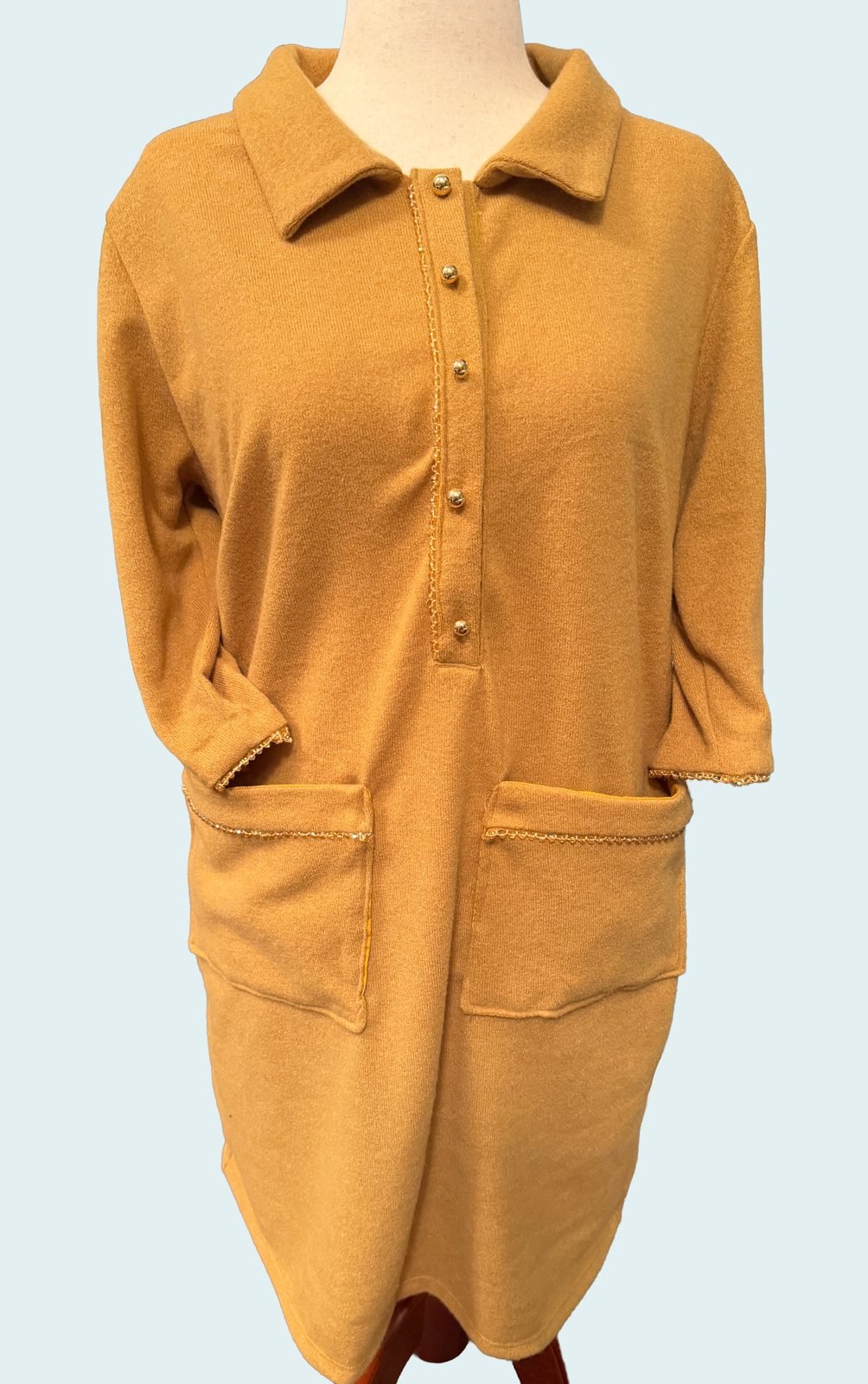
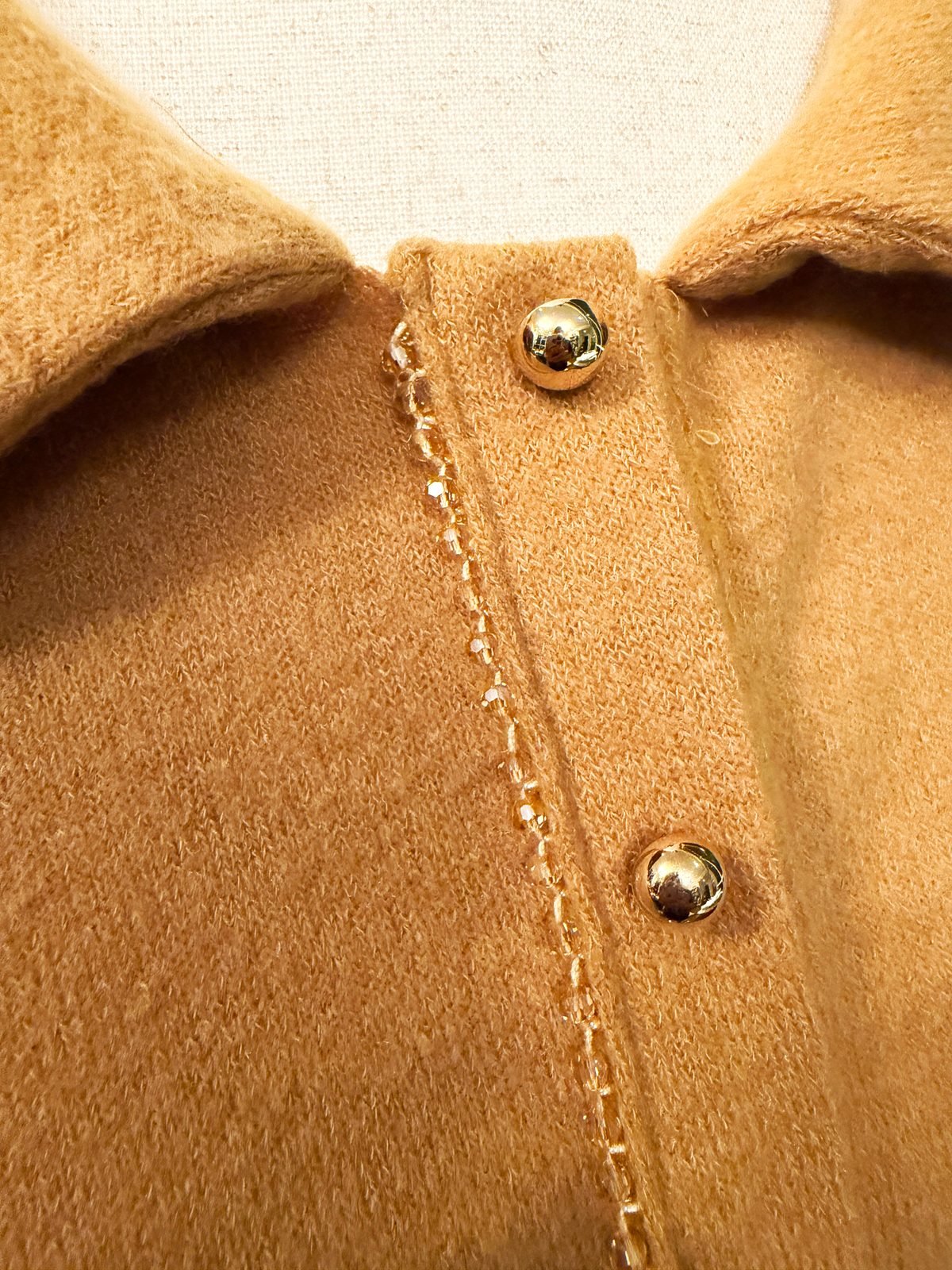
Then I sewed it and wore it and it grew. Knits do that. As a dress it hangs longer than I want now.
I did not give up on it. I bought trim in a color that worked with the mustard and ran it down the button placket, where the eye goes anyway. Up close you can see it: a line of small bright beads against the soft gold, right beside the buttons. That one strip is the difference between a plain knit sack and a dress with an idea in it.
It is not what I planned. It is still in my closet.
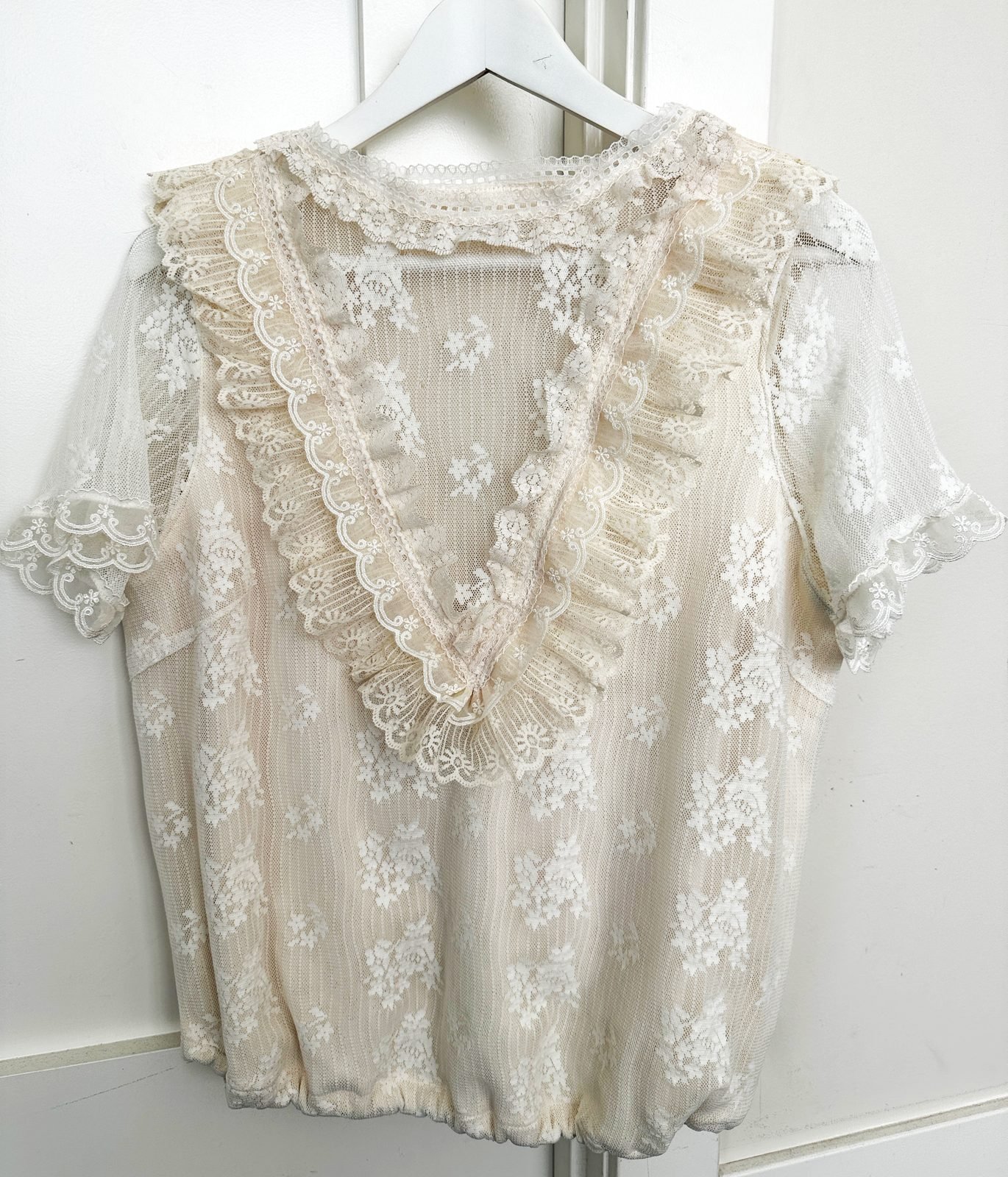
The white lace top. Small, fiddly, the kind of thing I make when I want to sew but do not want to commit to a whole dress.
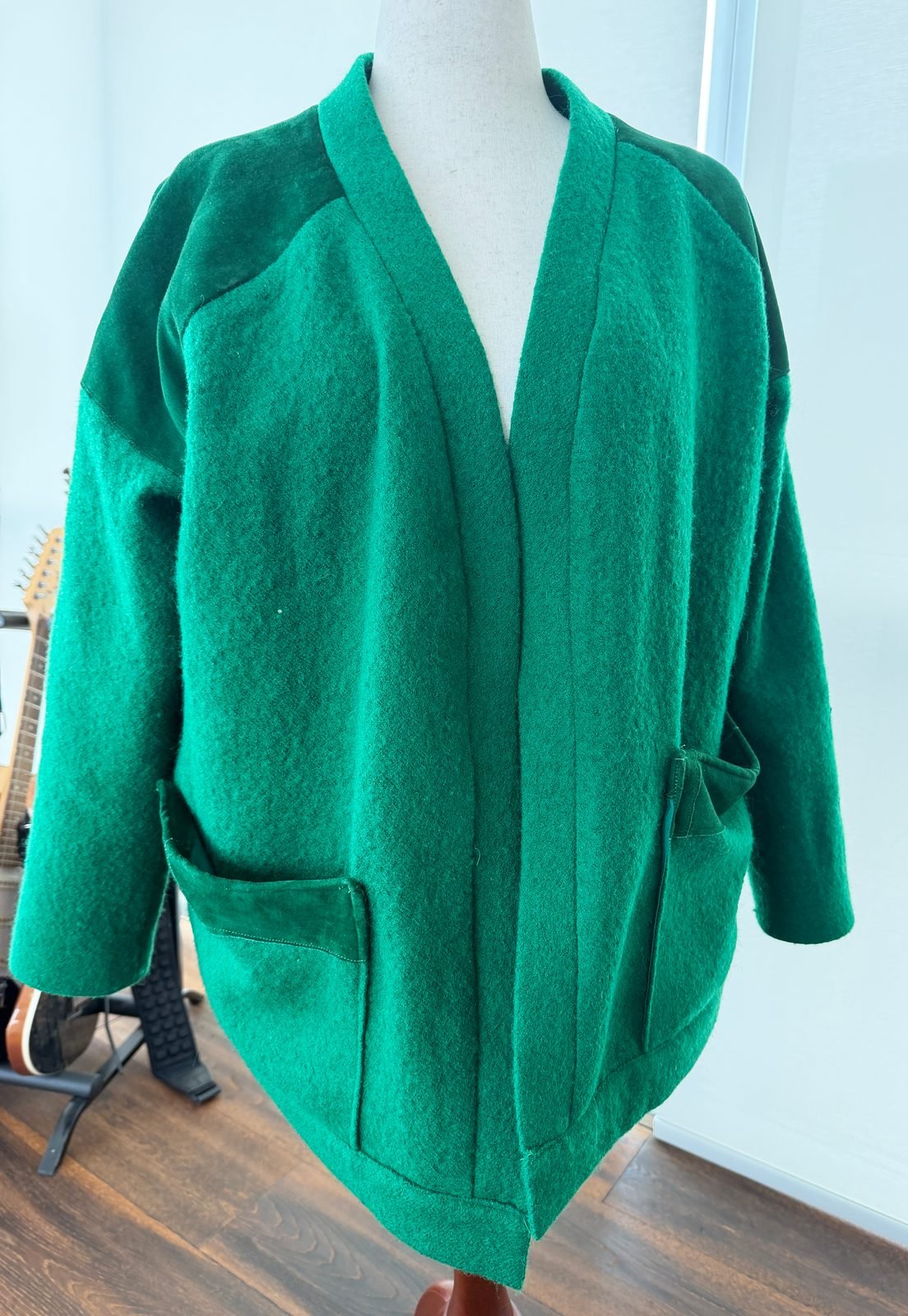
The green wool cardigan. This one started the way a lot of my clothes start — I saw the colour at the fabric store and bought it before I had any plan for it. Then the weather began to turn, and the plan arrived.
There was no pattern. I took a loose jacket I already own, laid it on the wool and drew around it. That is the method I use for anything that does not need fitting, and it costs nothing: your own wardrobe is a pattern library you have already tested on your own body.
I cut it with raglan sleeves on purpose. A set-in shoulder seam sits right at the widest point and makes my shoulders look broader than I want them to; a raglan runs the seam up toward the neck and softens that line. I lined it, too, which takes an afternoon and makes a home-sewn piece feel like a bought one.
Plain green wool on its own read flat to me, so I bought a piece of suede and set it in. One contrasting material is usually all a simple shape needs.
For my husband and me
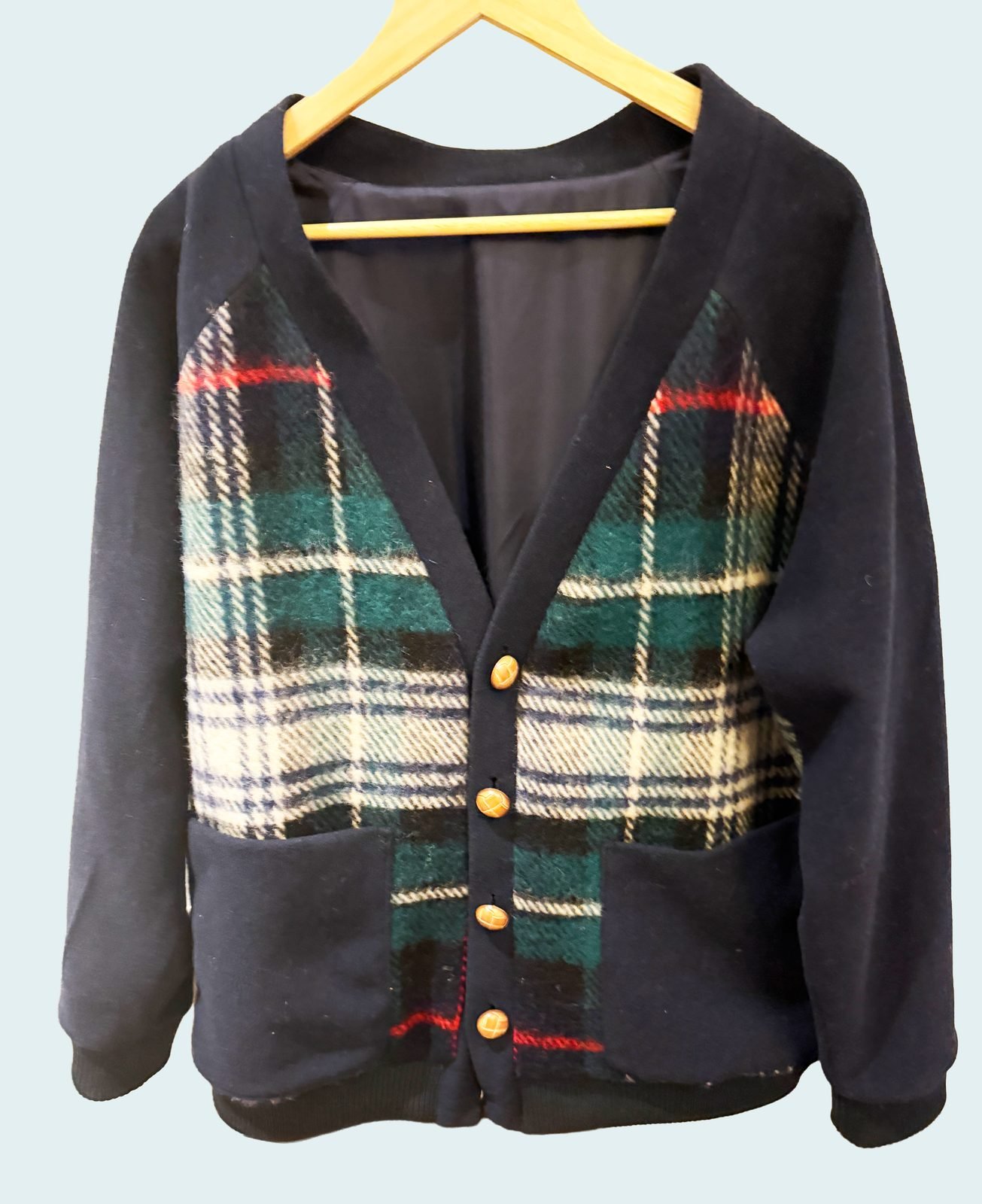
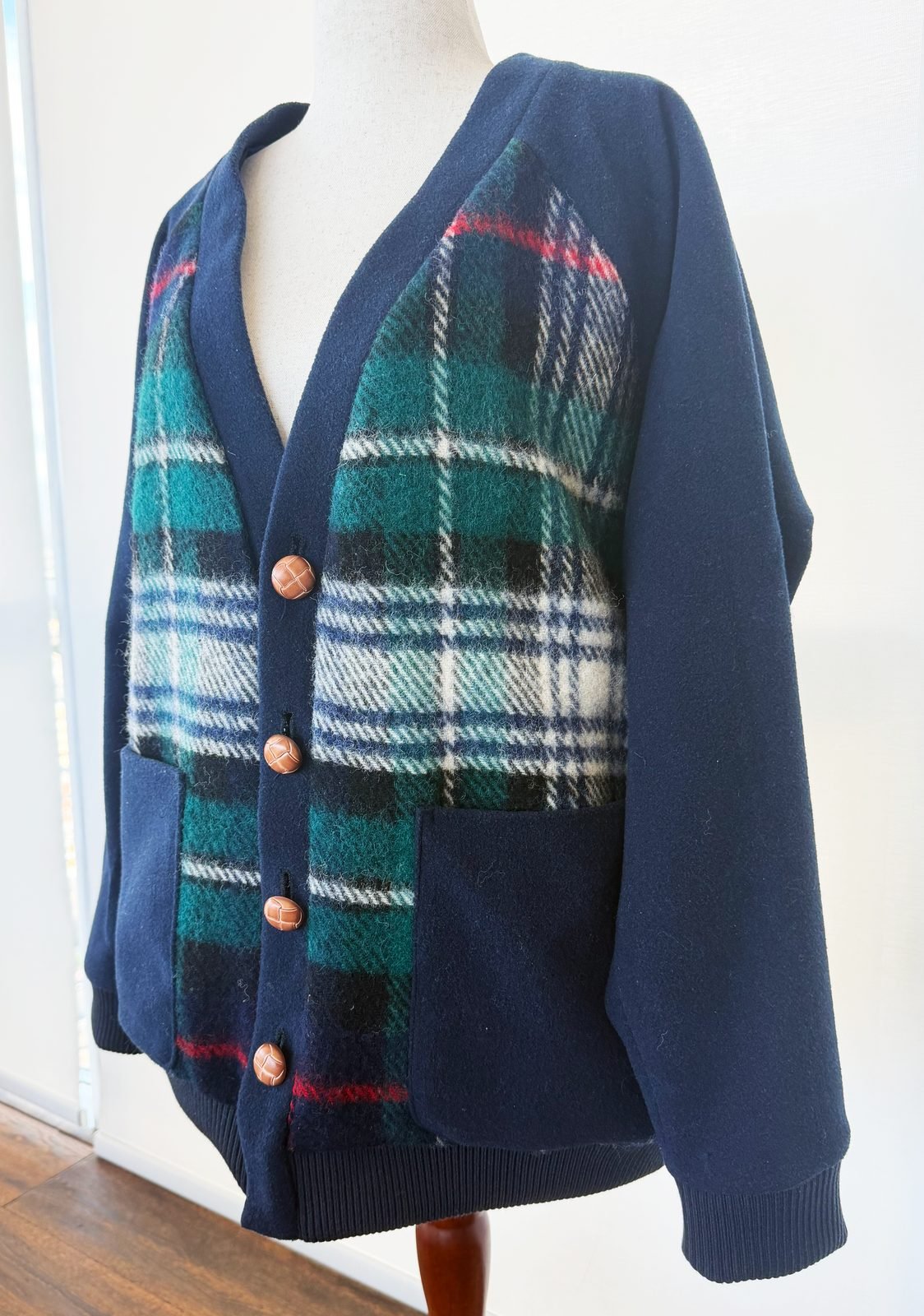
The plaid cardigans. This is my favorite story of the lot.
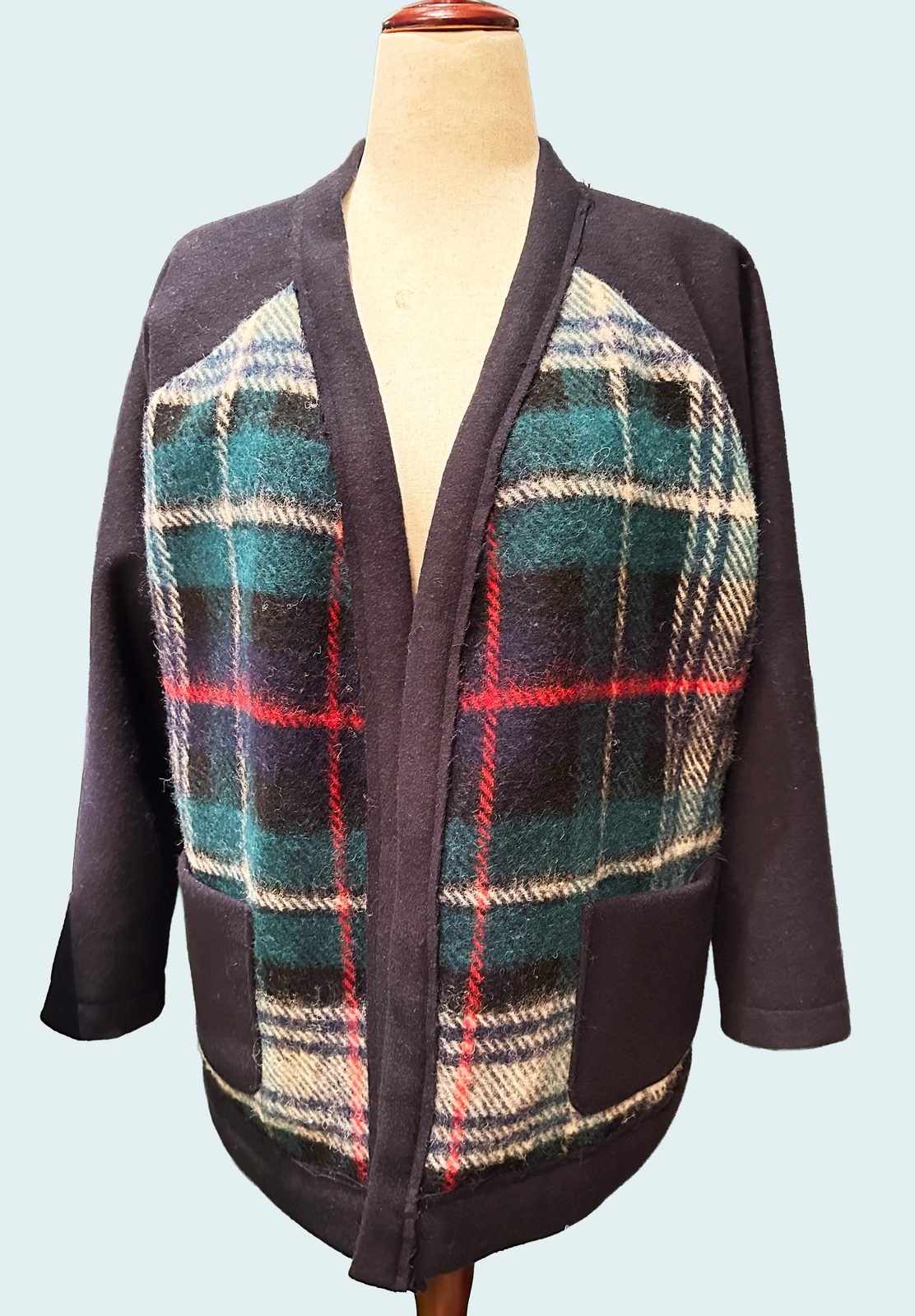
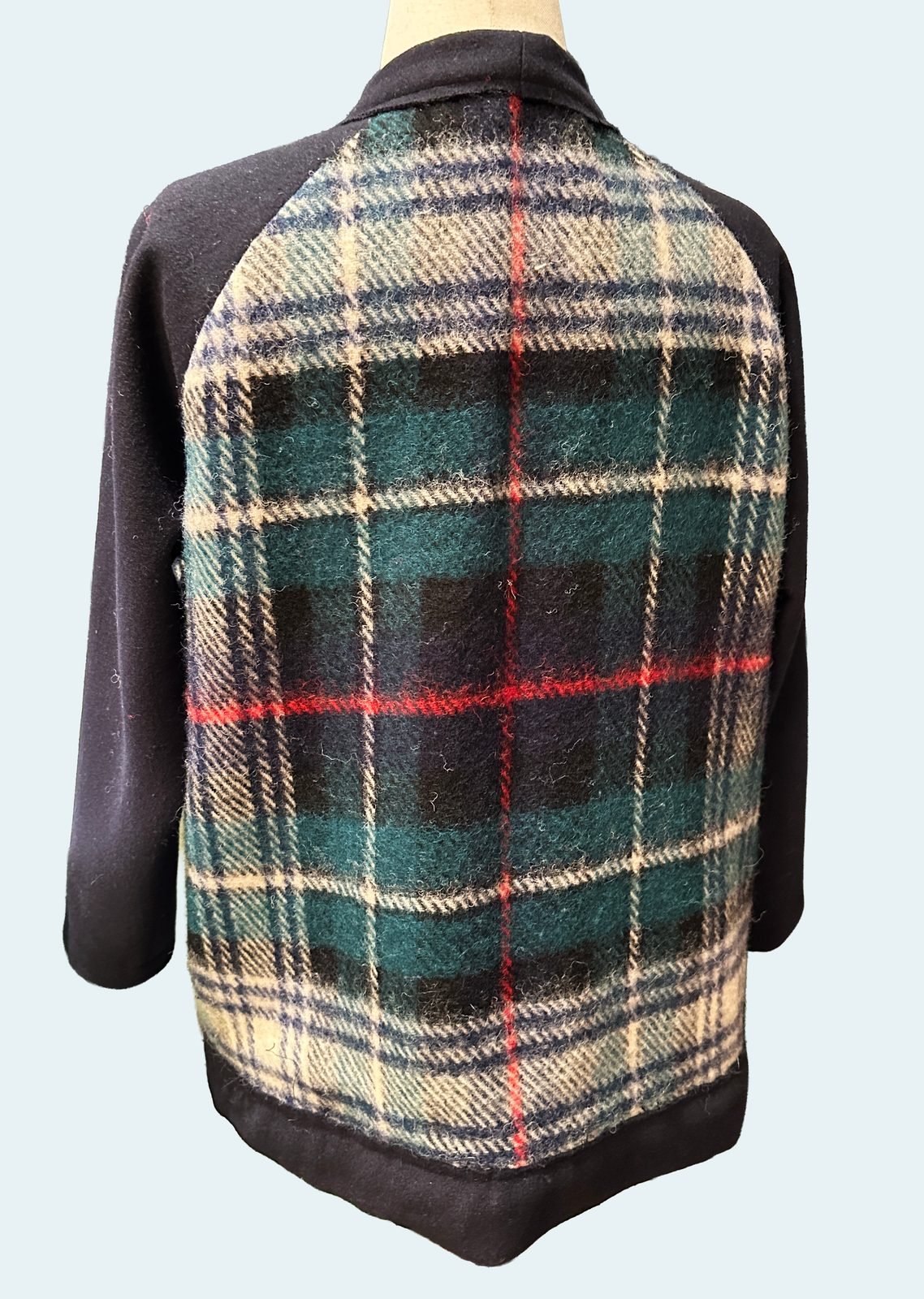
I found the wool at International Silks & Woolens on Beverly Boulevard. They told me it had been sitting there more than thirty years. I bought enough for one cardigan and made it.
My husband saw it and asked for one.
So I went back, and there was a yard and a bit left on the bolt, and they told me that was all of it — no more from them, no more anywhere. It looked warm and it was the end of it, so I bought what was left and made his.
There is a lesson in that and I will say it plainly: if a shop tells you a fabric is old stock and the bolt is nearly finished, and there is any chance you will want a second piece, buy it now. There is no going back. We have the only two of these cardigans that will ever exist, which was not the plan, and I like it.
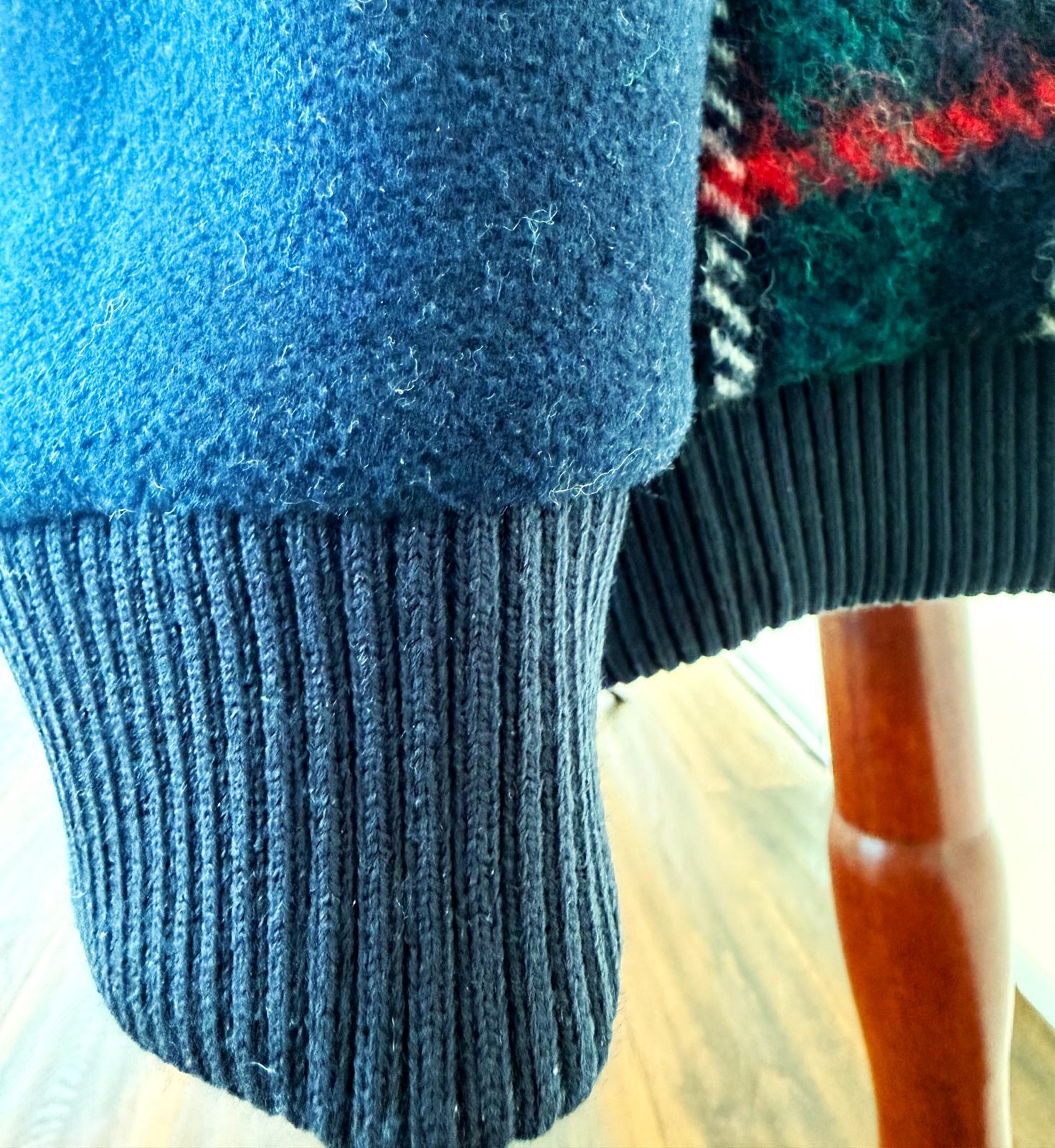
Look closely at the second one and you will see the cuffs and the hem are a different fabric. That was not a design decision, that was the bolt running out. It is the kind of accident I would now do on purpose.
What I would tell someone starting
- Hold it up to your face and take a photo. Not a mirror — mirrors are lit to flatter and your brain fills in what it expects to see. A phone photo is blunt. Do this in the shop, before you buy.
- If it is for someone else, choose for their face, not yours. The color you reach for and the color that suits them are two different decisions, and only one of them matters here.
- Buy the end of the bolt. Old fabric does not come back. If you are standing in front of the last yard and a half of something you love, the decision is now, not next month.
- Put elastic in the waist of the fancy thing. Especially for an evening you want to enjoy. Nobody can tell, and you will still be comfortable at the end of the night.
- One band of color saves an all-black garment. At the neckline, where people look.
- A knit will move after you sew it. Not always, but often enough to plan around. If the piece has to hold a line, think twice before cutting it in a soft knit — or design it so a little growth does not ruin it.
- Trim can rescue something plain. Matching trim in a related color gives the eye somewhere to land. It costs very little and it salvaged a dress for me.
- Give a busy print one quiet place, and put the good detail there. This is the rule I use more than any other. A solid collar, a bound edge, a single band of color at the neck. The eye needs somewhere to land, and wherever it lands is where your work should be.
- Bind a busy print in one solid color from inside the print. Neckline, cuffs, hem. It is the difference between a length of fabric with armholes and a finished dress.
- Cover the foil before you iron it. A cloth or baking paper between the iron and the metallic transfer. This is the entire technique, and it is easier than it looks — but plan on hand washing whatever you make.
- Buy the slip fabric on the same trip as the sheer. A sheer dress is two garments, not one. Decide the solid while you are still standing in the shop with the chiffon in your hand.
- Scale the print up and embroider it on the solid part. Take one motif from the fabric, enlarge it many times over, and stitch it where the print is not. It costs you an afternoon and it makes the garment look designed rather than assembled.
- Cheap fabric plus the right surface work beats expensive fabric. The silver leaf dress is plain satin. Nobody has ever guessed.
- Simple shapes let good fabric speak. Every piece here I like best is a plain silhouette in a fabric that is doing something. The temptation is always to add. Usually the answer is to subtract.
Where I buy fabric
International Silks & Woolens — 8347 Beverly Blvd, Los Angeles. Where the thirty-year-old plaid came from. Ask what has been sitting a long time; that is where the good surprises are.
Mood — the Los Angeles store. Both the rose silk and the grey chiffon came from here. Check their current location and hours before you go.
Daehan Geumbak — Dongdaemun, Seoul, on the second floor of the hanbok fabric market. This is where the silver foil came from. If you are in Seoul and you sew, go and look even if you have no plan for it.
Hours and stock change, so confirm before you travel.
What’s next
I design fabric patterns, and I have not yet made a single garment from one of my own. That seems like the obvious thing to fix.
I would like to cut into something I drew myself and see what it becomes — the way my mother’s daisies became a dress for my sister, forty years after she bought the cloth.
If you sew, tell me in the comments who you make things for. I suspect a lot of us are making things for other people and calling it a hobby.