It takes a while for the table to fill.
One dish arrives. A minute later, another. Then another. And at some point you look down and there is no empty space left on the table. That moment is when you understand what a Jeolla province restaurant is. This is Gowonnim, on the second floor of an office building in Samseong-dong, Seoul.
When a trip to Seoul comes up, this place goes on the calendar before anything else. If I have the time, I go twice. Three times, even. It has never once felt like a waste of an afternoon.
See it in 40 seconds
The whole course, in the order it arrived.
Best for
Anyone who wants to eat Jeolla food properly for once. Anyone looking for somewhere to take a visiting friend who has never been to Korea. A family gathering when relatives are in town. Because it comes out as a course, there is plenty of room to talk between dishes.
The order it arrives in
The best thing about Gowonnim is that the food does not land on you all at once. We had the Samhakdo omakase, the top course here at 118,000 won per person, with a two-person minimum. It comes out one plate at a time, in order, and following that order is half of the meal.
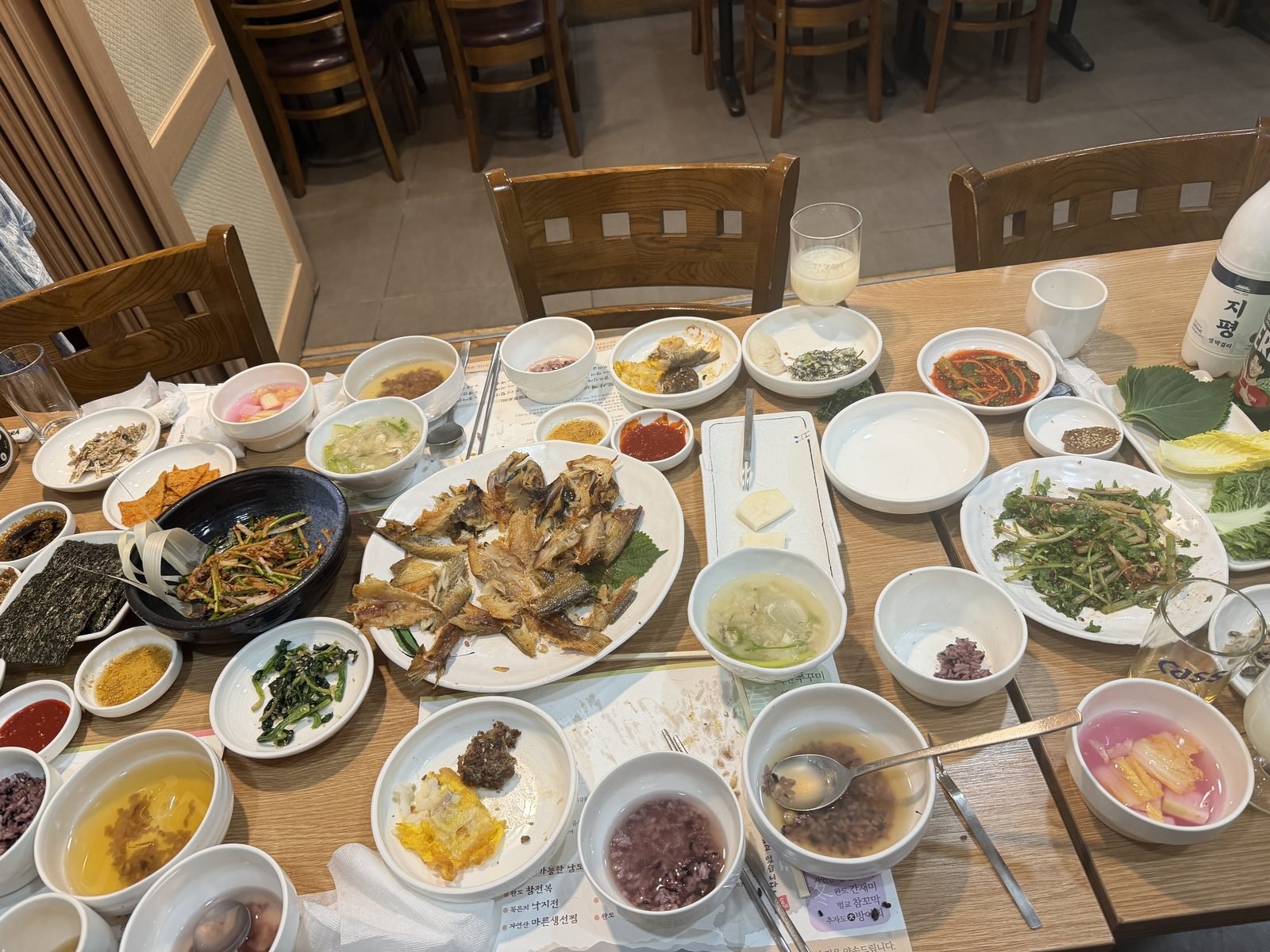
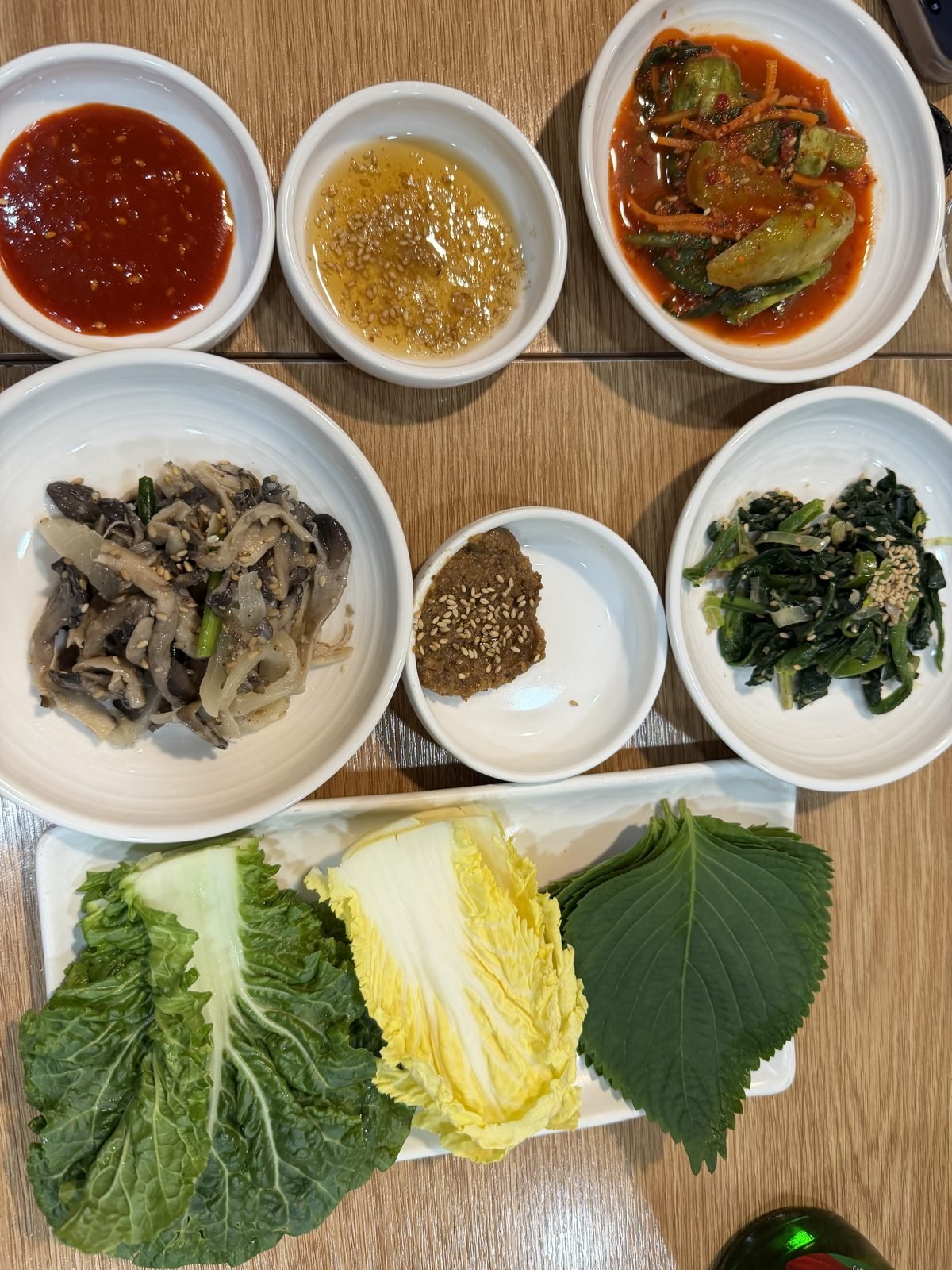
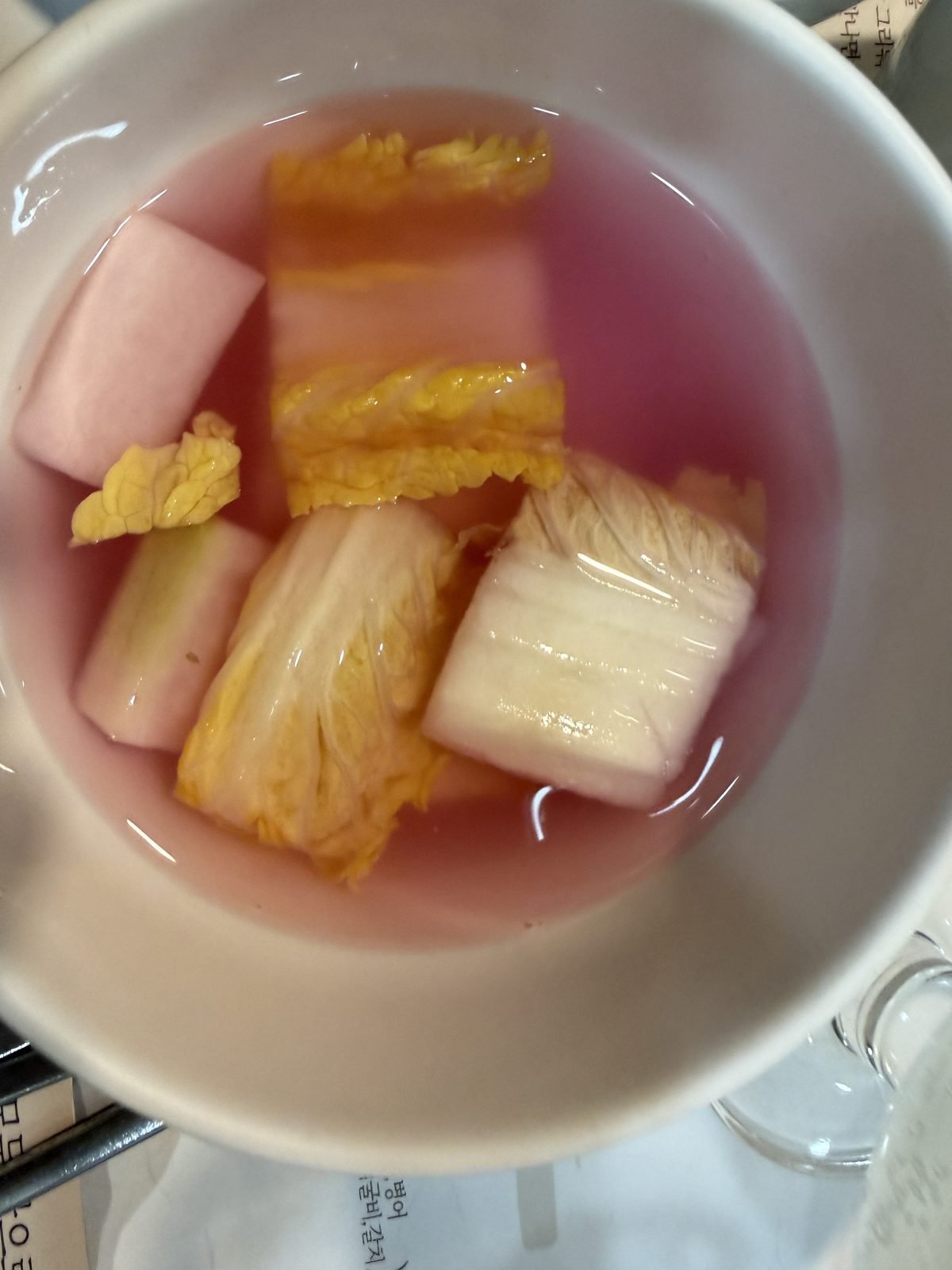
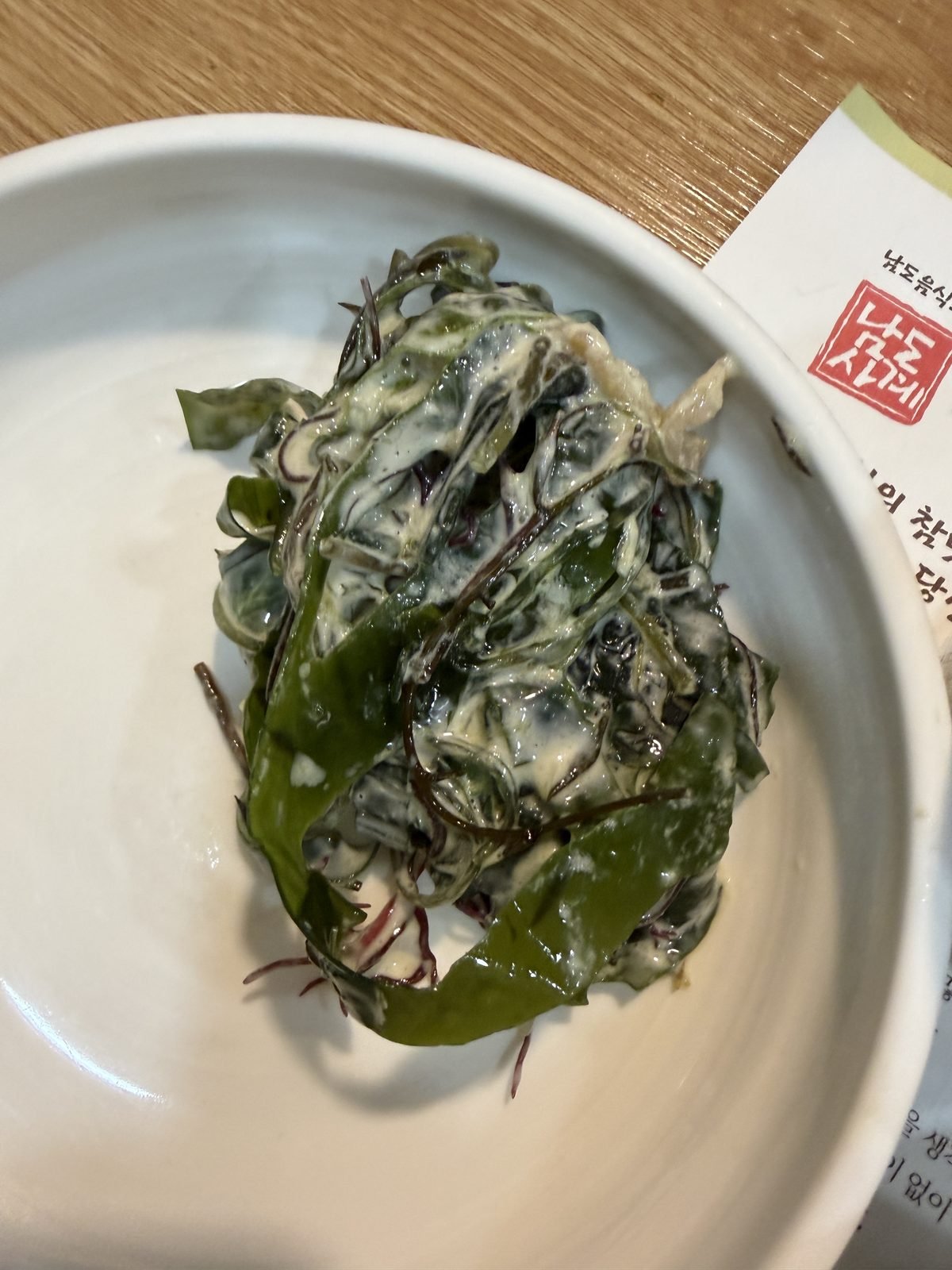
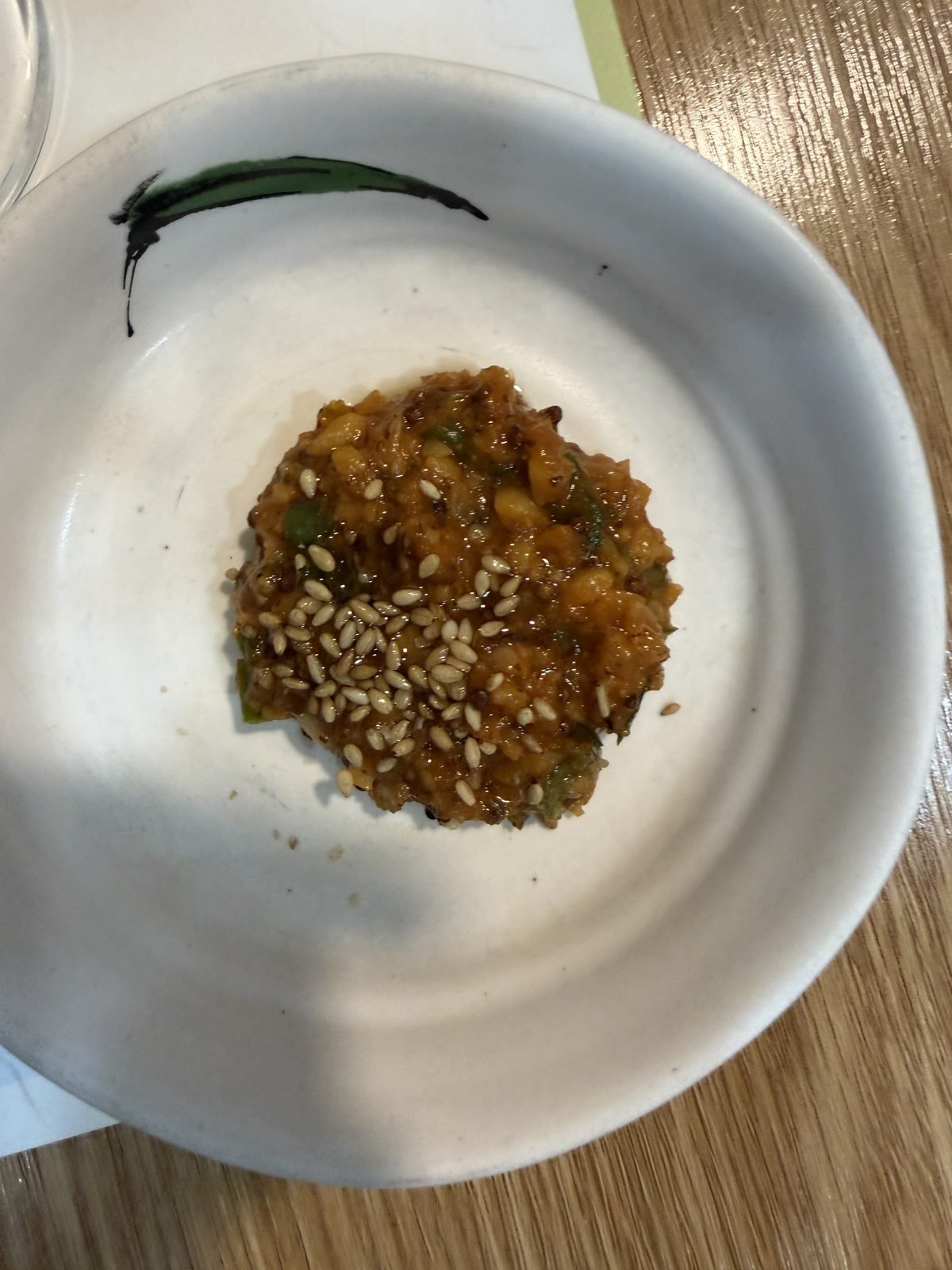
The banchan come first
Around eight seasonal side dishes. Not one of them is filler. Seasoned greens, sauteed mushrooms, salted seafood, laver, leaves for wrapping, and a bowl of cold water kimchi. I start thinking about rice right at this point, which is a trap, because rice comes at the end.
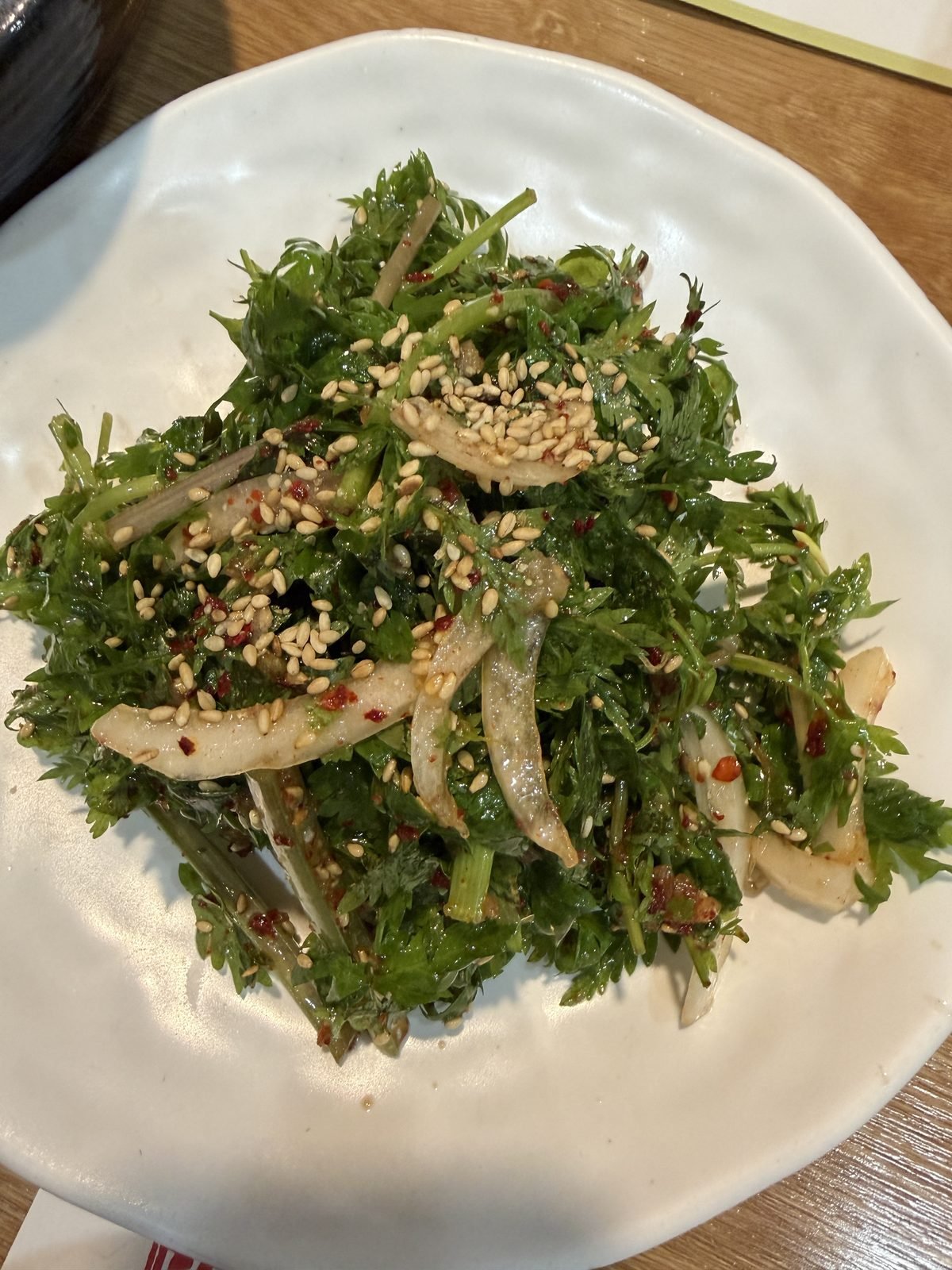
Fresh greens
A bright, vinegared salad of minari and young greens. Starting with nothing rich makes everything that follows land better.
Raw fish and octopus
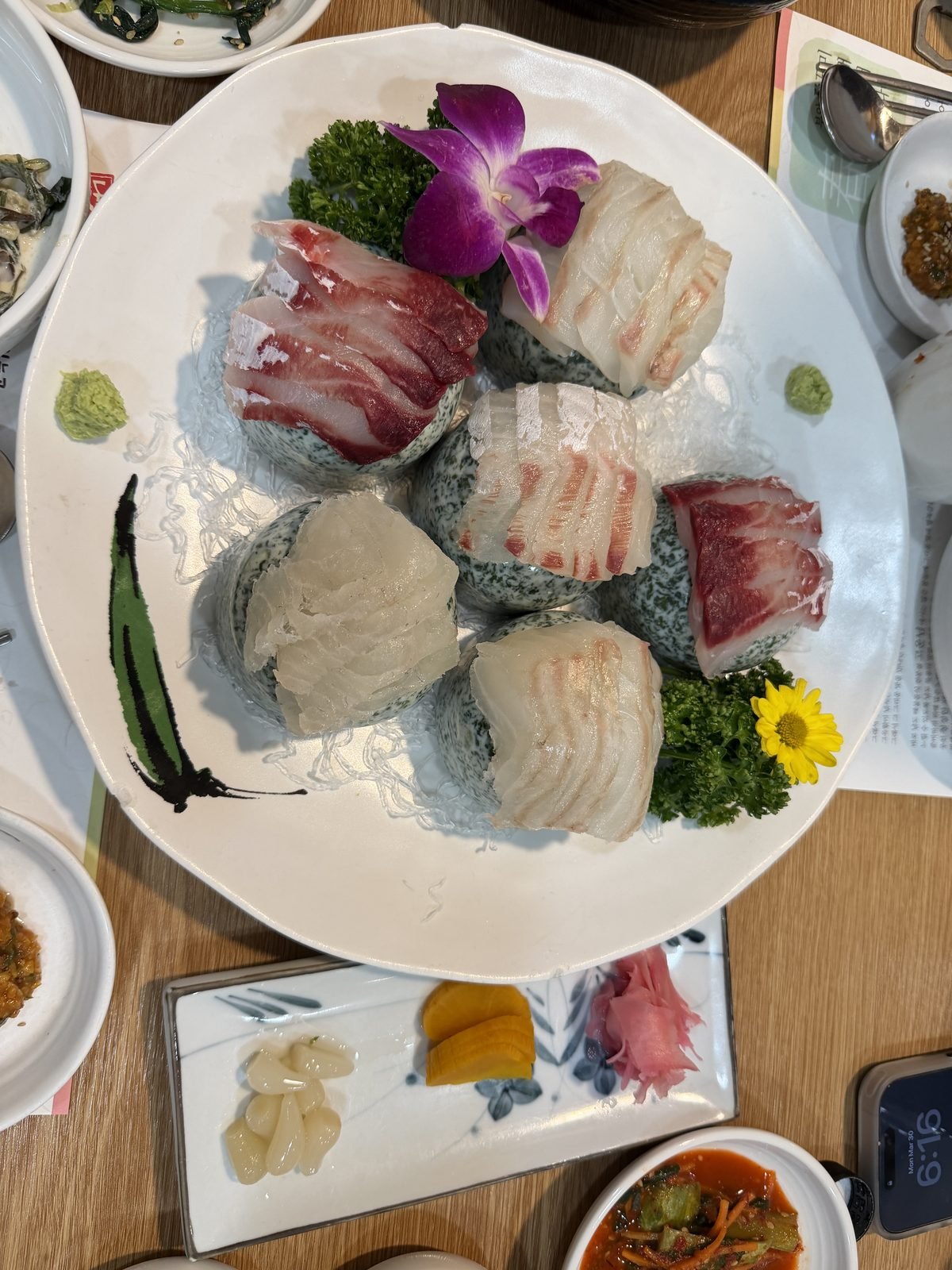
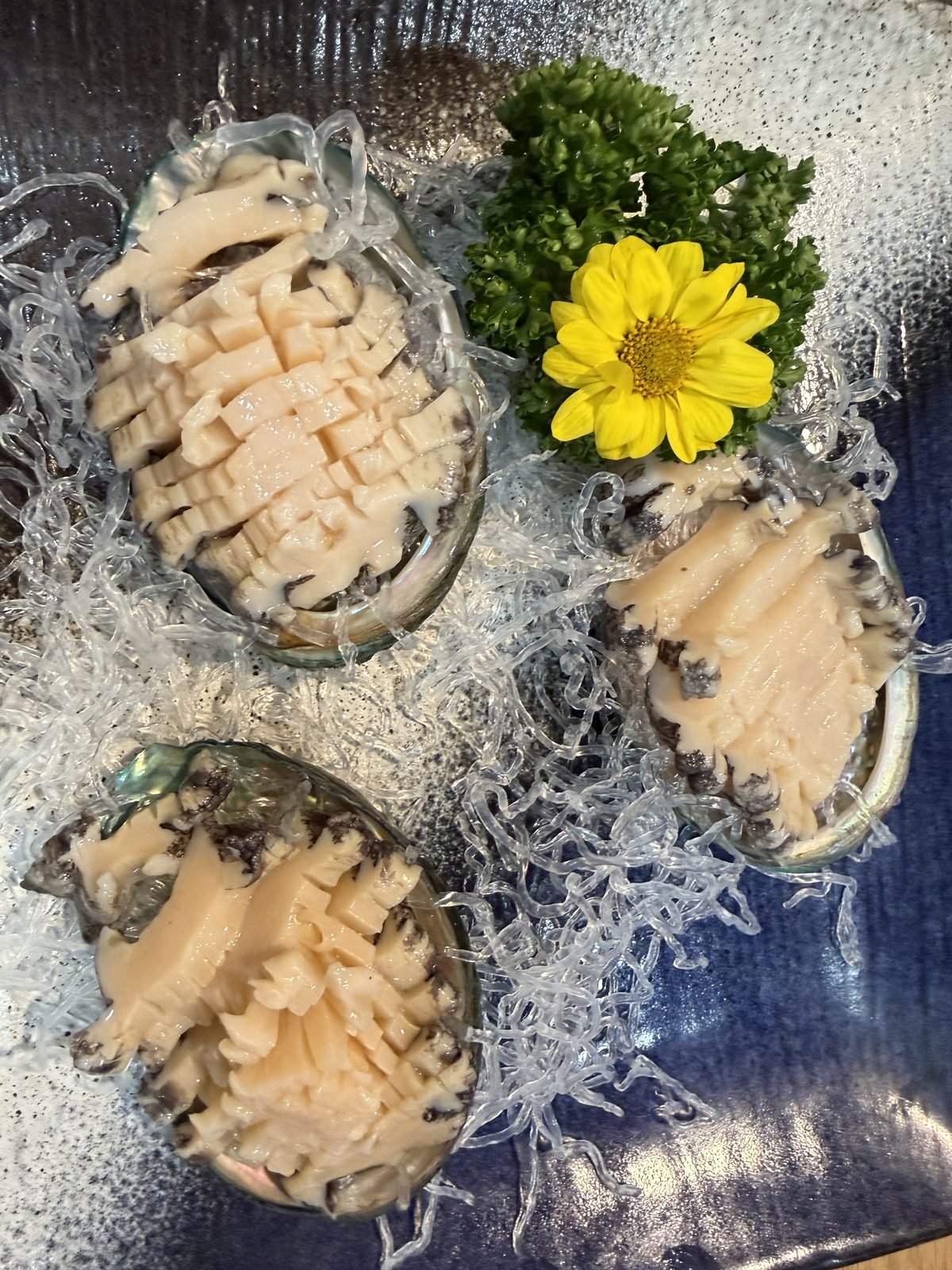
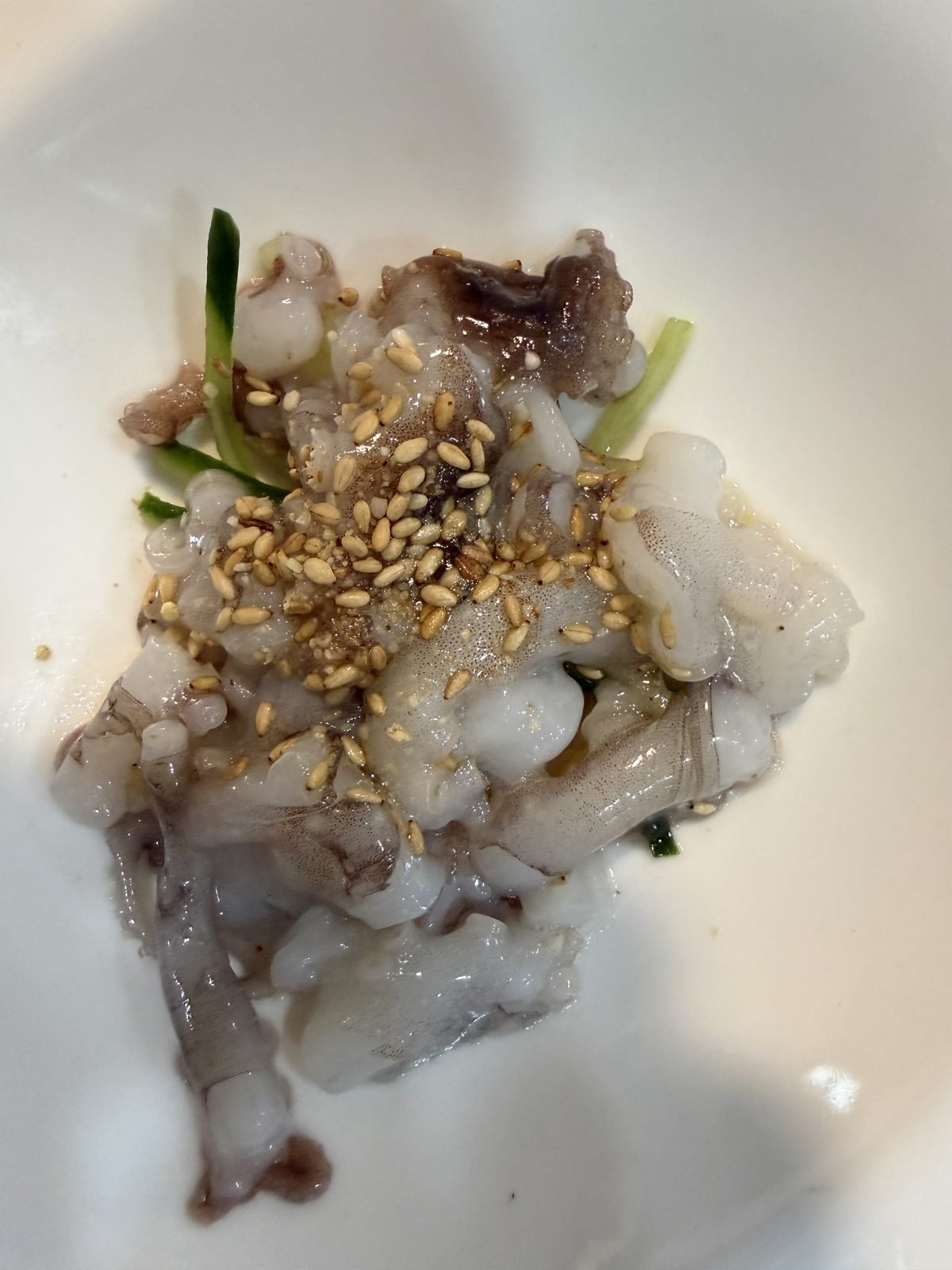
Then the sea arrives properly. A plate of sliced raw fish, and separately, thin slices of poached octopus. The menu says the octopus comes from Wando.
Chomuchim
A sweet and sour cold dish is close to mandatory on a Jeolla table. Plenty of minari, a bright red dressing, and a ring of sliced radish holding the whole thing together.
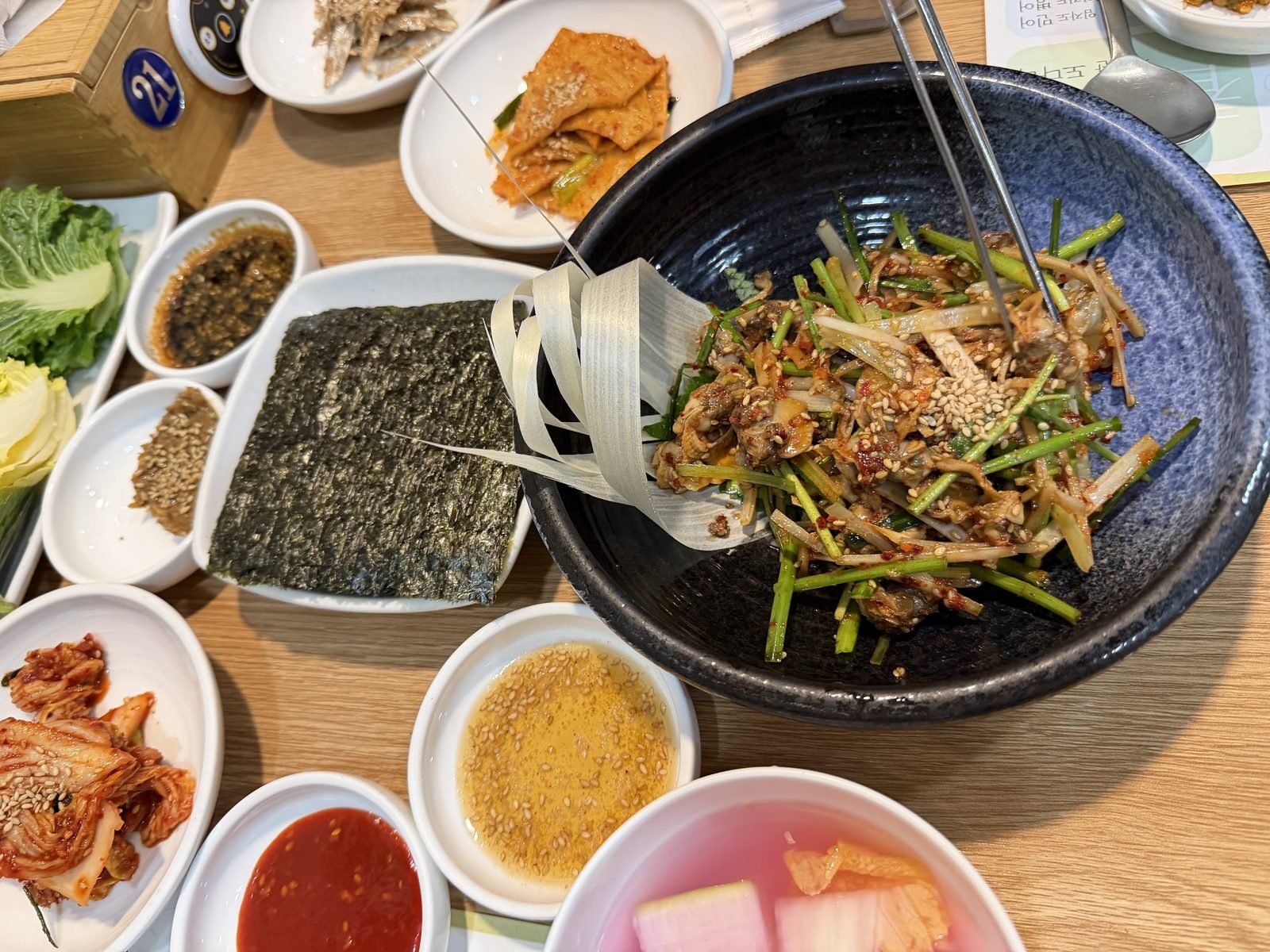
Jeon
When the pancake plate lands, the mood at the table shifts. Chive, seafood and kimchi jeon all arrive together, straight off the pan, crisp at the edges.
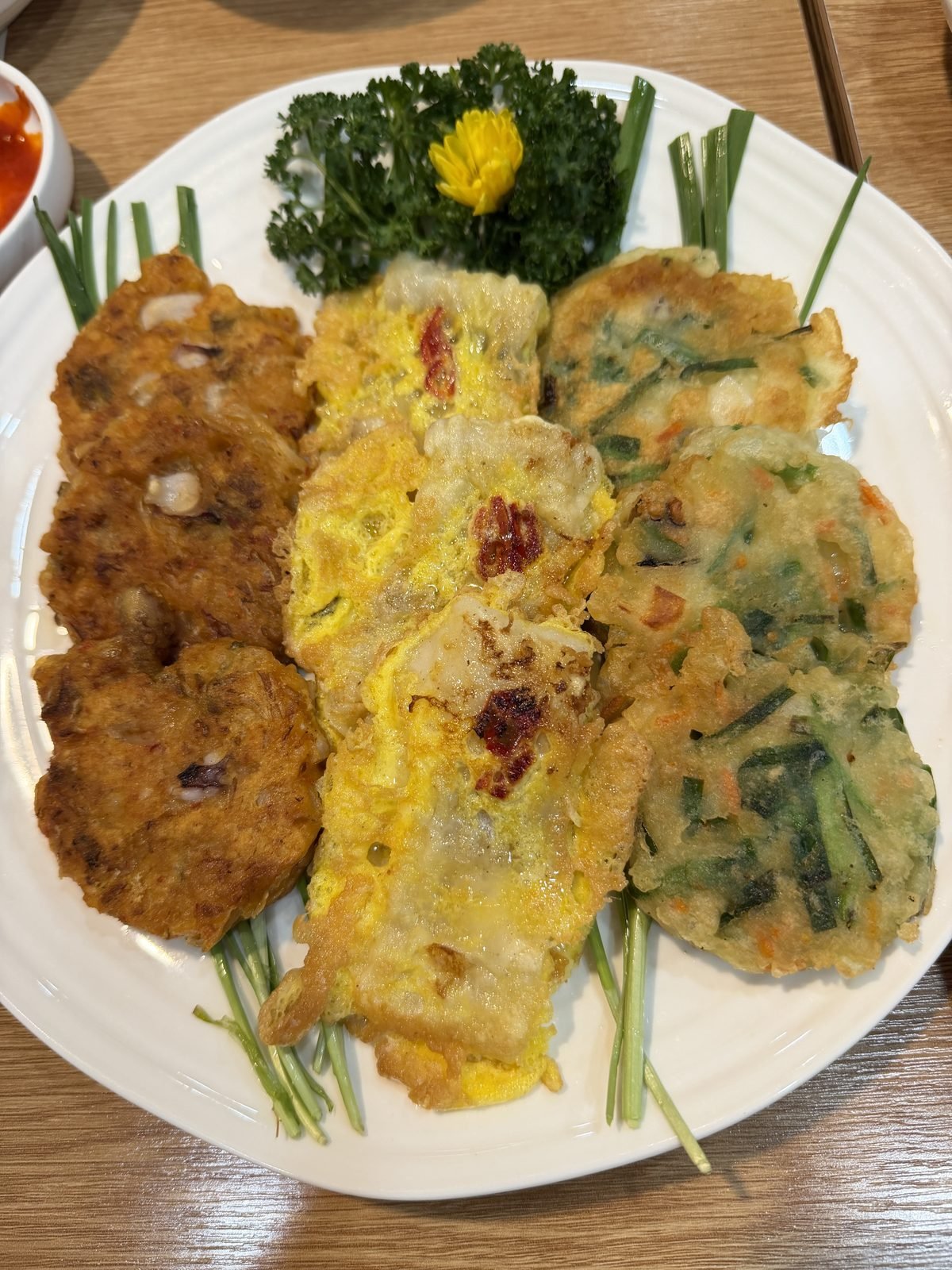
Tteokgalbi
One per person. Jeolla style tteokgalbi has a fine texture and a quiet sweetness rather than a heavy glaze. It comes with a small cup of tea, which I liked.
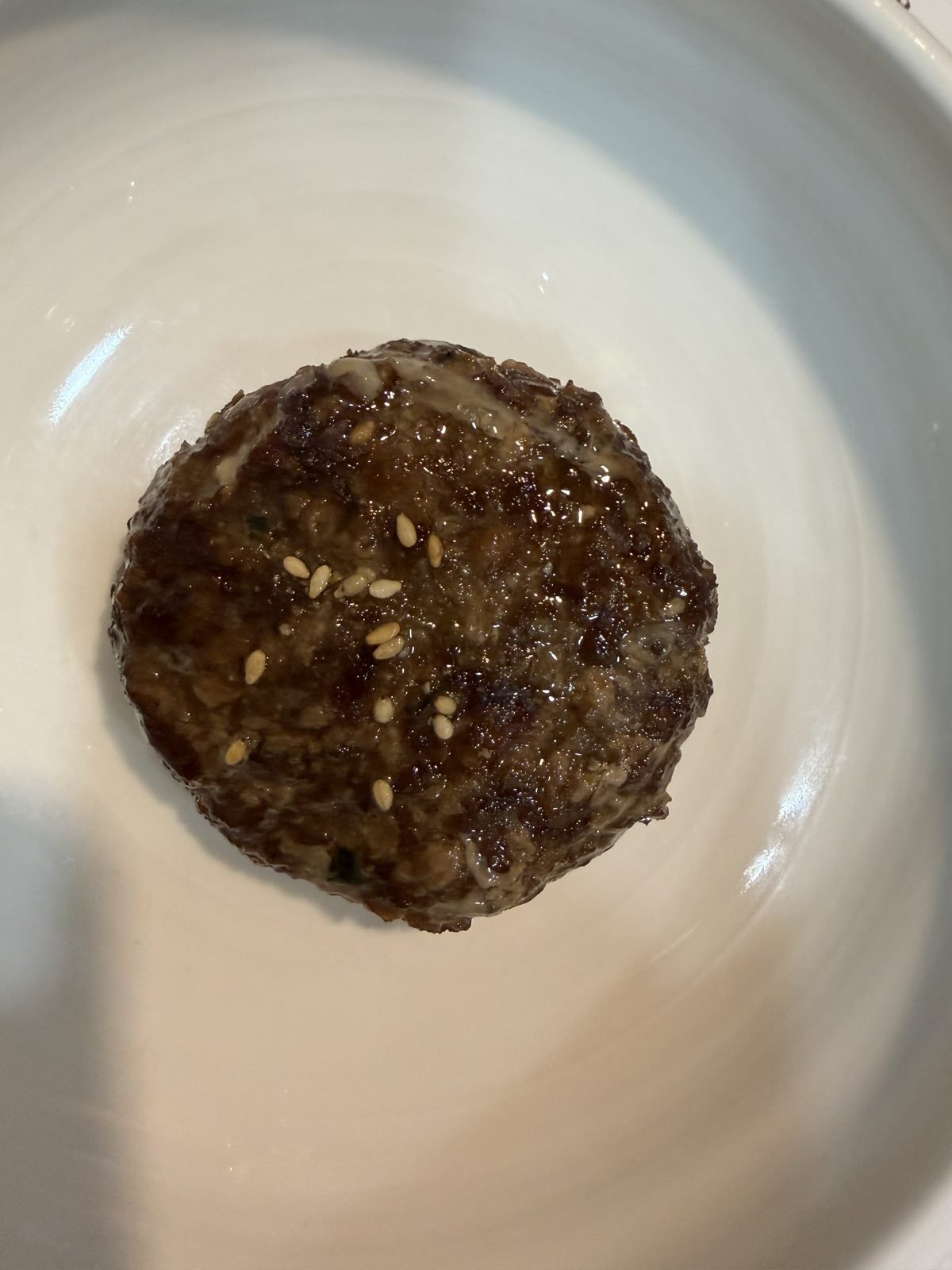
Hongeo samhap
This is the most Jeolla plate in the house. Fermented skate, boiled pork and aged kimchi, stacked and eaten in one bite. If it is your first time, pile the kimchi on generously. It makes an enormous difference. And if you are bringing a friend from abroad, explain this one before it arrives rather than after.
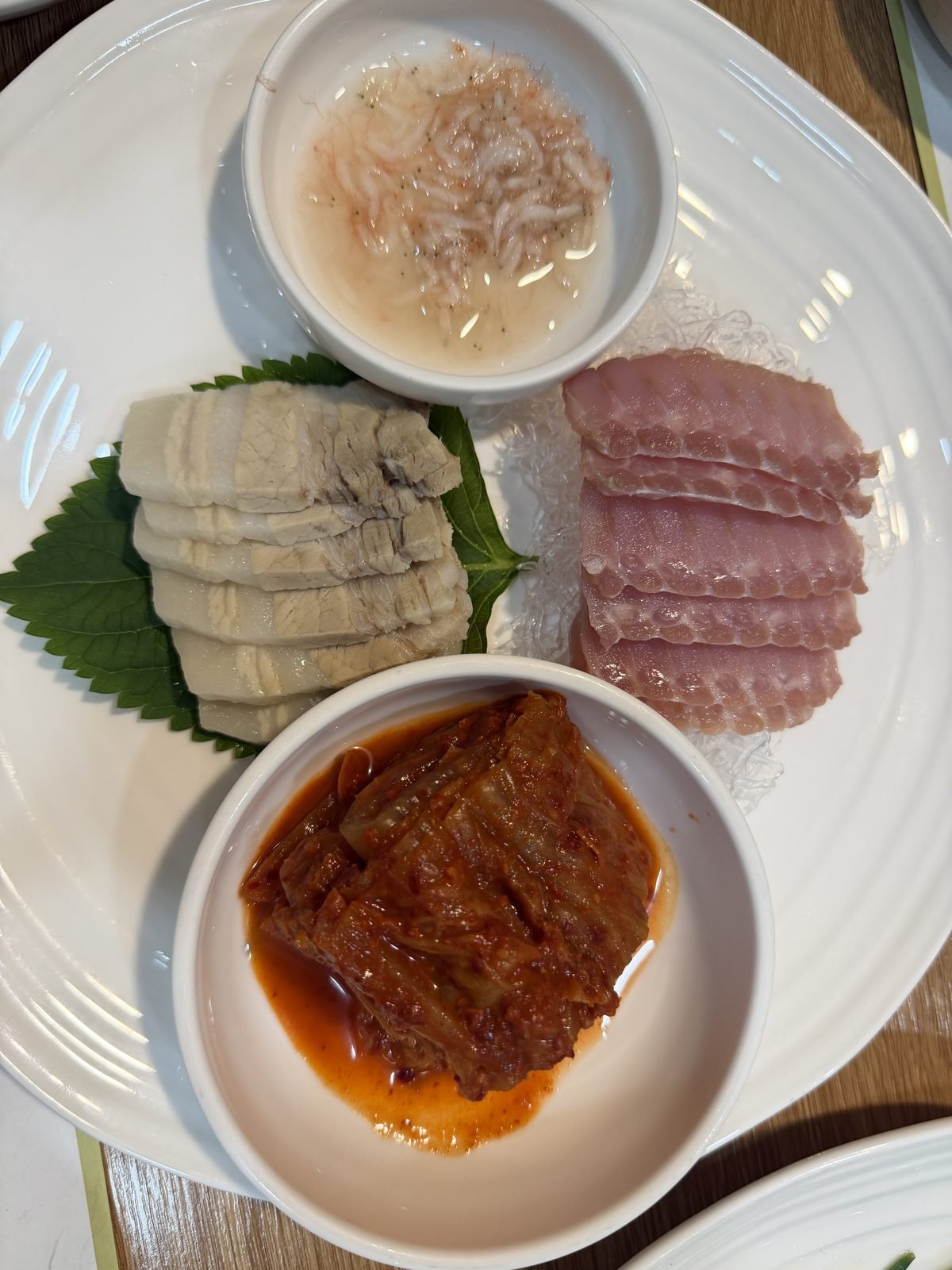
Grilled fish
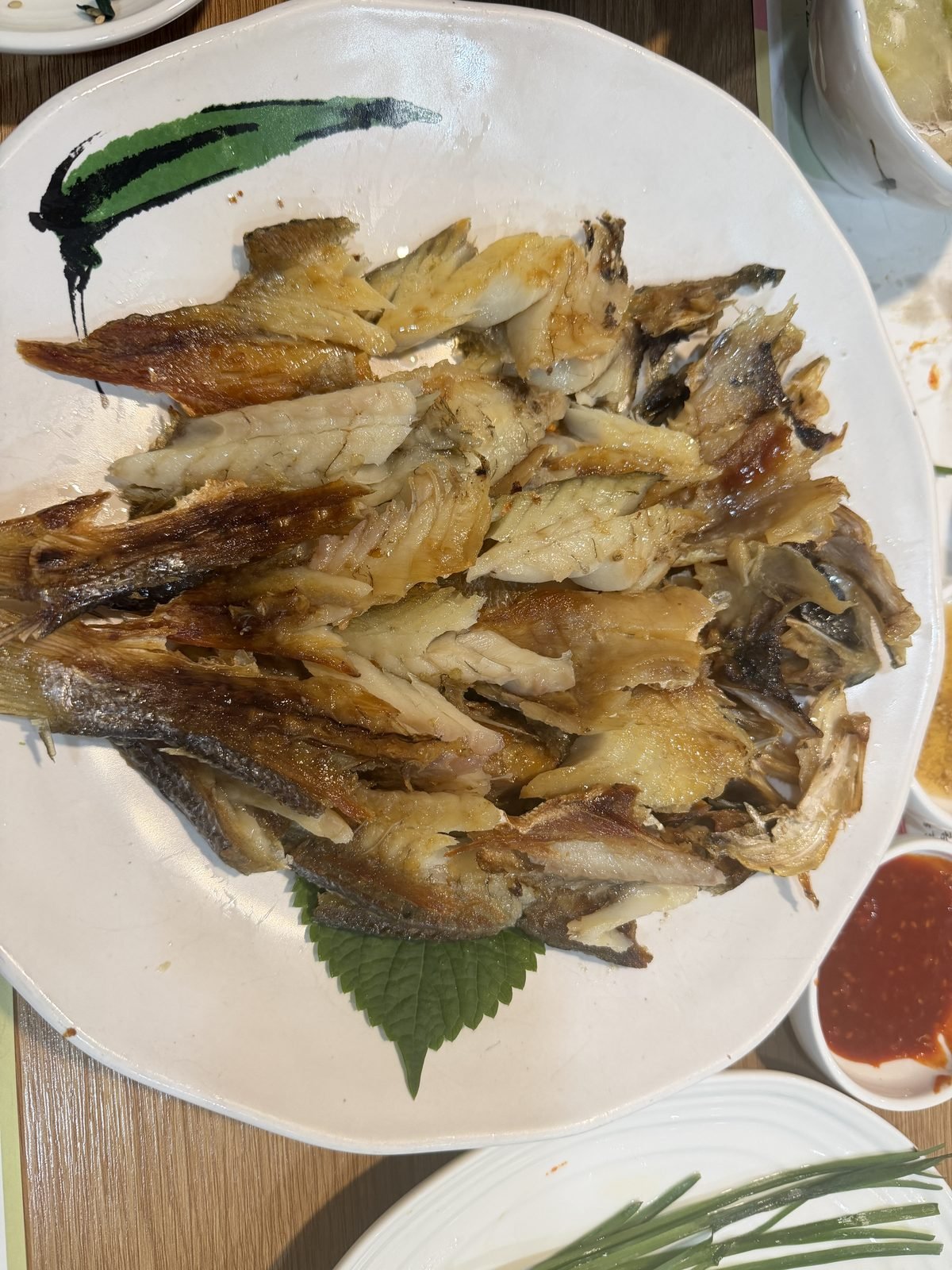
Bori gulbi from Yeonggwang, grilled. The flesh is firm and the salt is restrained, so it belongs with rice rather than standing alone.
Soup and rice
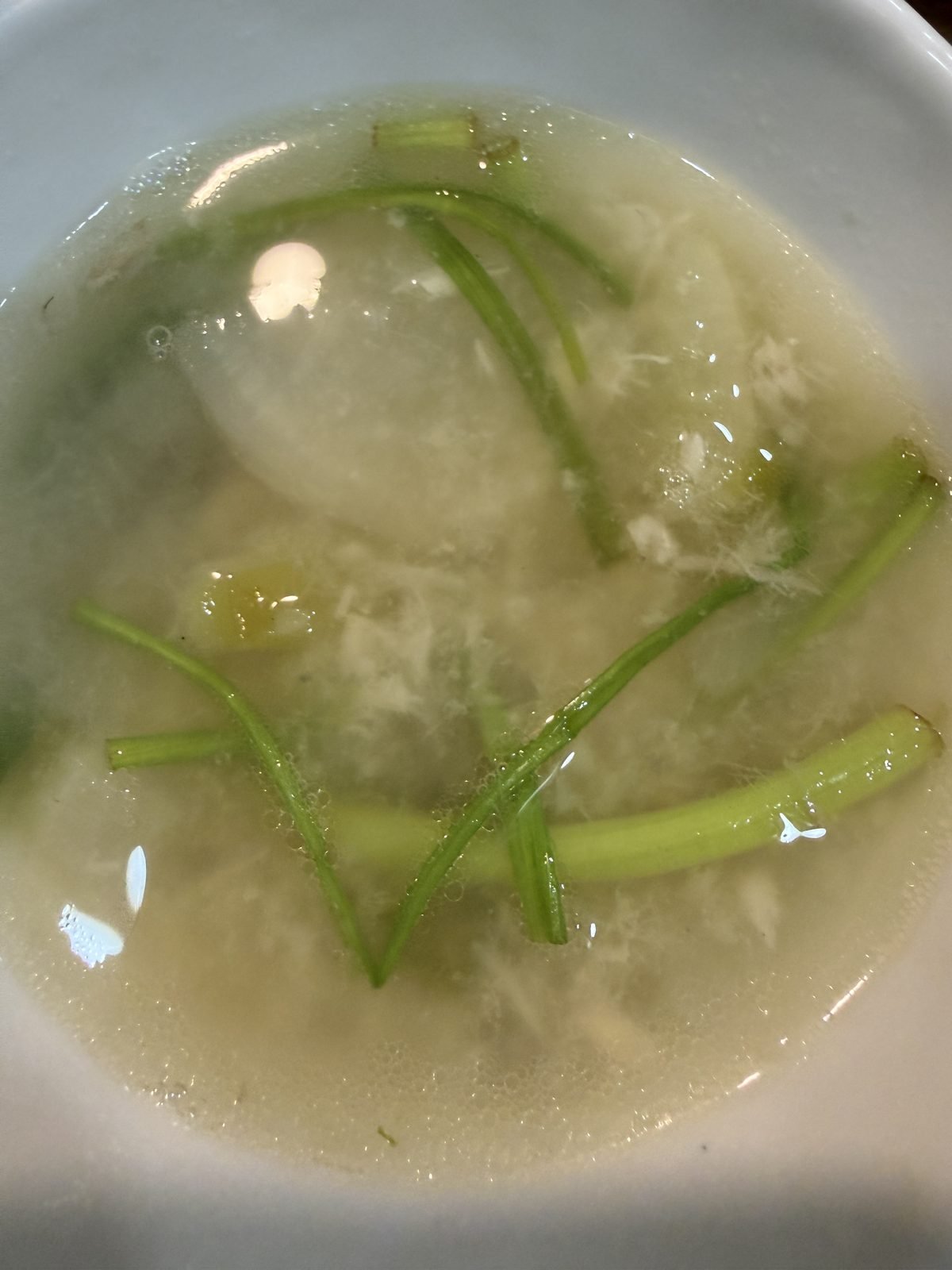
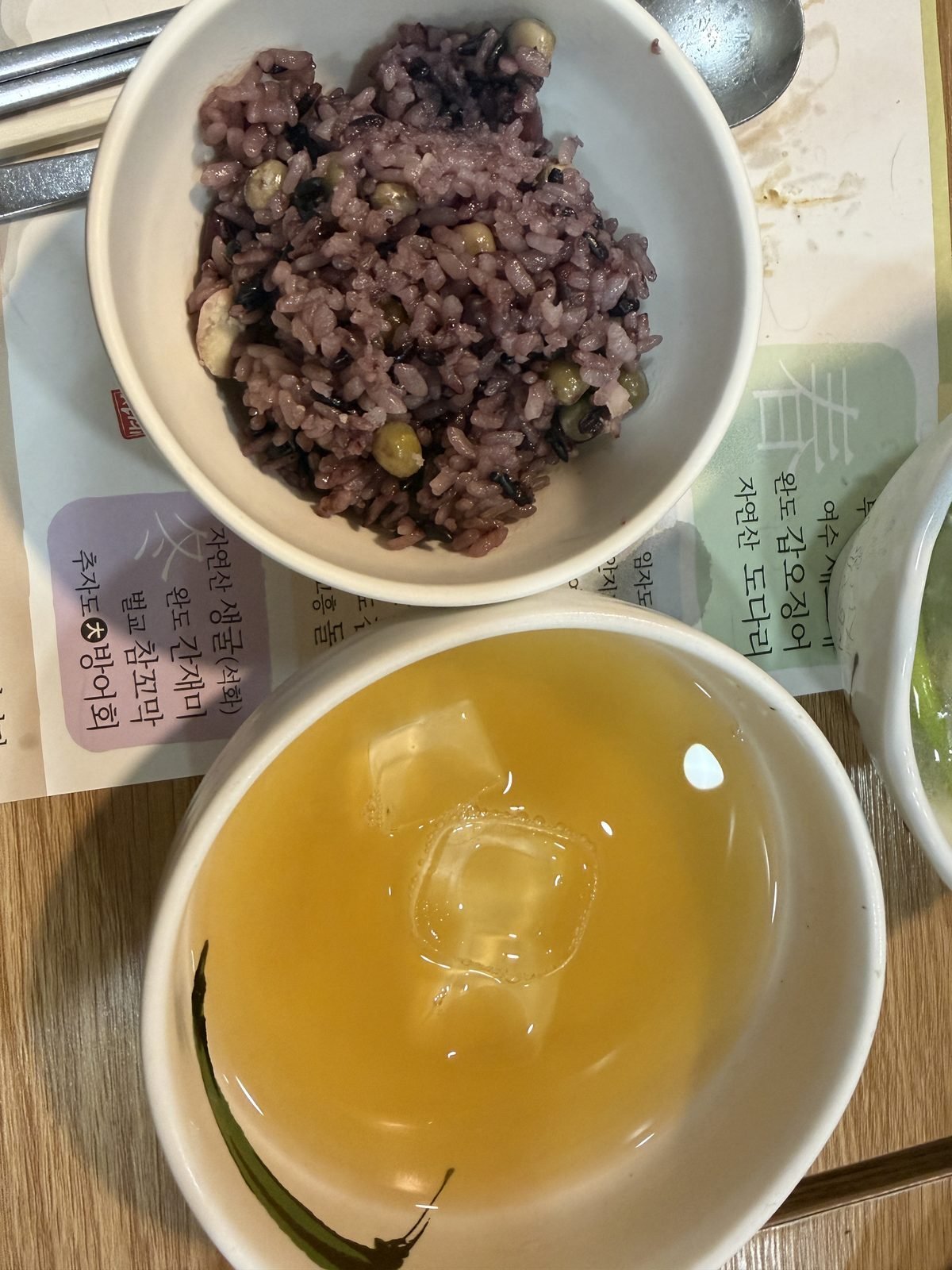
A clear soup and a bowl of black rice. After everything before it, this soup tastes startlingly clean. Sweet rice punch comes alongside.
Dessert
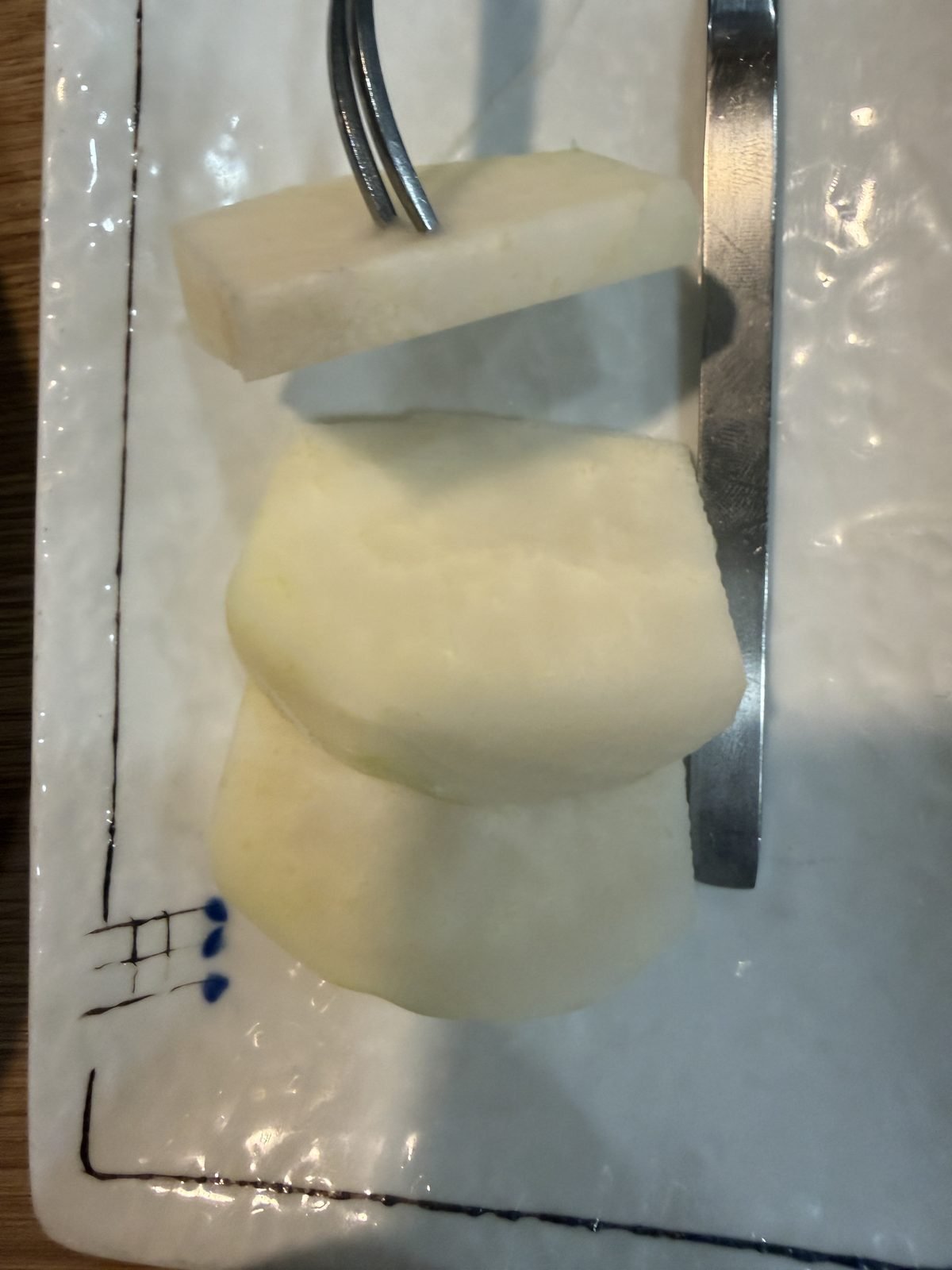
Red bean porridge closes it. Not sweet, just the grain itself. Then one cold piece of fruit, and that is the end.
Why I recommend it to people visiting Korea
The easy thing, when you want to show someone Korean food, is to take them to a barbecue place. That is one slice of it.
This is a different job. In one meal it shows you why so many side dishes arrive, how the sea and the mountains end up on the same table, and why rice comes last instead of first. English is limited here, but the menu board carries prices and Chinese characters alongside the Korean, and pointing works.
It is good for family gatherings too. The older relatives get exactly the flavors they remember, and there is plenty on the table that younger kids will eat, between the pancakes, the tteokgalbi, and the rice and soup at the end.
Prices and menu
These are the prices from the menu board on the wall. They can change, so please confirm before you go.
Meals
- Daily set menu, 12,000 won
- Aged kimchi stew with Jirisan black pork, 12,000 won
- Sashimi rice bowl, 14,000 won
- Maesaengi seaweed soup, 15,000 won
- Octopus hot pot rice, 16,000 won
- Spicy croaker stew, 16,000 won, two person minimum
- Namdo table, 19,000 won, two person minimum, orders taken until 2:30pm
- Bori gulbi set, 43,000 won, two person minimum
Gowonnim omakase, two person minimum
- Geumdo, 58,000 won
- Cheongsando, 87,000 won
- Samhakdo, 118,000 won
Namdo seasonal dishes
- Yeonggwang bori gulbi, steamed, 28,000 won
- Aged kimchi and octopus pancake, 48,000 won
- Skate, 58,000 won, samhap 78,000 won
- Wando octopus 63,000 won, Wando cuttlefish 63,000 won
- Muan tidal flat octopus 73,000 won, octopus soup or cold octopus 78,000 won
- Shinan pomfret, raw or dressed, 85,000 won
- Braised hairtail, from 58,000 won
- Steamed Yeosu sole, from 53,000 won
What to know before you go
- Book ahead. Lunch fills up fast in this part of Gangnam.
- The omakase and the set menus need two people minimum. Solo diners should look at the single dishes instead.
- The Namdo table is only ordered up to 2:30pm. Worth remembering if you were planning a late lunch.
- There is a break. The kitchen closes from 2pm to 5pm.
- Closed Sundays. If this is going into a weekend, make it Saturday.
- Leave time. A course here runs two hours. That is the point of it.
Location and details
- Gowonnim, Samseong branch
- 2F, 11 Yeongdong-daero 86-gil, Gangnam-gu, Seoul
- Phone: 02-403-8282
- Hours: Monday to Saturday, 11:00 to 22:00
- Break: 14:00 to 17:00, last order 20:30
- Closed Sunday
- Walking distance from Samseong Station, Line 2
Please confirm hours and prices before you go.
Would I go back
Yes. When a Seoul trip gets booked, this date gets blocked before anything else does.
Sitting down in front of a full Jeolla table and giving it two hours is not the same thing as eating a meal. If you are heading to Seoul, one afternoon spent here is not an afternoon lost.
Is there a Korean course restaurant in Seoul you always go back to? Tell me in the comments. I am always looking for the next one.