The last time I wrote about a Korean Air lounge at Incheon, the thing everyone wanted to see was a wall of instant ramen and a machine that cooks it for you.
This is a different lounge. It’s a long walk from that one — different end of the terminal, different room entirely — and there is no wall of ramen here.
There is a counter with a small sign that says Noodle Bar, and a chef standing behind it, making the bowl for you.
At a glance
- 🍜 Food: ⭐⭐⭐⭐⭐
- 🪑 Seating & atmosphere: ⭐⭐⭐⭐⭐
- 🧭 Easy to figure out: ⭐⭐⭐☆☆
- 🤝 Service: ⭐⭐⭐⭐⭐
- In one line: Come hungry and give yourself an hour. The food here is cooked, not just set out.
Seven lounges, and they are not interchangeable
Here’s the part nobody tells you before you start walking.
Korean Air now runs seven lounges at Incheon Terminal 2 — a First Class Lounge, the Miler Club, Prestige East (split into two halves), Prestige West, and two Prestige Garden lounges. Korean Air says the renovation roughly doubled its lounge footprint at Incheon, from about 5,100 to 12,300 square metres, and seats from around 900 to over 1,500.
They did not all get the same food.
The instant-ramen wall — the Ramyeon Library — is in one of them. Live cooking stations with chefs from the Grand Hyatt Incheon went into others, with things like janchi guksu (banquet noodles), gimbap and carved beef on the menu. So “the Korean Air lounge at Incheon” isn’t one place with one buffet. It’s seven rooms with genuinely different kitchens.
I walked a long way between the two I’ve been in, and they had almost nothing in common.
The Noodle Bar is the reason to find this one
You come around the corner of the buffet and there’s a hood, a proper cooking line, and a small white sign on the counter: Noodle Bar / 누들 바.
Behind it, a chef in whites and a toque. Not a warming tray, not a help-yourself station — a person, cooking, one bowl at a time.
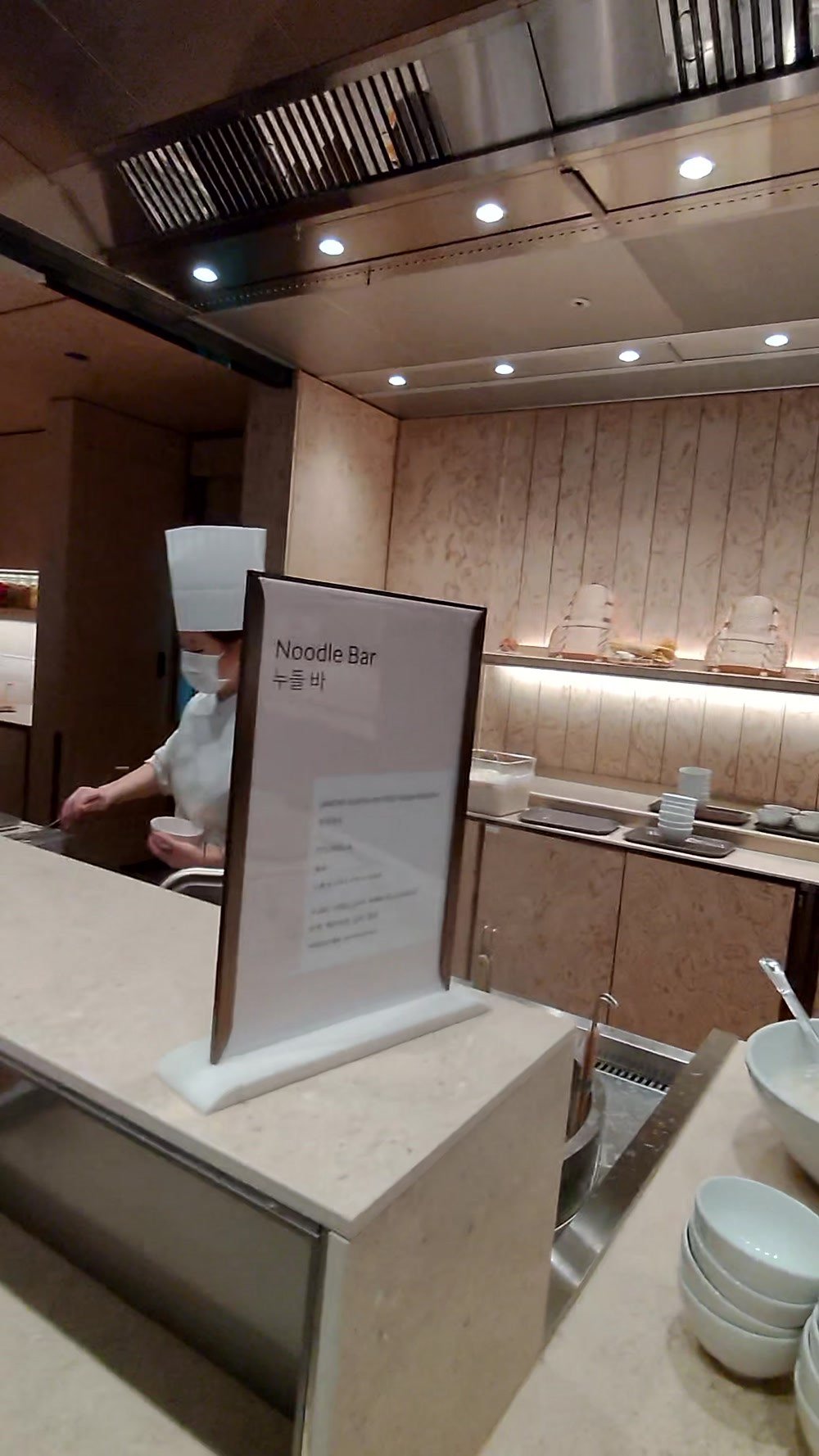
The setup is simple: stacks of small white bowls on the counter, garnishes laid out beside them, a big bowl of broth, and the chef working the line behind. You ask, you wait a moment, you get a hot bowl handed to you.
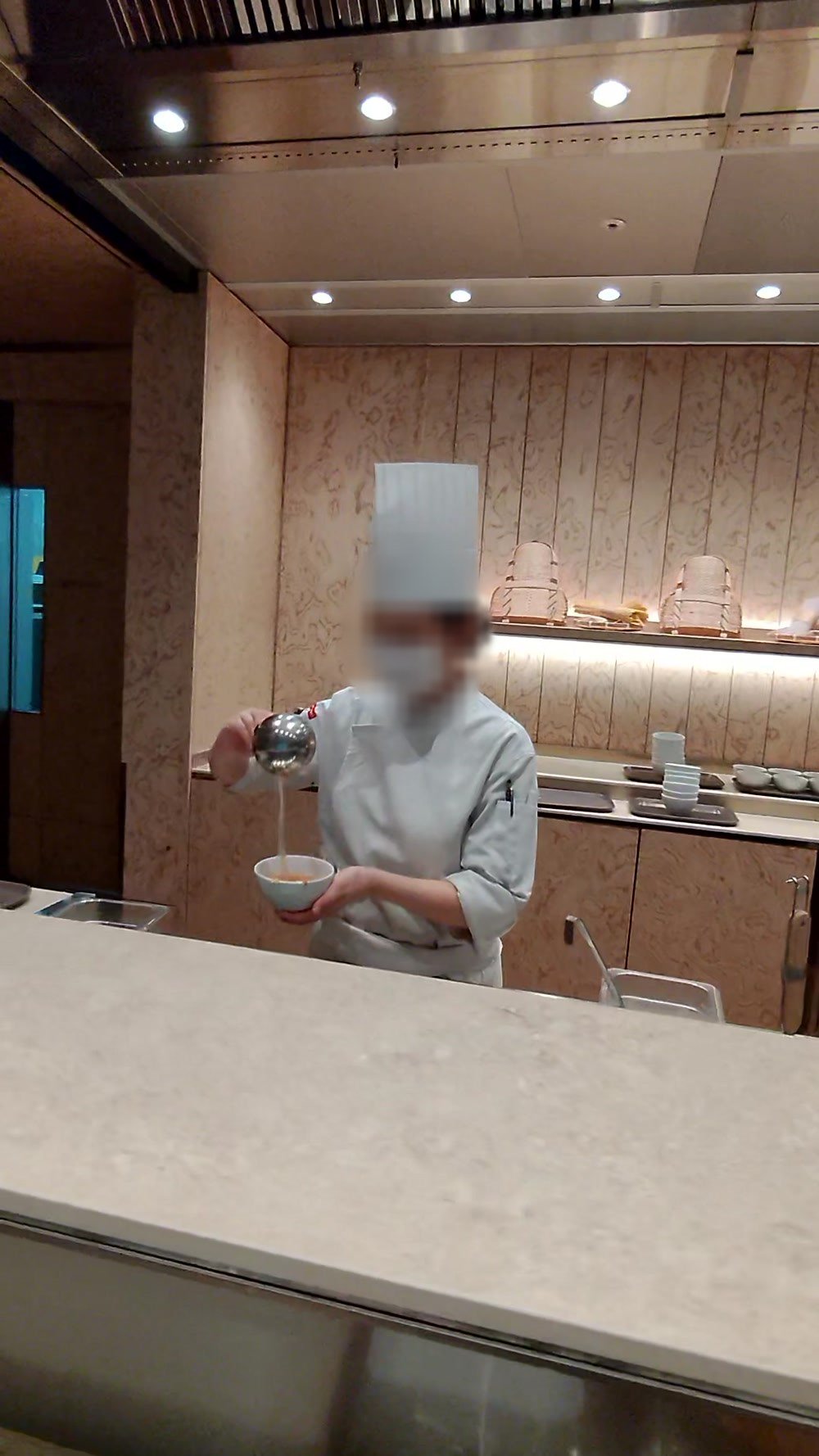
If you’ve only ever done the instant-ramen version at the other lounge, this is a completely different experience. That one is fun. This one is food.
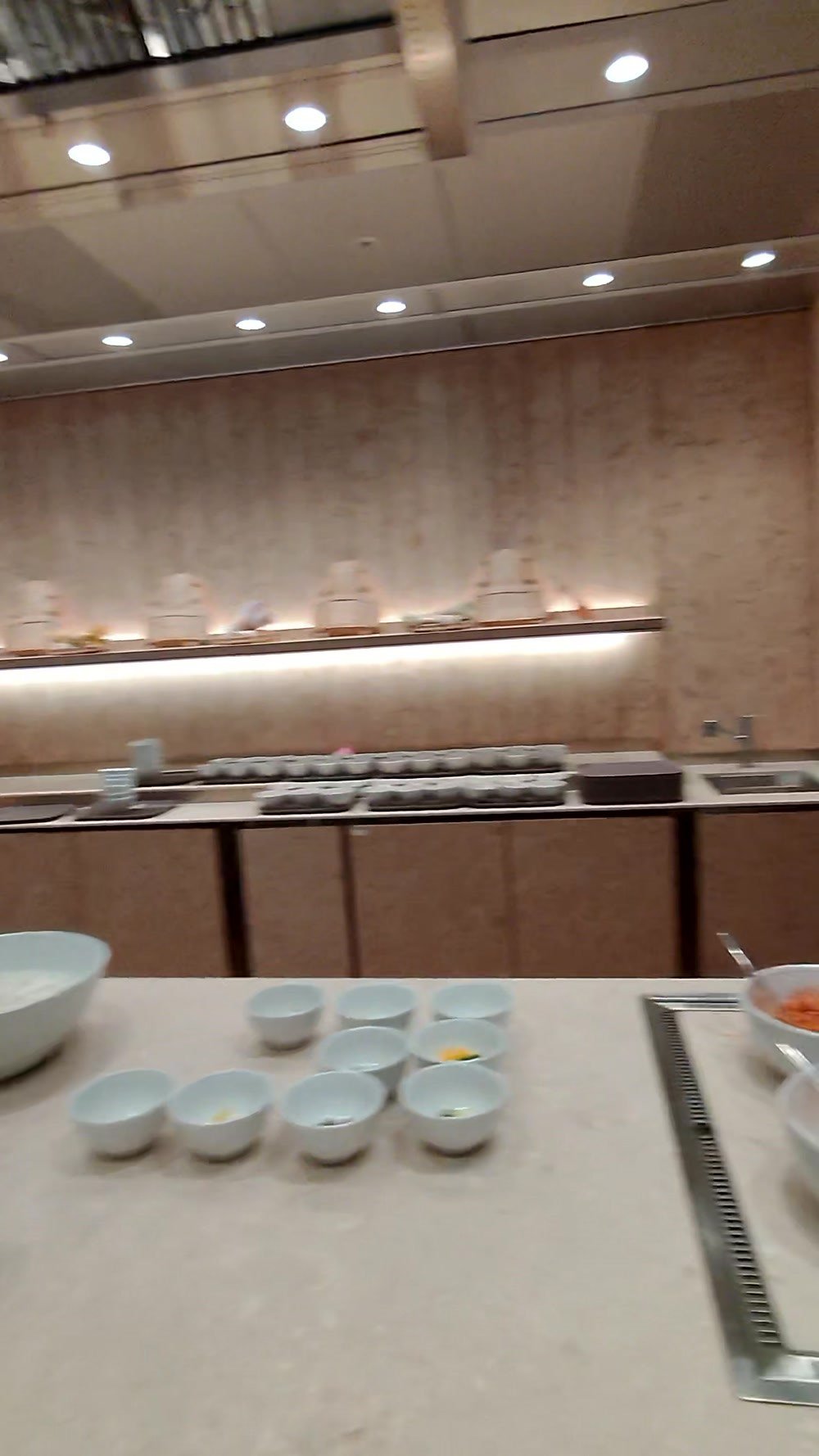
A bibimbap counter you build yourself
The other thing I’d walk back for.
There’s a long run of wide brass bowls set into the counter — seasoned carrot, bean sprouts, greens, minced beef, several kinds of namul — with tongs in each one and rice cookers sitting right there on the line, lids up.
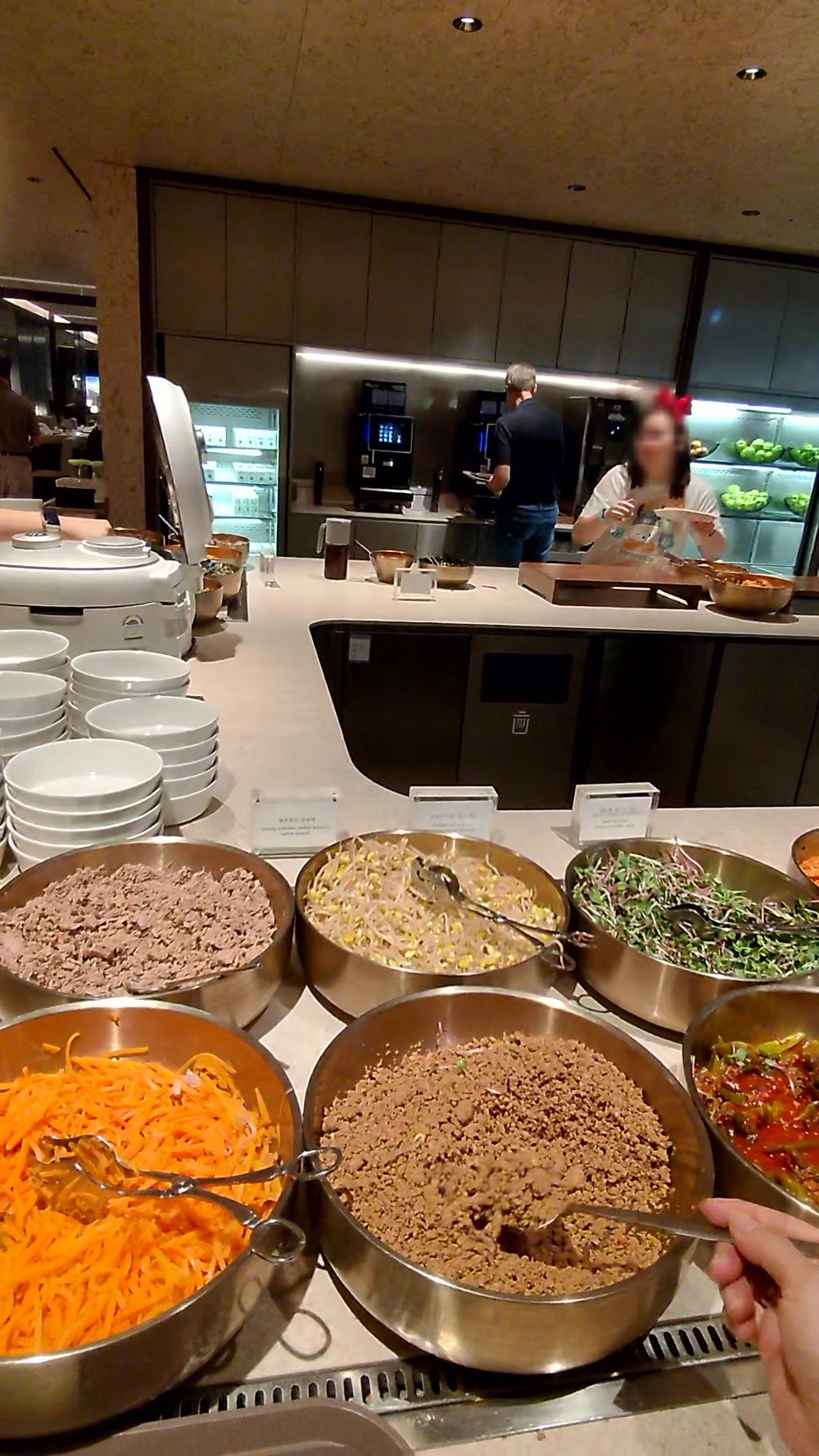
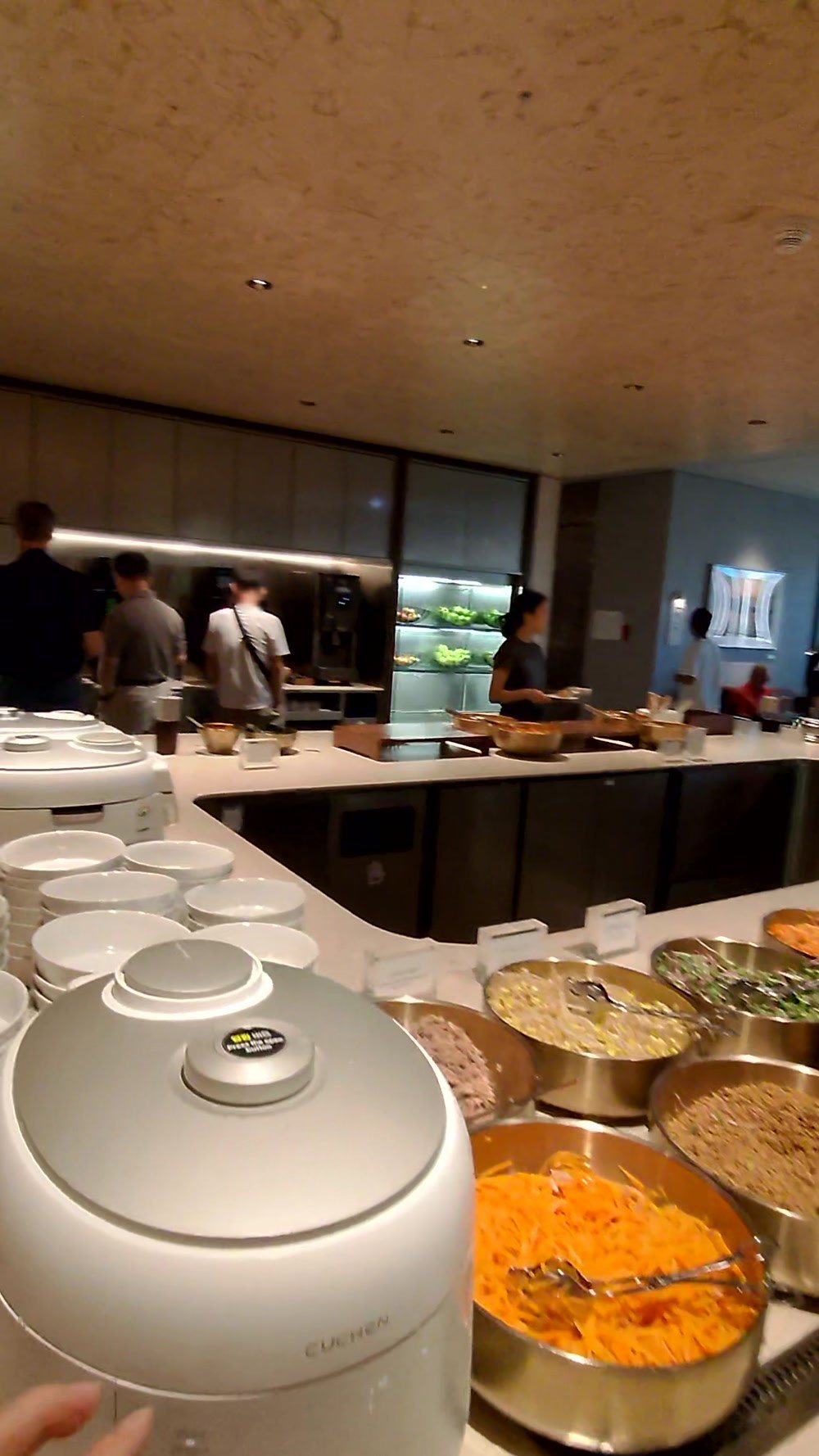
You take a bowl, you take rice, and you build it the way you want it. It’s the kind of thing that’s hard to do badly — and after a long-haul flight in either direction, a bowl of rice and vegetables you assembled yourself is often exactly the right amount of food.
One small tip: go lighter than you think. It’s a buffet, the bowls are small, and you can always go back.
Hot dishes, a salad bar, and a bar with somebody behind it
Past the bibimbap line, the rest of the buffet keeps going.
Braised dishes come out in enamel pots set into induction wells, with steamer domes beside them and wide brass pans of something red and simmering. Everything is on heat, not sitting under a lamp.
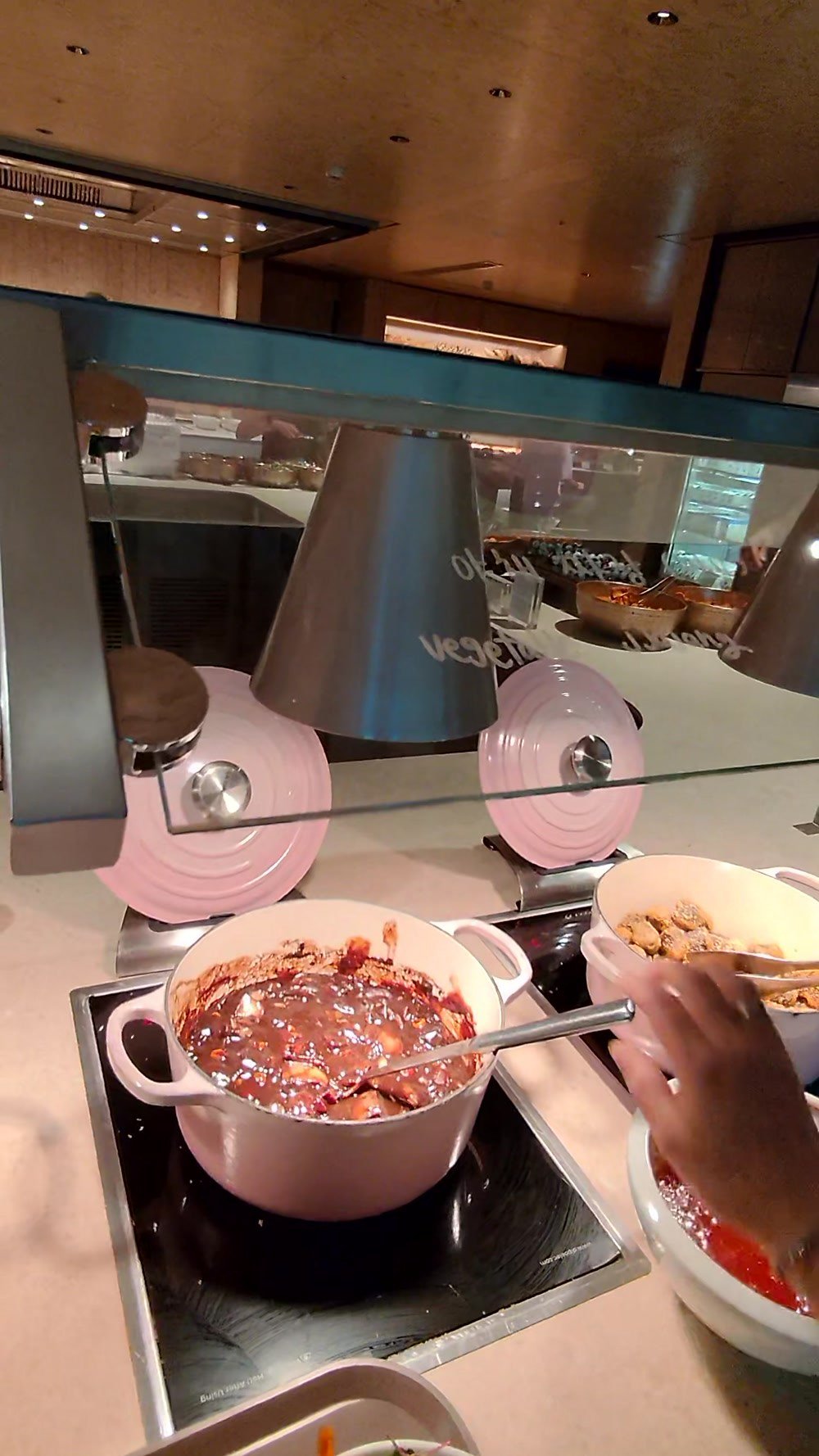
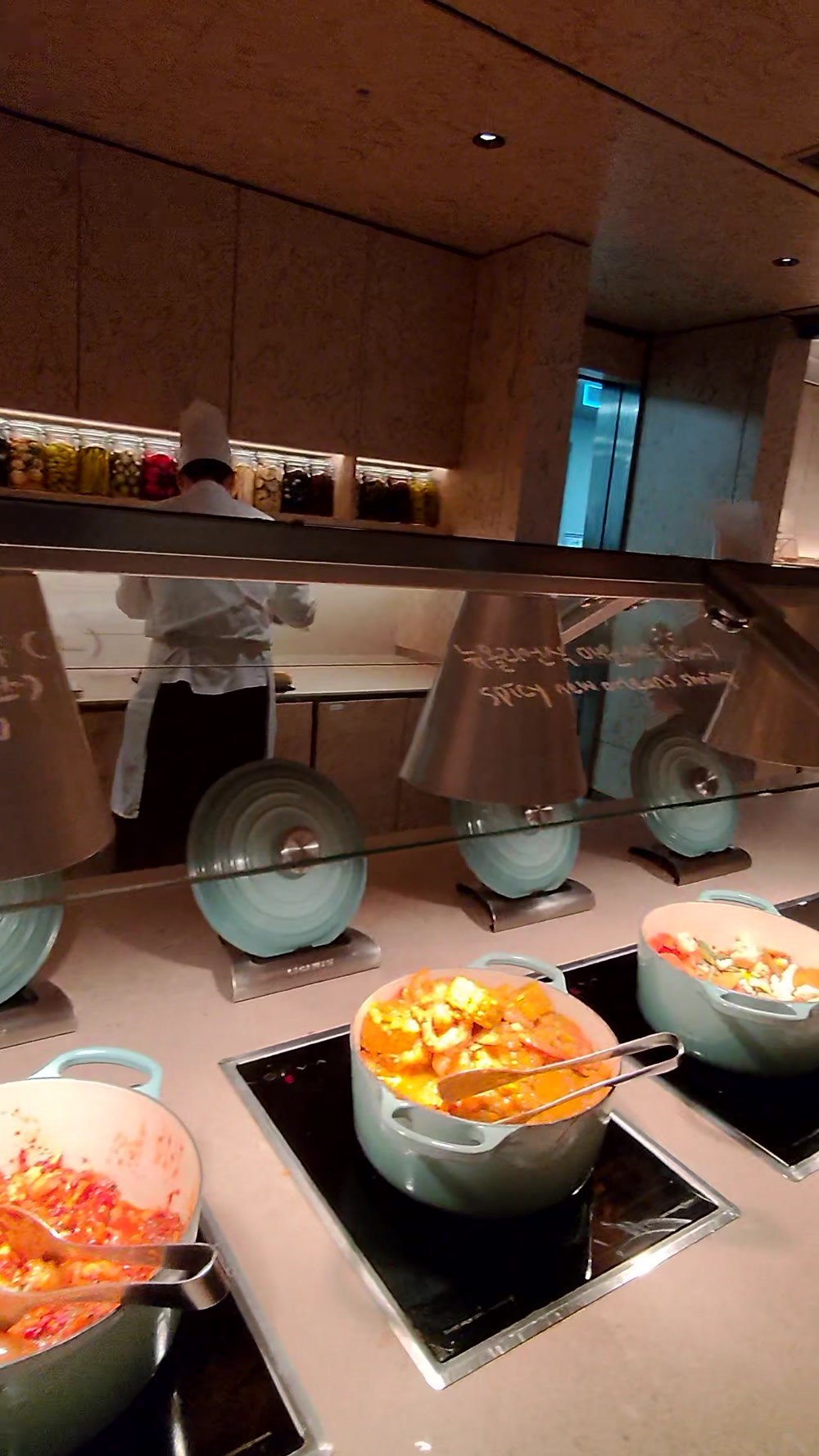
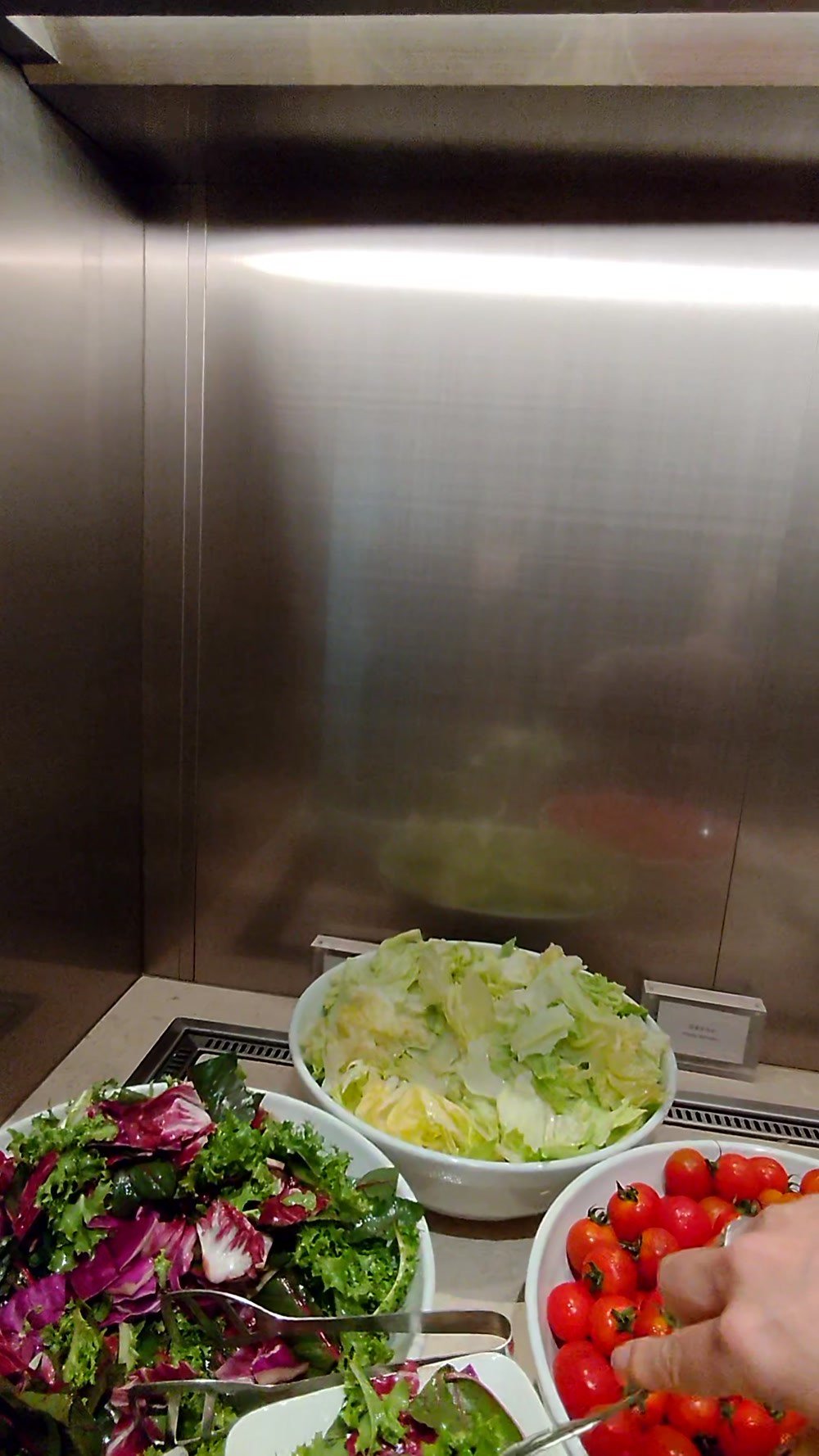
The salad bar is a proper one — mixed leaves, iceberg, cherry tomatoes, composed salads, dressings — tucked into a stainless alcove so it stays cold.
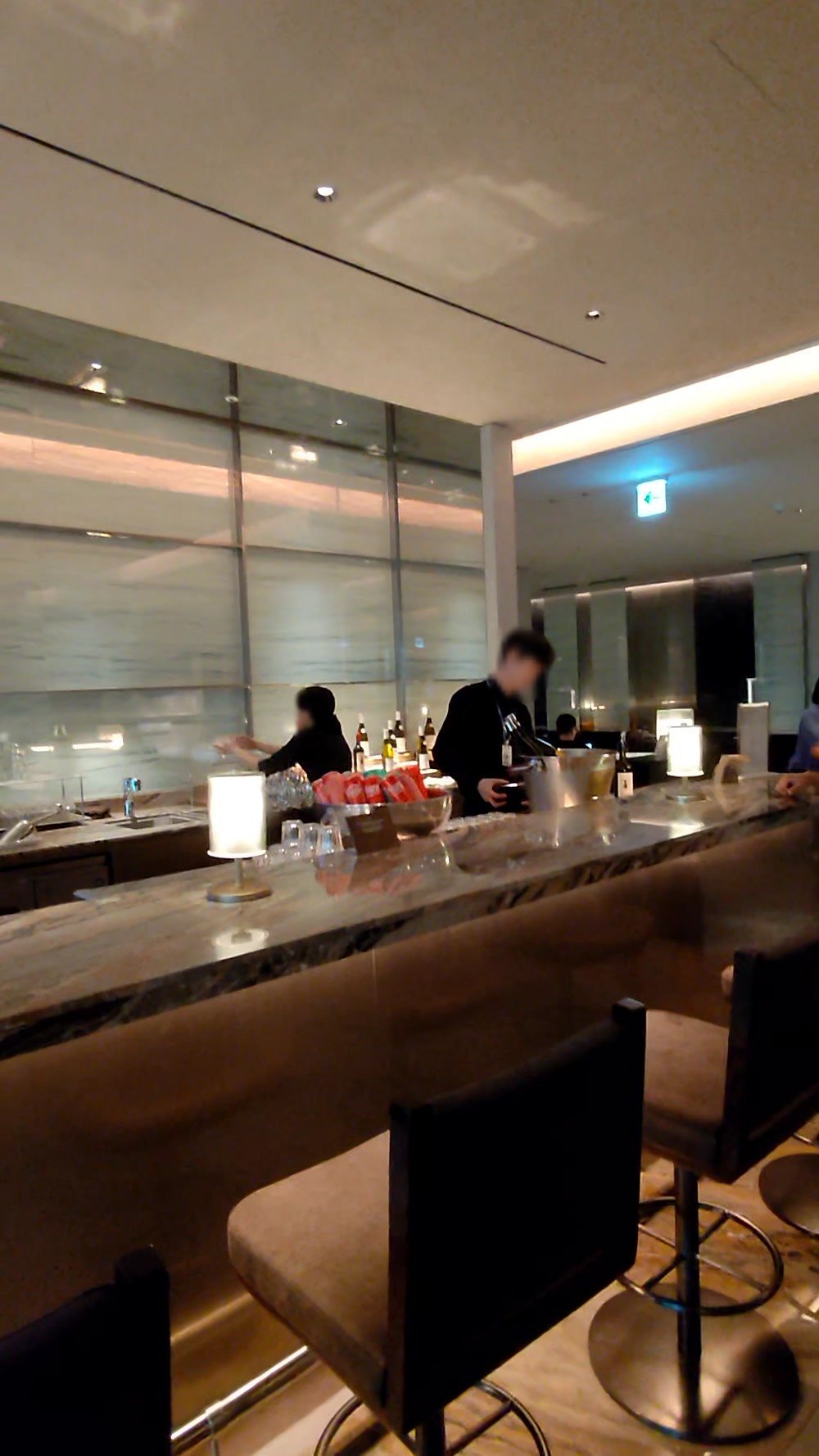
And there’s a bar. Not a self-serve shelf of bottles — a marble counter with stools and someone working behind it.
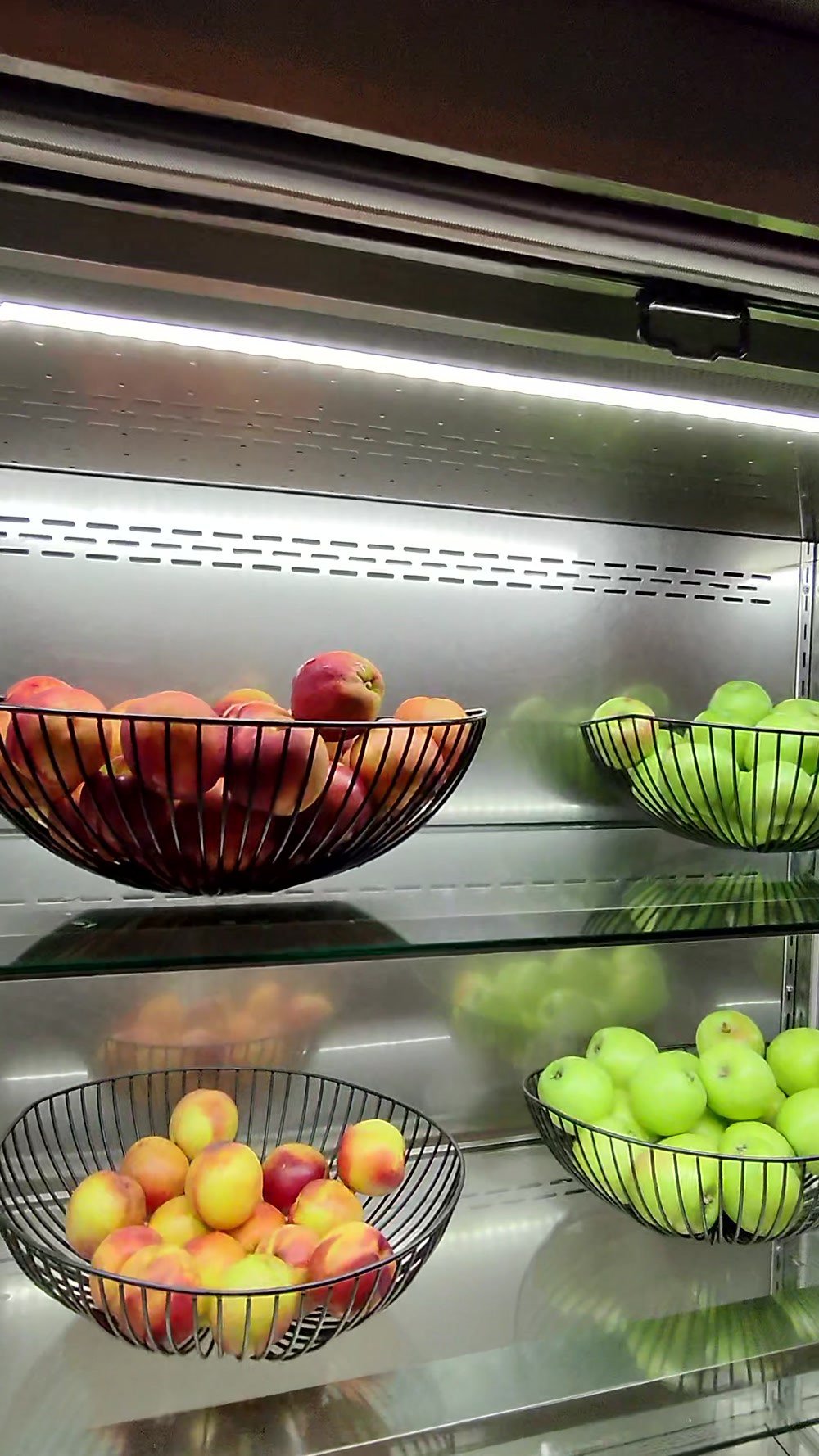
Then, off to one side, a lit cabinet of fruit: apples, pears, green grapes in wire baskets, cold and glowing like a shop display. It’s a small thing, but it’s the detail that tells you somebody is thinking about how the room looks.
The room itself
Away from the buffet, this is a quiet, low-lit room — marble tables, banquette seating, a small lamp on every table, glass partitions breaking the space into sections so it never feels like one big hall.
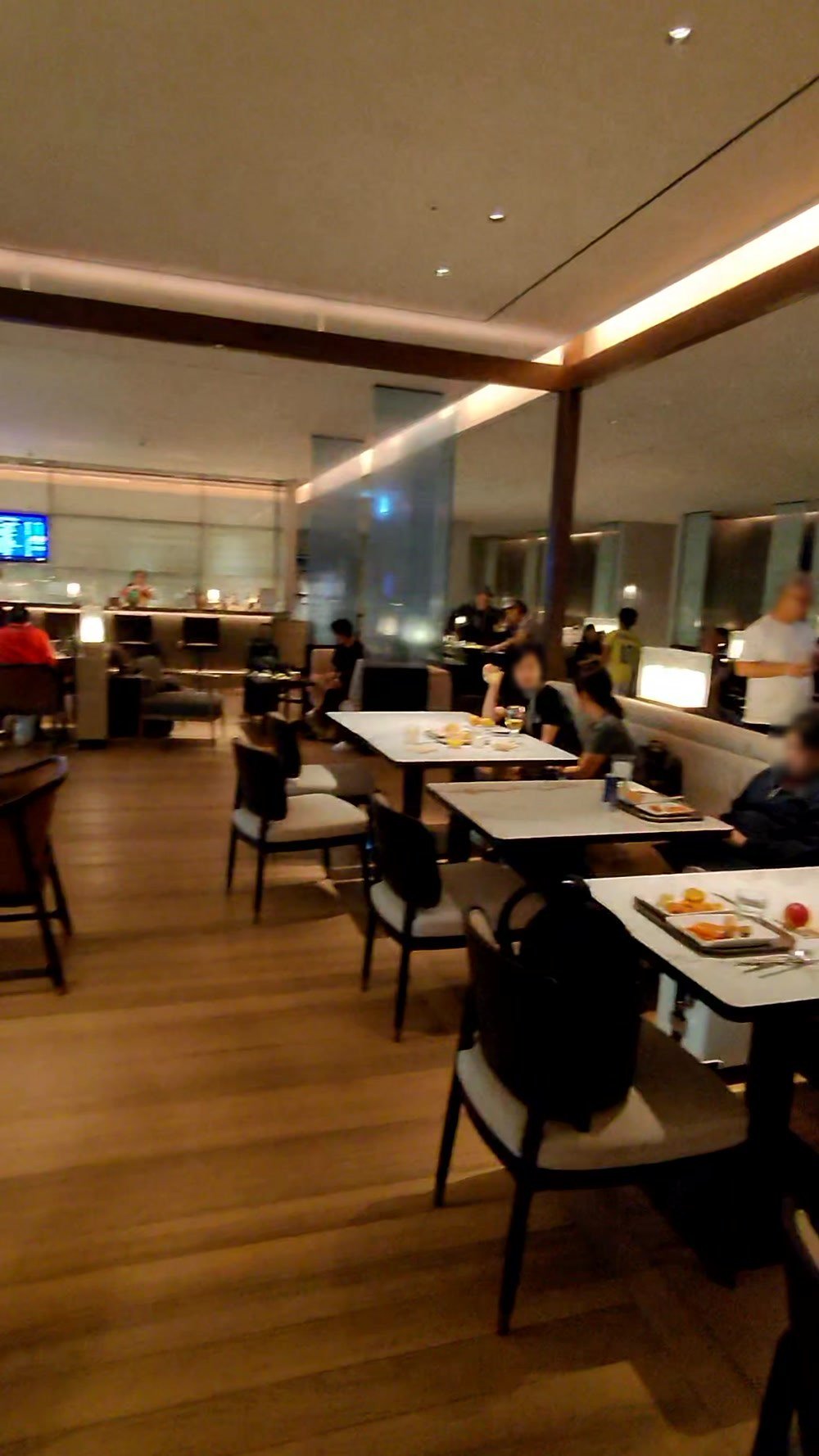
Staff move through constantly clearing plates, the same way they do in the ramen-bar lounge. In a room where everyone is carrying their own food to their own table, that’s the whole difference between a lounge and a food court.
Worth knowing before you go
- Find out which lounge you’re walking to. Seven lounges, seven different kitchens. The ramen wall is in one of them; the chef-made noodles are in another; they are not near each other.
- Give yourself an hour, not twenty minutes. The food here is worth sitting down for, and the walk between terminal areas is long.
- Look for the Noodle Bar sign. It’s a small card on the counter and it’s easy to miss behind the buffet line.
- Build your bibimbap small. You can go back. A full bowl plus sides plus salad is a lot to carry onto a long flight.
- Eat, then hydrate. Korean buffet food is salty and a long-haul cabin is dry. Fill a bottle before you leave.
- If a chef is working a station, wait for it. The cooked-to-order things are better than anything sitting in a tray, and the wait is usually a minute.
📍 Location & access
- Lounge: Korean Air lounge, Incheon International Airport, Terminal 2
- Which one: Korean Air operates seven lounges in Terminal 2 — First Class, Miler Club, Prestige East (two halves), Prestige West, and two Prestige Garden lounges. Check the signage or the Korean Air app on the day; the food differs between them.
- Access: First and Prestige Class passengers on Korean Air, and SkyTeam Elite Plus members. The Miler Club lounge additionally requires Million Miler or Morning Calm Premium status.
- Hours: Tied to the flight schedule — check before you go.
Watch it in 51 seconds
No narration. The bar, the buffet, the Noodle Bar, the bibimbap line.
I’ve now been in two Korean Air lounges at Incheon and they were nothing alike — one built around a glass case of instant noodles you cook yourself, one built around a chef with a ladle. Both good. Completely different afternoons.
That’s the thing worth taking away: at Incheon, “lounge access” isn’t one experience. It’s worth knowing which door you’re walking to.
If you haven’t read it yet: the Korean Air lounge at Incheon with a wall of instant ramen and a machine that cooks it for you.
And the other end of the scale: the Korean Air lounge at Narita is one small room — calm, spotless, and almost nothing to eat.
And now the American one: the Korean Air lounge at LAX reopened in March 2026 — and it is the reason I have twice skipped every meal on a 13-hour flight.
If there’s something you want me to point the camera at in the next lounge — the showers, the work area, how long the line gets at the noodle counter — tell me in the comments.